Cost and Profit Analysis of Free-Range Native Chicken Farming
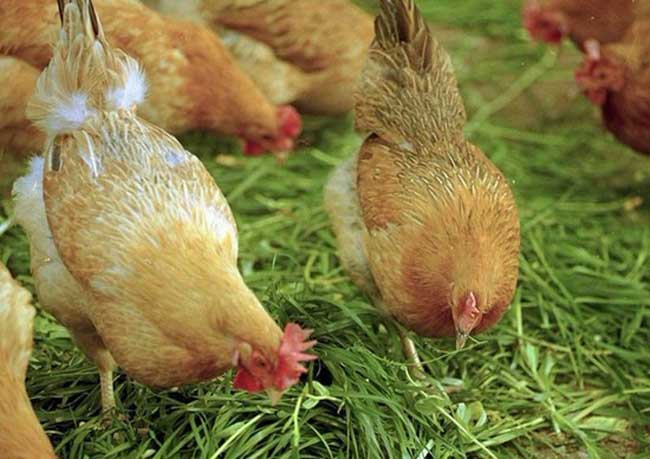
Most rural native chicken farming is mainly free-range, which not only makes full use of natural resources such as land, but also effectively reduces feed costs. However, most rural farmers are completely unaware of the cost of free-range native chickens. Below, the editor will discuss with everyone the cost and profit of free-range native chickens!
Cost of Free-Range Native Chickens
From raising chicks to selling at market, the main costs include chick cost, vaccine cost, and feed cost:
1. Chick cost: Generally on the market, the price of one chick is around 3.5 yuan. If the farmer breeds and raises their own, the price of one chick is about 1.5 yuan to 2.0 yuan lower than the market price.
2. Vaccine cost: Chicken farming focuses on prevention. The cost of chicken vaccines depends on the scale of the farm. One dose of vaccine costs 20 yuan and can be injected into 1000-2000 chickens. Commercial native chickens generally receive vaccines 3-4 times, and the vaccine cost per chicken is under 0.2 yuan.
3. Feeding cost: Native chickens are mainly free-range. According to the growth physiology of native chickens and the characteristics of nutrient accumulation, they can be sold at market in 110 days, reaching a weight of 2.5-3.0 jin for market. The meat is tender and fresh, and this is the optimal period balancing physique, quality, and cost. The feed cost for raising one chicken is about 15 yuan.
Native chickens sell well and have a good market price. Calculated at 15 yuan/jin, a 2.5-jin native chicken can sell for about 38 yuan. After deducting costs, 3.5 yuan + 0.2 yuan + 15 yuan = 18.7 yuan, the net profit per chicken ranges from 18-20 yuan. If the farmer breeds and raises their own, the profit will be even higher. Based on the current national selling price of native chickens, the net profit per native chicken raised is 10 yuan-20 yuan.
Of course, these are theoretical costs. In reality, costs are currently about 1.5 yuan higher, and veterinary drugs and feed are also a bit more expensive. The price of native chickens is between 8 yuan and 9.5 yuan, and the weight of a four-month-old hen is around 2 jin. This is still a crossbred native chicken; the weight of a pure native chicken is even worse.
Cost of Large-Scale Free-Range Native Chicken Farming
1. Calculated at 2 yuan per female chick.
2. Raising one chicken for five to six months requires approximately 19-22 yuan in supplementary feed costs. For the first 100 days, an average of 0.1 feed per day; for the last 60-80 days, an average of 0.15 feed per day. If not all-in-all-out, one day of eating costs 0.15 yuan in feed.
3. Epidemic prevention and treatment drug costs: 0.8 yuan/chicken.
4. The survival rate of fully free-range native chickens is generally 50-75%, which depends on your management level, technique, and luck.
5. Dead chicken cost is calculated at 8 yuan.
6. Labor costs, water and electricity costs, and depreciation of fixed assets are not included.
The cost per chicken is between 28 and 32, the wholesale price of native chickens is between 9-11 yuan/jin, with an average weight of 2.5 jin. No matter how you calculate it, it is a losing business.
Investment and Profit of Free-Range Native Chickens
Below, we take 4000 free-range native chickens (mixed male and female) as an example to explain the cost and profit of raising native chickens. The market stock is divided into 140-day roosters and 140-day laying hens.
1. Land area occupied: 20 mu of woodland, calculated at an average of 200 chickens per mu, rent of 2000 yuan/year, rent per mu of 100 yuan/year.
2. Housing construction cost: 400 sq m, calculated at 5-10 chickens per sq m, can raise 4000 chickens. At 140 days, the roosters must be culled, leaving only 2000 hens, so only 400 sq m of chicken housing is built. Materials are cement tiles, hollow bricks, bamboo roof beams, simple doors and windows, sand and gravel compacted ground, height 1.7-2.0m, construction cost of 50 yuan/sq m, totaling 20000 yuan. Depreciation period is five years, 4000 yuan per year.
3. Chicken farming equipment, such as brooding cages, heating equipment, feed buckets, water pipes, sprayers, shovels, egg frames, etc., totaling 8000 yuan, with annual depreciation of 1600 yuan.
4. Chick cost: 2 yuan/chicken, survival rate of 98%, meaning 4000 chickens require purchasing 4080 chicks, costing 8160 yuan.
5. Feed cost: When free-ranging native chickens, supplementary feed is given every morning and evening. Brooding is 28-35 days before leaving the heat source, all using chick feed. At the current chick feed price of 2500 yuan/T, each chick eats 1 jin, so 4000 chicks require 5000 yuan of chick feed. Later-stage feed is divided into rooster feed: A. Roosters are raised for another 110 days, weighing 1.5kg, with 8.25kg of feed per chicken, at a unit price of 2 yuan/kg. That is 16.5 yuan per rooster. B. Hens are raised to 20 weeks of age, weighing 1.35kg, using grower feed at a unit price of 2.2 yuan/kg, requiring 8.25kg, which is 16.5 yuan per hen. C. Hens have already started laying after 140 days of age, consuming an average of 100g of feed per day, with layer feed at 2.25 yuan/kg. That is 0.225 yuan/day, with a laying rate of 55%, meaning the feed cost per egg is 0.41 yuan.
6. Drug and vaccine cost: Vaccine 0.3 yuan/chicken, drugs 0.8 yuan/chicken, totaling 1.1 yuan.
7. Brooding equipment depreciation 0.3 yuan, electricity 0.1 yuan, heating cost 0.3 yuan, totaling 0.7 yuan per chicken.
8. Direct cost per rooster for 140 days: namely, chick, feed, drugs, etc. M = 2 yuan/chick + 1.25 yuan/chick feed + 16.5 yuan/grower feed + 1.1 yuan/vaccine and drugs + 0.7 yuan/equipment, heating, water and electricity + 1 yuan/land depreciation + 1 yuan/chicken housing depreciation = 23.55 yuan/chicken. Weight is generally 3 jin, cost per jin is 7.85 yuan.
9. Cost per hen to laying (140 days) M = 2 yuan/chick + 1.25 yuan/chick feed + 15 yuan/grower feed + 1.1 yuan/vaccine and drugs + 0.7 yuan/equipment, water and electricity, heating + 1 yuan/land depreciation + 1 yuan/chicken housing depreciation = 22.05 yuan/chicken. Each hen weighs 2.7 jin, so the cost per jin is 8.17 yuan.
10. The cost per egg was mentioned earlier: 0.41 yuan + 0.05 yuan equipment depreciation = 0.46 yuan/egg.
11. Total investment: Calculated from raising to laying at 140 days. Although chickens continue to be raised afterward, the egg selling price is profitable, so no additional investment is needed, only rolling development. M = 2000 yuan land rent + 20000 yuan chicken housing construction + 8160 yuan/chicks + 5000 yuan/chick feed + 16.5 yuan/rooster feed × 2000 roosters = 33000 yuan + 30000 yuan/pre-laying chicken feed + 4000 yuan/drugs, etc. + 8000 yuan/equipment, water and electricity, heating, etc. + 800 yuan/egg frames, etc. = 110160 yuan.
12. Net profit per rooster at 140 days when sold: Weight 3 jin, market wholesale price 11 yuan/jin. Total 33 yuan/chicken, minus the cost of 23.55 yuan mentioned earlier, that is 9.45 yuan/chicken.
13. Commercial native eggs sell for 0.80 yuan each, with a profit of 0.34 yuan per egg. If calculated at a hen laying rate of 55%, 2000 hens can produce 1100 commercial eggs per day, earning 374 yuan/day.
14. Profit per hen when raised to 450 days: Weight 2.8 jin, selling price 11 yuan/jin. The increased growth cost in between is fully compensated by the egg value appreciation. Sold at 30.8 yuan/chicken, minus the cost of 22.72 yuan, earning 8.75 yuan/chicken.
15. Summary: Profit situation of a 4000-chicken native chicken farm:
① 2000 roosters, 2000 × 9.45 yuan/rooster = 18900 yuan.
② After 450 days, selling hens: 2000 × 8.75 yuan/hen = 17500 yuan.
③ Hen egg-laying profit: 300 days × 374 yuan = 112200 yuan.
Total profit: 18900 yuan (roosters) + 17500 yuan (culled laying hens) + 112200 yuan (eggs) = 148600 yuan.
15. It should be noted here that:
① It is assumed that the male-to-female ratio is calculated at 50% each.
② The survival rate is calculated at 98% brooding survival. How many die along the way depends on farming technique and luck. The hen laying rate is calculated at 55%; this fluctuation range is considerable and directly determines your profit or loss.
③ Selling prices and feed prices vary across the country, so costs and profits vary.
④ Free-range chickens finding wild grass, small insects, green vegetables, etc. in mountain forests as supplementary food results in varying degrees of feed savings, so costs also differ. In addition, chicken manure as organic fertilizer can save on purchasing fertilizer for orchards, and eating insects and weeds can save on herbicides and pesticides, which is also a benefit.
⑤ The above is for family self-raising. If workers are hired, worker wages must be deducted separately.
⑥ If you want to build your own brand, or produce and sell yourself, the product price can be raised, but short-term operating costs increase.
⑦ The larger the scale of free-range native chickens, the greater the farming difficulty and the higher the requirements for the site. Of course, costs decrease and profits increase.