What are the precautions for ecological chicken farming? This article explains in detail
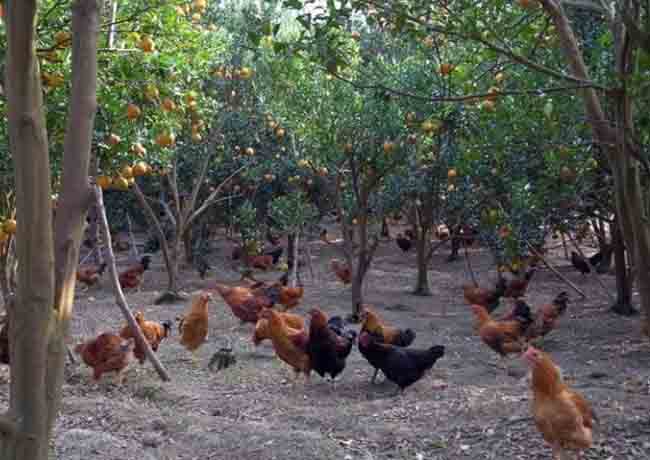
Ecological chicken farming is a rearing method different from modern cage raising, one that fully returns to nature and practices free-range grazing in the wild. It is based mainly on free foraging for insects, tender grass and various seeds, supplemented by artificial feeding of compound feed, allowing the chickens to grow and develop in an environment with fresh air, excellent water quality and abundant forage. But what issues need attention during the farming process?
Site selection
For ecological chicken farming, it is advisable to choose a place that is sheltered from the wind and facing the sun, with flat terrain, convenient water access, far from villages, far from industrial areas, with convenient transportation, smaller tree canopies and sparse fruit trees. Natural grasslands, natural hills and orchards and fields with superior ecological conditions are suitable grazing sites for raising them. The specific requirements are: within a 5 km radius of the site and sheds there should be no major pollution sources, there should be abundant forage, and having a small stream or mountain spring water is best. The mountain slope should preferably not exceed 25°, and it should be sheltered from the wind and facing the sun, shaded by green trees, with ample water sources and convenient water access. Large-scale farming also requires guaranteed road access and power supply, to facilitate the transport and processing of feed and products.
Breed selection
Superior breeds are the foundation of raising native chickens. When selecting breeds, one should choose local breeds with colored feathers that have thin skin and fine bones, full muscles, delicious meat, strong resistance and a small-to-medium body size, or crossbred chickens containing local bloodlines. In addition, the breeds raised must adapt to the local climate and environment, and at the same time, when selling, be able to meet the demands of the sales market.
Scientific feed supplementation
The feed used for artificial supplementation of ecological chickens must be natural organic feed. When growing feed for ecological chickens, operations must follow the requirements of organic food production; producing organic compound feed must follow the standards for producing organic food, and adding any kind of chemical drugs during production is strictly prohibited; when purchasing commercial feed, one must choose complete-price feed produced by legitimate feed manufacturers that contains no chemical drugs or growth hormones, in order to ensure the quality of the ecological chickens.
During the brooding and growing stages, the feed supply and supplementation for chicks, growing chickens and adult chickens must be ensured according to the nutritional needs of each growth stage. Generally, before grazing, feeding 5 to 6 times per day is required, while also ensuring sufficient clean drinking water. After entering the free-range period and once they have a strong ability to forage freely, artificial feed supplementation can gradually be reduced to 2 to 3 times per day, and care should be taken to feed less in the morning and more in the evening.
Safety precautions
In the process of ecological chicken farming, safety precautions must be done well to prevent harm from natural enemies such as eagles, weasels, lynx, foxes and snakes. Generally, the better the natural ecological environment of the hills, the more frequent the activity of natural enemies.
Disease prevention and control
Ecological chicken farming is mainly based on free-range raising, with the chickens spending most of their time active in the wild, and ecological chickens have a relatively long growth period, generally requiring 4 to 5 months, so they may be infected with various diseases at any time. As soon as the chicks break out of the shell, they must be vaccinated with Marek's disease vaccine, and at the same time, prevention and treatment of other diseases must be done well.