Turkey farming cost and profit analysis: how good are the returns?
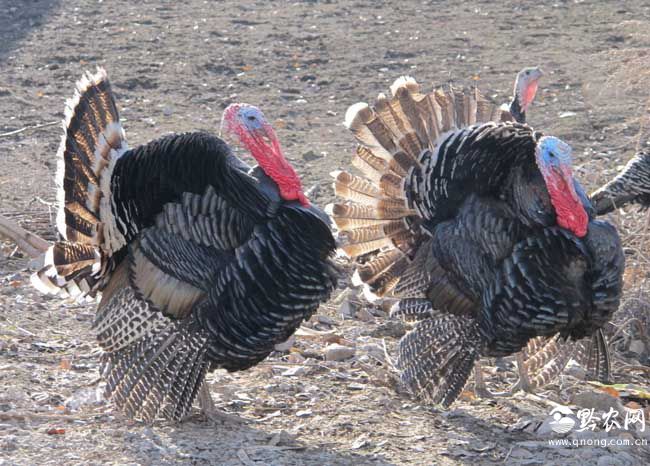
Turkeys are relatively large in body size, have a high lean meat yield, and their meat is tender and fine-textured. It contains relatively high protein and extremely rich amino acids. Compared with the meat of other poultry, it has a lower cholesterol content, making it a poultry meat with relatively high nutritional value and an ideal farming project. Below, the editor of Qiannong Network will introduce the farming costs and farming prospects of turkeys for everyone!
Turkey farming costs and benefits
Turkeys have the characteristics of fast growth, high meat yield, strong reproductive capacity, easy management, and high benefits. Under normal conditions, heavy-breed turkey males can reach 16-20 kilograms at 140 days, females can reach 9-15 kilograms, medium-breed turkey males can reach 13-15 kilograms, and females can reach 8-10 kilograms. Two seasons can be raised each year.
1. Cost: The current market price of turkey poults is 10 yuan each, feed cost per season is 25 yuan each, epidemic prevention and other miscellaneous expenses are calculated at 0.5 yuan each, for a total cost of 35.5 yuan each.
2. Output: Commercial birds are calculated at 10 kilograms each, the lowest market price is 10 yuan per kilogram, and the survival rate is calculated at 90%, for a total output of 90 yuan each.
3. Profit: Each turkey can yield a net profit of 54.5 yuan. Raising 100 birds per person per season in rural areas does not affect other work, and raising two seasons a year can yield a net profit of more than 10,000 yuan.
Market prospects for turkey farming
Turkeys have strong adaptability. Under artificial rearing, crop straw crushed into powder and mixed evenly can all be used as turkey feed, and both barn feeding and grazing are possible.
At present, China's turkey market is developing rapidly. The main consumer market is rapidly penetrating from the coastal areas of Guangdong to large and medium-sized cities in East China, North China, and elsewhere, and total sales are growing. It can be foreseen that, with the continuous improvement of people's consumption levels, turkey farming will become an industry with broad prospects, and turkeys will gradually become a mass consumer product and a new favorite on Chinese dining tables.
Turkey farming techniques
1. Breed selection. There are many turkey breeds and varieties. At present, there are mainly three common breeds on the domestic market.
① Bronze turkey: native to the Americas, named for its feathers having a bronze luster. It lays about 60 eggs per year, with female turkeys weighing 8 kilograms and male turkeys 16 kilograms. This breed was introduced into China too long ago, and at present its degeneration is serious.
② Nicholas turkey: bred by the American Nicholas Turkey Breeding Company. Adult male turkeys have a maximum weight of 25 kilograms, female turkeys about 12 kilograms, and they lay 60-80 eggs per year, with pure white feathers. This turkey has a huge difference in weight between males and females, and the fertilization rate of natural mating is poor, so artificial insemination must be carried out. It is suitable for intensive factory farming.
③ Beltsville turkey: native to Mexico, later bred and domesticated by the French Beltsville Turkey Breeding Company, and has now become the only breed in the world that can be both grazed and barn-fed. This turkey tolerates roughage, gains weight quickly, has a high feed conversion rate, and strong disease resistance. It lays 90-120 eggs per year, with male turkeys weighing about 10 kilograms and female turkeys about 5 kilograms. This turkey has a high fertilization rate in natural mating and relatively strong self-incubation ability. It is suitable for specialized rural households and farmers for free-range raising, and is an ideal breed.
2. Feeding management
① Forage support: Planting forage grass is the key point of the entire turkey raising work. The green feed that turkeys like to eat is very extensive; wild grass, vegetables, leaves, water peanut, sweet potato vines, and peanut vines, etc., are all acceptable. Forage grasses such as ryegrass, chicory, comfrey, and rumex are all good feed for turkeys. Forage grass and crop straw can also be sun-dried and crushed and reasonably combined with cake meal types and bran and wheat types. This kind of self-mixed feed both ensures quality and saves money, can reduce costs, and improves chicken quality.
② Prevent feed mildew: Because there is more rain and high humidity in summer, concentrated feed is very prone to mildew, causing turkey mold poisoning. Feed needs to be sun-dried on sunny days to eliminate the occurrence of poisoning incidents. Moldy feed is prohibited.
③ Do a good job of environmental sanitation: promptly remove all kinds of pollutants in the facility, disinfect regularly, and choose disinfectants that are safe for humans and poultry, non-corrosive to equipment, and free of toxic residues. Drinking water should use tested well water or tap water.
3. Expert tips
① It is necessary to buy breeding eggs or chicks from professional turkey breeding farms, because they are relatively complete in breed purity, epidemic prevention methods, feeding techniques, and after-sales service.
② Beginners should first raise light-breed turkeys, such as the French Beltsville turkey. This breed can mate naturally, and egg laying and incubation are not divided by season.
③ Turkeys can only be used for 3 years. When introducing breeding stock, it is better to buy chicks and young turkeys, and do not buy old turkeys that are about to be culled.