Detailed Explanation of Guinea Fowl Breeding Technology and Management Methods
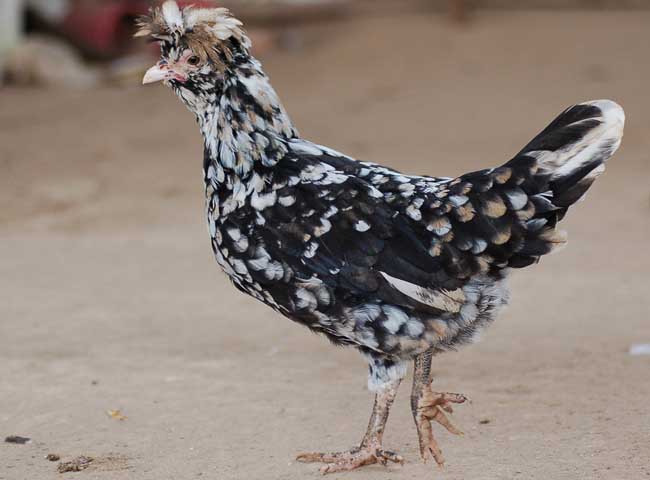
Guinea fowl, also known as the lady's fowl or royal fowl, is a new breed of fine specialty poultry from European countries such as the United Kingdom, France and the Netherlands. Because of its splendid appearance, strong adaptability, tender meat, high lean meat rate, rich nutrition and dual use as food and medicine, it has been well received by a great number of producers and consumers since being introduced into China, and has developed rapidly. The UK guinea fowl has a petite body, peculiar appearance and light build, and wears a phoenix crown on its head; in front of the crown body there is an independent small triangular comb, the crown body is a bean-shaped comb and extends into a "V"-shaped fleshy horn-like comb of bright red color, and on its rear side there is a large spherical tuft of black-and-white speckled feathers, like the hat of a Western lady. The UK guinea fowl has strong adaptability, relatively good resistance to cold and heat, a wide range of foods, relatively fast growth, does not peck eggs, is gentle in temperament, is not good at fighting, likes to live in groups, is not afraid of people, and can be attracted to peck at fingers by tapping on the netting outside the exercise yard. Its flying ability is relatively weak, and it likes sunlight.
Production Performance of Guinea Fowl
Hens can begin laying at about 180 days of age, each hen lays 150-180 eggs per year, the eggshell is white, and the average egg weight is 40 grams. The body weight of adult hens is 1.1-1.25 kg, and that of roosters is 1.5-1.75 kg. Under good feeding and management conditions, eggs can be laid every year from March to February of the following year; from March to August the fertilization rate of breeding eggs and the hatching rate of fertilized eggs are about 90%, and from September to February of the following year they are about 80%. The average body weight of commercial chickens is 33 grams at 1 day of age, 268 grams at 25 days of age, 475 grams at 40 days of age, and 900-1100 grams at market weight at 90 days of age. When commercial broiler pellet feed is fed with an appropriate amount of imported fish meal, the meat-to-feed ratio is 1:3.5.
Hatching Technology for Guinea Fowl
The UK guinea fowl does not have a strong brooding instinct, so its offspring can be reproduced by methods such as hatching in an electric incubator or by traditional methods. Artificial Breeding Technology for UK Guinea Fowl, by Yu Haibo and Luo Ling. The incubation period is 21 days. To increase the hatching rate of fertilized eggs, the following technical points should be mastered.
1. Timely disinfection of eggs set for incubation: breeding eggs can be stored at a room temperature of 13-15°C for a maximum of 5-7 days. Before incubation, soak them in a 0.02% potassium permanganate solution for 2 minutes, then air-dry and set for incubation.
2. Good control of temperature and humidity: from the 1st to the 18th day after setting, the temperature should preferably be 37.8-38.0°C in winter and 37.5°C in summer. On the 19th day, transfer the eggs to the hatcher, where the temperature should preferably be 37.2°C in winter and 37.0°C in summer. The relative humidity requirement is 60% from the 1st to the 18th day and 70% from the 19th to the 21st day. Methods of increasing humidity include adding water trays or wet towels inside the machine and spraying warm water on the egg surface.
3. Turning and candling eggs: from the 1st to the 18th day, turn the eggs once every 2-4 hours; on the 5th to 7th day, perform the first candling to remove infertile eggs and eggs with dead embryos; on the 19th day, perform the second candling, transfer the eggs with live embryos to the hatcher, stop turning the eggs and wait for hatching. In cases of difficult hatching, artificial assistance may be used by gently peeling open the eggshell.
Brooding Technology for Guinea Fowl
1. Do a good job of disinfecting the brooding house, utensils and litter
① Brooding house: thoroughly clean dust from the walls and eaves, rinse the walls and floor with tap water, and after drying brush the walls with 20% lime milk, then scrub the floor and the walls up to 1 m above the floor with 3% caustic soda water, and finally close the doors and windows and fumigate with formaldehyde for 24 hours.
② Utensils: wash the feed trays and drinkers clean with clear water, then soak them in a 0.1% benzalkonium bromide solution for 1 hour, and finally rinse with clear water and dry in the sun for later use.
③ Litter: dry it in the sun before use, and spray-disinfect it with a 1/500-1/600 dilution of 84 disinfectant.
2. Provide suitable temperature and humidity: brooding temperature is the key to successful brooding. The suitable temperature for 1-2 days of age is 32°C, and thereafter it can be lowered by 0.5°C each day. Although the UK guinea fowl has relatively strong cold resistance, a room temperature of about 22°C must still be maintained at 21-30 days of age, so the brooding house should be equipped with sufficient heating equipment, such as an iron stove with a flue, a brooder umbrella or an electric heating plate. The relative humidity should preferably be 65%-70% in the early stage and 55%-60% in the later stage. The brooding house must be strictly protected against drafts, and windows should be opened for a period on fine days or when the flock is active in order to allow ventilation.
3. Provide complete compound feed and clean drinking water: complete powdered feed for laying-type chicks may be fed, mixed with 4% imported fish meal and 6% feed yeast powder, so that the crude protein of the feed reaches about 25%, which is beneficial to the growth and development of the chicks. Feed is supplied all day with free access, but care should be taken to feed small amounts frequently. For drinking water, clean boiled water that has cooled is best.
4. Strengthen management: as the age in days increases, the stocking density should gradually be reduced from about 60 birds per square meter to about 30 birds per square meter. Pay attention to hygiene, frequently wash the feed trays and drinkers, and promptly replace wet and dirty litter. Observe frequently, emphasize prevention and treatment, and keep good records. Feeding and management personnel should carefully observe the chicks' spirits, appetite for food and water, droppings and breathing conditions every day. When sick or weak chickens are found, they should be isolated and treated promptly; when dead chickens are found, necropsy should be carried out promptly to confirm the diagnosis and prescribe the right medicine. Disinfect regularly, vaccinate strictly according to the immunization program, and do a good job of recording all kinds of tables.
Feeding and Management of Guinea Fowl
1. Do a good job of selection
The first selection is carried out at about 90 days of age, retaining roosters and hens with complete appearance characteristics and body weights meeting the standard as reserve breeding chickens, and the other chickens are marketed as commercial broilers. The second selection is carried out at 180 days of age, requiring roosters to be agile in movement and strong in libido; hens should have bright, spirited eyes, move flexibly, and be moderate in fatness.
2. Feed and drinking water
Reserve breeding chickens may be restrictively fed with young laying hen feed, fed twice a day, about 100 grams per bird per day. Laying hens may be fed with laying hen feed mixed with 2% imported fish meal and 5% feed yeast powder, fed 3 times a day, 125 grams per bird per day. Clean drinking water is supplied all day.
3. Strengthen management
① Density: reserve breeding chickens are raised at 8-10 birds per square meter inside the house, and there should be an exercise yard outside the house more than 1 times larger than the inside. Laying hens are raised at 4-5 birds per square meter inside the house, with 100-150 birds per flock being suitable. The male-to-female ratio is 1:7-8, and the service life is generally 3 years. The exercise yard should preferably be provided with a calcium pool, in which some shell powder or limestone is placed.
② Lighting: natural lighting is suitable for reserve breeding chickens, while laying hens should receive 15-16 hours of light per day, and lights should be turned on and off at fixed times. Pay attention to hygiene.
4. Disease prevention and treatment
Clean the droppings inside and outside the house every day, pay attention to observing the flock, and promptly prevent and treat diseases. Others: collect eggs frequently, ensure the hygiene of the egg box, and it is best to provide perches inside and outside the house.
Disease Prevention and Treatment of Guinea Fowl
1. Newcastle disease: at 5 and 25 days of age, use Newcastle disease strain II vaccine once each by eye drop and nasal drop; at 40 and 135 days of age, use strain I vaccine once each by intramuscular injection; during the rest period from laying, breeding chickens are vaccinated with strain I vaccine once more. In epidemic areas, strain I vaccine should be injected urgently.
2. Infectious bursal disease: at 10 and 30 days of age, use attenuated vaccine once each by drinking; 1 month before laying and at 38-40 weeks of age, use inactivated vaccine once each by intramuscular injection. When the disease occurs, hyperimmune yolk liquid may be injected intramuscularly, and inactivated vaccine should be used once 7-10 days later.
3. Pullorum disease: from 1 to 20 days of age, alternately mix norfloxacin powder into the feed according to the instructions for prevention, and stop the medication from 3 to 7 days of age. Adding 1% chopped garlic to the feed can both increase appetite and prevent disease.
4. Coccidiosis: for chicks from 20 to 60 days of age, appropriate amounts of robenidine, clopidol and other drugs may be alternately mixed into the feed for prevention, with medication stopped at 23-27 days of age and 38-42 days of age. Ground flat rearing and high-temperature, high-humidity environments are most likely to cause outbreaks of coccidiosis.
5. Avian ascariasis: if raised on the ground, it is best to deworm once every 2 months. The first-choice drug is piperazine, which has relatively few side effects on poultry.