What to Do When Laying Hens' Egg Production Drops? Causes and Solutions
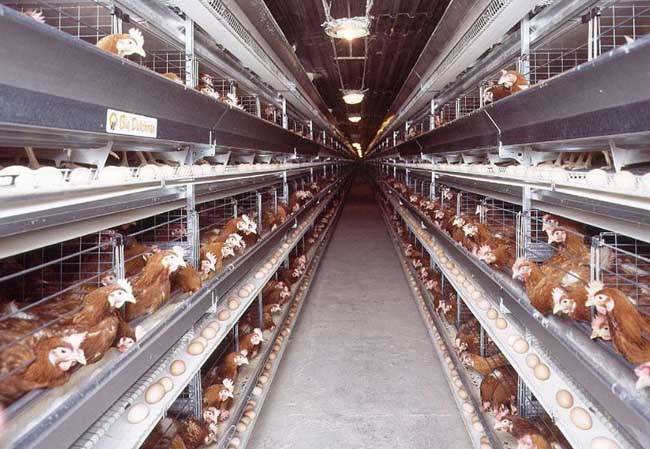
It is fairly common for laying hens' egg production to decline in late autumn, winter and early spring. The causes of reduced egg production in laying hens are complex and multifaceted. The editors at Qiannong Network will now offer some analysis of the causes of declining egg production in laying hens for your reference.
Symptoms of Declining Egg Production in Laying Hens
1. Feed intake, spirits and droppings of the flock are normal (on close inspection the comb may appear purplish in the morning and return to normal at noon), eggshell color and quality are normal, and the laying rate drops by about 20%.
2. Initially a few individual chickens shake their heads and have nasal discharge (thin and transparent like water). After 1-2 days more chickens develop nasal discharge, and a few individuals make a rale sound. At this point feed intake begins to decline, the laying rate falls rapidly, eggshell color becomes lighter, eggshells become thinner, and egg weight decreases.
3. Feed intake and spirits of the flock are normal, but listless chickens suddenly appear and gradually increase as the disease progresses. The laying rate drops by 20%〜30%, eggshells become thinner and their color lighter. Necropsy often reveals yolk peritonitis.
4. During the day the flock's feed intake and spirits are normal, but at night respiratory sounds can be heard, initially a rattling sound, followed by rales (mostly occurring near the doorway). Feed intake declines, the laying rate drops, and this can last about a week. Eggshell quality is poor, with soft-shelled and sand-shelled eggs appearing.
5. Feed intake and spirits of the flock are normal; egg output is low in the morning and increases in the afternoon (normally more in the morning and less in the afternoon). Eggshell color becomes lighter in some eggs, and soft-shelled and sand-shelled eggs appear.
6. Feed intake and spirits of the flock are normal, but the laying rate suddenly drops. The decline is not large but fluctuates in a wavelike pattern, and eggshell color is normal.
Poor Feeding Management Leads to Declining Egg Production
1. Poor feeding management during the brooding and growing periods, such as excessive stocking density, overcrowding, slow growth, insufficient body weight, late body maturity and sexual maturity, and late onset of laying and formation of the laying peak. Some chicken farmers raise roosters and hens, laying hens and broilers together during the growing period, or even mix chickens of different ages together, resulting in great disparities in strength and weakness, uneven eating and drinking, and unequal growth rates. As a result, the uniformity of the flock is very poor, the laying peak arrives slowly and it is also difficult to maintain a high laying rate for a long time, showing obvious declines in the laying rate to varying degrees.
2. Since the beginning of winter, the outside temperature has been very low and the temperature difference inside and outside the coop is large. Some chicken farmers only pay attention to maintaining the temperature inside the coop while ignoring the importance of ventilation, and problems of poor ventilation are relatively common. The concentrations of ammonia, carbon dioxide and hydrogen sulfide in the coop are very high. Not only is ventilation poor and oxygen relatively insufficient, but harmful gases are excessive and highly concentrated. Over a long time, this easily irritates and damages the respiratory mucosa of the chickens, reduces their resistance, and induces respiratory diseases, which in turn affect gas exchange, causing further oxygen deficiency and hindering the oxidative decomposition of nutrients in the body. Therefore, it affects the production performance of laying hens and causes the laying rate to decline.
3. Insufficient light: Light has a relatively large effect on stimulating the physiological function of the gonads and on egg production. With insufficient light, gonadal function weakens, follicle formation is slow, and egg production is reduced. Some chicken farmers use only natural light without artificial supplemental lighting, so light exposure is below 16 hours. Although some supplement light, the bulbs are too few or too low in wattage; even with 15W bulbs, if they are not wiped clean in time and are covered by dust, the light is still insufficient, adversely affecting the laying rate.
4. Some chicken farmers supply feed and drinking water at fixed times and in fixed amounts and practice restricted feeding, resulting in insufficient feed and water and inadequate energy and protein.
5. Changing feed too quickly after the laying peak causes a relatively large stress response, affecting feed intake, the absorption and utilization of nutrients, and egg formation, thereby reducing egg production.
6. Sudden stress to the flock, such as unusual noises, suddenly flickering light and shadows, vaccination and antibody injection, catching chickens during feeding, and changes in feeding procedures and environment, can also cause a decline in the laying rate.
In response to the above problems in feeding management, they should be solved promptly, with reasonable feeding, strengthened management, attention to avoiding excessive stocking density, and appropriate ventilation and lighting. In short, let the chickens live in a suitable and good environment to fully mobilize and give play to their excellent genetic production performance.
Unreasonable Feed Formulation, Incomplete or Unbalanced Nutritional Components
1. Poor stability of feed raw materials, especially self-mixed feed, is more likely to cause changes in production performance, such as frequently switching premixes, concentrated feeds, or replacing soybean meal or soybean cake with miscellaneous meals, which affects feed quality and the balance of effective ingredients and affects the absorption and utilization of nutrients and the performance of egg formation. Research has shown that when miscellaneous meals are used, lysine, iron, copper, VB6, VB12, etc. should be supplemented.
2. Poor feed processing and uneven mixing. Some chicken farmers mix feed with a "shovel" and cannot achieve a high degree of uniform mixing, so the effective ingredients are unevenly distributed. Some chickens eat more and some eat less, affecting the production performance of some chickens and causing the laying rate to decline.
3. Insufficient energy: Feeding chickens with new corn as a bulk raw material. New corn has too high a water content, reducing energy substances. The standard moisture content of corn is 14%. However, new corn has a moisture content of 19-20%, or even higher. When corn, as the main energy substance, has too high a moisture content, it effectively means reducing energy substances, causing insufficient energy. Therefore, in winter when the weather is cold, insufficient feed energy, combined with restricted feeding, can all cause the laying rate to decline, because the energy obtained by the chicken body can only pay for the energy needed for egg production after deducting the energy needed for the chicken's life activities. Insufficient energy will inevitably reduce egg production.
4. Because the price of eggs produced by laying hens is not high and the market is sluggish, some chicken farmers, when formulating feed, excessively pursue lowering costs and saving money, choosing poor-quality and substandard feed or raw materials with incomplete nutritional components and insufficient protein, vitamins, trace elements, etc. Especially during the growing period, the chickens are not well raised, so their growth and development are poor, their constitution is weak, and their resistance is low. Their excellent genetic production performance cannot be fully exerted, resulting in poor production performance during the laying period, with a low or unstable laying rate and a decline in the laying rate.
5. Because some chicken farmers use moldy, spoiled or deteriorated feed containing large amounts of bacteria, toxins, denatured proteins, etc., enteritis, diarrhea or poisoning occur, causing digestive disorders and absorption obstacles, which will also become one of the causes of the decline in the laying rate.
For the above problems in feed formulation, they must be solved promptly. According to scientific feed formulas, select high-quality raw materials and formulate reasonably, so that the chickens can eat complete-price feed meeting their nutritional needs and live in a suitable environment, continuously mobilizing, giving play to, improving and maintaining good production performance.
Incorrect Medication for Laying Hens Leads to Declining Egg Production
After laying hens become ill, improper treatment or incorrect medication, such as using sulfonamide drugs, tetracycline drugs and neomycin drugs that are contraindicated for laying hens, causes damage to the body, inhibits reproductive function, reduces egg production, and lowers the laying rate.
Declining Egg Production Caused by Disease Interference
Due to seasonal changes and too low macroclimate temperatures, some chicken farmers fail to properly handle the contradiction between heat preservation and ventilation inside the coop in winter, and problems of poor ventilation exist. The environment inside the coop is very poor, and respiratory diseases such as infectious rhinitis, infectious laryngotracheitis, and mycoplasmosis are prone to occur, all of which can cause declines in the laying rate to varying degrees. When the laying rate suddenly drops by a relatively large margin, the interference of the following infectious diseases should also be considered:
1. Newcastle Disease
[Diagnostic Method] Relatively common in production, mostly occurring in flocks that have not been immunized for a long time or whose immunization effect is poor or that have experienced immunization failure. Feed intake declines (10-20%), and the laying rate declines (20-30%). Egg quality decreases, eggshells become white and thin, deformed eggs increase, and greenish loose droppings are passed; some have neurological symptoms. Pathological necropsy often reveals characteristic lesions of the virus in the gastrointestinal tract.
[Prevention and Control Measures] Comprehensive prevention and control measures can be implemented for the diseased flock. Such as emergency immunization, strengthened disinfection management, use of antiviral drugs such as Likening, Dukeyi No. 1, and Kedutule, and antibacterial drugs such as Tasha, ciprofloxacin, enrofloxacin, and doxycycline, and nutritional supplementation (increasing the dosage of Jinweita), to improve the body's disease resistance.
2. Avian Influenza
[Diagnostic Method] Sometimes it shows endemic prevalence. Diseased chickens have reduced feed intake and laying rate (30-60%), are depressed, and have purplish combs; some have edema of the comb, eyelids and wattles. The scales on the legs show purplish-black hemorrhagic spots. There are respiratory symptoms of varying degrees, with large amounts of mucus in the tracheal rings, and green droppings are passed. The proventricular papillae bleed or have large amounts of mucus; the corneal layer of the gizzard is easily peeled off; the intestines show patchy or strip-like hemorrhages; the oviduct is edematous with purulent material; and follicles are deformed, hemorrhagic, and easily ruptured. The kidneys are swollen and hemorrhagic. The liver is enlarged, often accompanied by fatty changes or ruptured hemorrhage.
[Prevention and Control Measures] Adopt comprehensive prevention and control for the diseased flock, strengthen feeding management, carry out isolation and disinfection well, improve the body's resistance, reduce stress, and prevent other secondary diseases. Carry out necessary drug treatment to reduce production losses. For the whole flock, Banlangen granules and antiviral drugs (Likening, Kedutule, or virazole, ribavirin from Shannongda Pharmaceutical Company) can be used in drinking water or mixed into feed. Drugs such as amantadine, VC, and doxycycline can also be used to reduce deaths and prevent secondary diseases. In the late stage of the disease, Jinweita or Jindansan can be used to promote the resumption of egg production.
3. Avian Infectious Bronchitis
[Diagnostic Method] Adult chickens have obvious respiratory symptoms, but the laying rate declines markedly, and in severe cases can be reduced by half. They lay deformed eggs, thin-shelled eggs, faded eggs; the egg white is thin and the yolk and white separate. Generally, egg production gradually recovers after 10 days. Variant infectious bronchitis in laying hens is caused by a coronavirus. This virus occurs in laying flocks and mostly breaks out at more than 200 days of age. This disease is closely related to stress, and various strong stressors can induce it. In the early stage of the diseased flock, there are respiratory symptoms mainly characterized by "rales"; when there is no mixed infection, there is no coughing or head shaking. The respiratory symptoms last about 5-7 days, and feed intake declines by 5-20%. Droppings become soft or watery.
① After newly laying chickens become ill, egg production rises slowly, stagnates, or declines. After recovery, it reaches the original level.
② If the disease occurs during the laying peak, egg production fluctuates 1-2 days before onset and then drops rapidly after 2-3 days, generally declining by 20-25%. After recovery, it also reaches the original level.
③ After older chickens become ill, the laying rate drops rapidly and recovers very slowly. Along with the decline in egg production, egg quality decreases: the eggshell surface is rough, the eggshell becomes thinner, the color turns white, egg weight is small, and there are many deformed eggs. Abnormal eggs account for about 510%.
[Prevention and Control Measures] There is no specific treatment for this disease. Because its occurrence is closely related to stress, only comprehensive measures such as trying to reduce stress, strengthening feeding management, disinfection, and early immunization can be used. At 120 days of age, one dose of the combined ND + EDS76 + IB + variant infectious bronchitis tetravalent vaccine can be injected, which can control its occurrence and prevalence.
4. Egg Drop Syndrome
[Diagnostic Method] Egg drop syndrome, also known as egg production decline syndrome, is a viral infectious disease occurring in young hens. Chickens laying brown-shelled eggs are most susceptible. The characteristic change is that the laying flock cannot reach the laying peak as scheduled or the laying rate drops substantially. The decline in egg production usually occurs at 24-36 weeks of age, with the laying rate falling by 20-30%, or even 50%. White-shelled eggs, thin-shelled eggs, soft-shelled eggs, shell-less eggs, deformed eggs and other abnormal eggs are laid; the egg white is watery and the yolk is pale; sometimes blood is mixed in the egg white. The decline in egg production lasts 4-10 days before recovery. A sudden drop in egg production and an increase in abnormal eggs, especially in brown-shelled-egg-laying chickens showing eggshell fading, thinning and brittleness 1-2 days after the decline in egg production begins, can provide a preliminary diagnosis, and further laboratory diagnosis can be made when necessary.
[Prevention and Control Measures] Strengthened management and vaccination can be adopted. The egg drop syndrome oil vaccine is generally injected 20 days before the start of laying or at 120 days of age, providing good protection throughout the laying period.
5. Avian Encephalomyelitis
[Diagnostic Method] Laying hens and broilers of all breeds can be infected and become ill, and the disease can occur in all four seasons, but it is more common in spring and winter. The spirits, feed intake, drinking water and droppings of the diseased flock are basically normal; during the onset period, feed intake in some flocks declines by 5-10%. The main manifestation is a decline in the laying rate, with no obvious changes in egg size, shape, color, or eggshell thickness. It takes about 5-15 days from the decline to the recovery of egg production in the flock. The extent of the decline varies greatly: flocks at the laying peak and near the peak show a large decline after onset, while flocks at the peak age show a small decline, generally between 10-40%.
[Prevention and Control Measures] There is no specific treatment for this disease. Likening, Kedutule, virazole and Banlangen granules should be added to the drinking water, and the dosage of vitamins should be increased. The best method is immunization. Use attenuated vaccine in combination with oil vaccine. Immunize growing chickens at 70-100 days of age with attenuated vaccine (because using attenuated vaccine during the laying period can cause a decline in egg production). The oil vaccine can be injected subcutaneously or intramuscularly 20 days before the start of laying, and immune protection can be produced after 15-20 days.