Detailed Explanation of Broiler Chicken Greenhouse Construction Methods
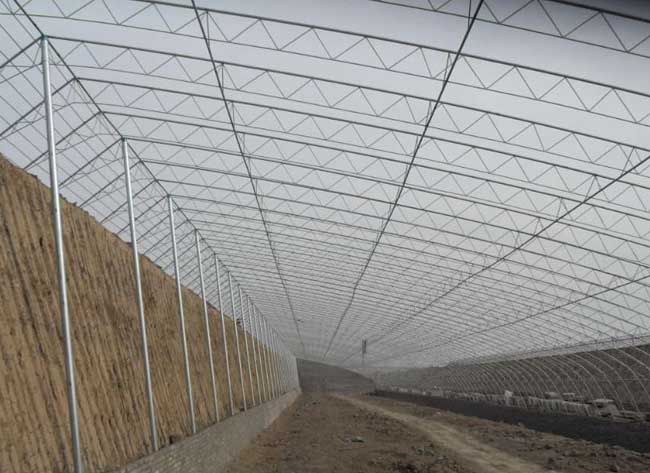
In appearance, broiler chicken greenhouses are similar to vegetable greenhouses. The chicken house usually faces south, with a span generally of 8 to 10 m. The east, north and west sides are enclosed by brick walls about 15 m high; the walls are relatively thick and have many windows installed. The south wall of the chicken house is open, formed by equally spaced large wooden windows and wall piers connected together. The wooden windows are covered with semi-transparent plastic film, which provides both insulation and ventilation. The top of the chicken house is mostly single-slope, made from relatively long bamboo poles and thick iron wire forming a flat support frame, which is then covered with one or two layers of plastic film, with grass on top or wheat straw inserted as a heat-insulating layer. Inside the chicken house there are varying numbers of wall piers supporting the entire roof.
Advantages of Broiler Chicken Greenhouse Farming
1. Low investment and quick results: At present, building a greenhouse for raising 1000-1500 meat chickens requires an investment of only about 2000-3000 yuan, and its cost is only 1/5-1/4 of that of a brick-and-tile chicken house. Generally, raising 2 batches of broilers in each chicken shed is enough to recover the entire investment in the shed.
2. It can provide a better growing environment for broilers: In winter, the "greenhouse warming effect" of the plastic film can raise the shed temperature, save energy and improve feed conversion efficiency. In summer, covering the top of the greenhouse with grass mats and straw has a good heat-insulating effect. When ventilating, open both sides and put up shade nets, which can achieve a very good heatstroke-prevention effect.
3. High shed utilization rate and great economic benefits: Greenhouse broiler farming generally uses deep litter floor rearing, with 8-12 birds per sq m, so the shed utilization rate is relatively high. At present, the domestic broiler rearing level has reached the point where birds can be marketed at 6-7 weeks of age. After marketing, 2 weeks are left to clean and disinfect the chicken house, so 5 batches can be marketed per year. Calculating at a net profit of 2 yuan per chicken, raising 1000 broilers per batch can yield a net profit of about 10,000 yuan for the whole year.
4. It requires a relatively high level of feeding management: Because broilers grow very rapidly, nutritional needs in all aspects must be supplied in a timely manner; otherwise, a deficiency in any aspect of nutrition will affect their growth and may even cause nutritional metabolic diseases. Therefore, broiler feed is required to use a complete compound feed, and feeding with pelleted feed gives the best results. At the same time, because the rearing density is relatively high, the requirements for the growing environment are relatively strict. If the feeding management level is relatively low, the flock is very prone to infectious diseases, such as coccidiosis, pullorum disease, colibacillosis, chronic respiratory disease, etc. This requires that when raising broilers, feeding management should be strengthened, efforts should be made to provide broilers with a good growing environment, and the market weight and survival rate of broilers should be improved, thereby obtaining relatively high economic benefits.
Construction Methods for Broiler Chicken Greenhouses
1. Selection of shed site: The shed site should preferably be chosen in a place with open terrain, good ventilation, close to a water source, uncontaminated soil, and far from major roads and noise. Any place meeting the above requirements, such as field edges, vacant village land, orchard vegetable plots, riverbank wasteland and slopes, can be used. This can provide broilers with a suitable living environment.
2. Building specifications: At present, the most commonly used type is the double-slope greenhouse, with a shed length of 2-30 m, a width of 7-8 m, running east-west or north-south, and a building area of 140-240 sq m, which can raise 1000-1500 broilers. Calculating on the basis of a 30 m long shed raising 1500 birds, about 200 bamboo poles about 4.5 m long, 20 bamboo poles about 8 m long, and about 2500 bricks are needed. In addition, an appropriate amount of thin rope, iron wire, wheat straw or grass mats should be prepared.
3. Greenhouse assembly
① Build brick walls at both ends of the greenhouse. Leave a door in the middle of one gable wall and ventilation holes on both sides. On the other gable wall, leave only ventilation holes or install windows, and also leave 1-2 smoke stove pipe holes for use during brooding or heating. Between the two brick walls, bury one row of upright posts every 2 m, with 1 post in the middle (at the same height as the top of the shed) and 2 posts on each of the left and right sides (of which the outer 2 posts are at the same height as the outer side of the shed), totaling 5 posts, so there are 5 rows of longitudinal posts. Connect the tops of each row of longitudinal posts with 8 m long bamboo poles to form the longitudinal support frame of the greenhouse. Then use groups of 4.5 m long bamboo poles, bind them firmly at the joints, and at horizontal intervals of 30-40 cm bind them around the longitudinal posts to form the transverse support frame at the top of the greenhouse. In this way, a complete greenhouse support frame is built.
② The plastic film should be glued in advance according to the length and width specifications. When covering the film, choose weather without wind or rain, and lay the film directly on the shed frame. Then cover the plastic film with 10-20 cm thick wheat straw or other weeds (to prevent the grass from sliding down, it can be covered with a plastic net). On top of that add another layer of grass mats or oiled felt paper, and fix it with iron wire crisscrossed and buried ground anchors. Install an adjustable exhaust vent with a diameter of 40-50 cm every 3-4 m on the top of the shed. Dig drainage ditches around the shed to facilitate drainage in the rainy season.
Preparation Before Using the Broiler Chicken Greenhouse
1. Thoroughly clean the equipment and dust inside the chicken house. For dirt floors, the surface old soil can be removed and replaced with new soil. Check and repair heating, lighting and other equipment in the chicken house, and eliminate fire hazards. Prepare fuel, light bulbs, lamp holders, etc. Drinking and feeding equipment should first be soaked and disinfected in 2% caustic soda solution for more than 12 h, then rinsed clean with clean water and dried in the shade for later use.
2. After the floor of the chicken shed is dry, spray and disinfect the floor inside the shed with 2.5% caustic soda solution. On the dry floor, spread clean, dry litter not less than 5 cm thick, such as chopped rice straw, wheat straw (6-10 cm), rice bran, peanut shells, etc. In the later period, dry sand can be used as litter. Evenly arrange all drinking and feeding equipment.
3. After sealing the chicken shed tightly, fumigate and disinfect it with formalin and potassium permanganate for 48 h. After disinfection, open the shed film, doors and ventilation holes for ventilation. Fumigation method: for a new chicken house, use 28 ml formalin, 14 g potassium permanganate and 14 ml water per cubic meter; for an old chicken house that has raised chickens, use 40 ml formalin, 20 g potassium permanganate and 20 ml water. First dissolve the potassium permanganate in a ceramic basin containing water, then pour in the formalin. The litter around the ceramic basin should be cleaned away. Note that plastic basins must not be used, otherwise fire is likely to occur.
4. Before introducing the chicks, there must be a preheating process of at least more than 24 h, so that the temperature inside the brooding shed is maintained at 32-35°C. In addition, sufficient warm boiled water should also be prepared.
Environmental Control of Broiler Chicken Greenhouses
1. Temperature: Throughout the entire rearing period, broilers have very strict temperature requirements. Experiments have shown that after 5 weeks of age, deviating from the suitable temperature by 1°C will reduce the body weight of each broiler by about 20 g by 8 weeks of age. The suitable temperature ranges for broilers are as follows: 34-35°C at 1-2 days of age, 32-34°C at 3-7 days of age, 30-32°C at 8-14 days of age, 27-30°C at 15-21 days of age, 24-27°C at 22-28 days of age, 21-24°C at 29-35 days of age, and maintained at about 21°C from 35 days of age to marketing. It should be noted that the temperatures listed above refer to the temperature at the height of the chickens' backs. Whether the temperature is suitable can be judged not only by observing the thermometer, but also by observing the activity of the flock. When the temperature is normal, broilers appear lively, evenly distributed, with good appetite, appropriate drinking, not huddling during sleep, quiet, and no screeching sounds are heard. When the temperature is too high, the chickens are inactive, move away from the heat source, open their mouths and pant, reduce feed intake and reduce water intake, and diarrhea often occurs. Long-term deviation will lead to slow growth and development and lackluster feathers. When the temperature is too low, broilers actively move closer to the heat source, emit continuous screeching, are restless during sleep at night, easily huddle, and may even be crushed or suffocated to death. Enough attention should be paid to this.
2. Humidity: The suitable relative humidity range for meat-type young chickens is 50%-70%. Generally, before 10 days of age, a higher humidity is required, up to 70%, which is beneficial for promoting the absorption of yolk in the abdomen of chicks and preventing chick dehydration. After 10 days of age, the relative humidity should be lower, and can be maintained at about 65%, which is beneficial for keeping the shed dry and preventing coccidiosis caused by damp litter.
3. Lighting: The purpose of lighting is to extend the feeding time of broilers and promote their growth rate. One lighting schedule is 23 h light and 1 h darkness every day throughout the entire rearing period; using this method can increase the mortality rate of broilers in the middle and later stages. At present, the following lighting plan is generally used: 24 h light at 1-2 days of age; 16 h light and 8 h darkness at 3-42 days of age; 23 h light and 1 h darkness after 43 days of age. This lighting plan neither affects broiler growth nor improves the survival rate. The principle requirement for light intensity is to change from strong to weak: 3.8 w/sq m at 1-7 days of age, 3.2 w/sq m at 8-42 days of age, and 1.6 w/sq m after 42 days of age. Stronger lighting in the early stage helps chicks become familiar with the environment and fully eat and drink. In the later stage, strong lighting is harmful to broilers and hinders growth, while weak light can keep the flock quiet and is beneficial to growth and development. In addition, in order to distribute light intensity evenly, do not use bulbs above 60 w. It is appropriate for lamps to be 2 m high and 2-3 m apart.
4. Rearing density: Whether the broiler rearing density is reasonable has a great bearing on raising broilers well and fully utilizing the chicken house. When the rearing density is too high, the air quality in the shed declines, infectious diseases are triggered, and the flock becomes crowded, competing for feed, resulting in uneven body weight development. In summer, it easily causes heatstroke and death in the flock. When the rearing density is too low, the utilization rate of the shed is low. The rearing density of broilers should be determined according to different ages, seasons, temperatures and ventilation conditions. For example, in summer the rearing density can be smaller, and in winter larger. The following rearing densities (per sq m) can be used for reference: 40 birds at 1-7 days of age, 30 birds at 8-14 days of age, 27 birds at 5-21 days of age, 21 birds at 22-28 days of age, 18 birds at 29-35 days of age, 14 birds at 36-42 days of age, 10-11 birds at 43-49 days of age, 9-10 birds at 50-56 days of age.
5. Spring and autumn: Spring and autumn are the best seasons for raising broilers in greenhouses. The average ambient temperature in these two seasons is about 10-25°C, and the relative humidity is between 60% and 70%. By taking appropriate measures, the temperature inside the greenhouse can be relatively easily controlled within the range of 18-23°C and the relative humidity controlled at about 60%, providing the best environment for broiler growth. Generally, this can be achieved by adjusting the degree, direction and time of opening and closing the film. In spring and autumn, generally from 10:00 to 15:00 each day, when the outside temperature reaches above 20°C, the film on all four sides can be fully opened for ventilation, which is beneficial for lowering the temperature inside the shed and evaporating moisture from the litter. From 2:00 to 4:00 each morning, when the external ambient temperature is relatively low, the shed film can be partially closed.
6. Summer: In summer, the outside temperature is relatively high day and night, so effective heatstroke-prevention and cooling measures must be taken; otherwise, it easily leads to heatstroke and death of broilers, especially those close to marketing. When the weather is hot in summer, in addition to opening the shed film on all four sides and all ventilation holes, doors, windows, etc., several electric fans can also be installed for cooling. It is also possible to place 3-4 rows of plastic flexible pipes inside the shed with cool water running through them so that the chickens lie on them for cooling. Experiments have proved that this method is very effective in preventing heatstroke in broilers. In addition, combined with disinfection, the flock can often be sprayed with cool water, which also helps lower the shed temperature. In extremely hot weather, for broilers over 40 days of age, the rearing density should be reduced, generally not exceeding 8 birds per sq m.
7. Winter: In winter, the outside temperature is relatively low, with the average temperature often in the range of 0-10°C, and the lowest can reach minus 10°C. However, the temperature inside the shed is generally required not to be lower than 18°C. To achieve this goal, first, a row of protective enclosure about 2 m high can be built with bricks or straw at around the 1 m line of the shed to block the invasion of cold north wind into the greenhouse. Second, all shed film should be closed. When there is sunlight, the grass mats on about 0.9-1.0 m of the front slope of the east and west sheds should be lifted; for north-south sheds, lift the mats on the east side early and lift the mats on the west side in the afternoon, which helps raise the temperature inside the shed. At night or in rainy, cloudy and snowy weather, the shed can be fully closed, and if necessary, 1-2 stoves can be lit to raise the temperature inside the shed. In addition, the broiler rearing density in winter can be increased to 10-12 birds/sq m, which is also beneficial for raising the temperature inside the shed. Another problem that is not easy to handle in winter broiler rearing is the removal of harmful gases inside the shed, because excessive ventilation is not conducive to heat preservation inside the shed. Solutions: First, make full use of the exhaust vents on the top of the shed and the gable walls on both sides. During the day when there is sunlight and the temperature rises, open the exhaust vents. Second, frequently replace contaminated litter with dry sand, which is beneficial for maintaining the temperature inside the shed and preventing the production of harmful gases.
8. Control of brooding temperature: The temperature required for brooding is relatively high. The end of the greenhouse without a door can be isolated (about 1/5-1/4 of the total area), with film used as a partition in the middle, and 1-2 stoves (smoke pipe diameter 14-18 cm) lit inside to raise the temperature for brooding. If conditions permit, underground flues can also be used for heating. As the age increases, the temperature requirement gradually decreases and the rearing area increases. The temperature can be gradually lowered as required, the rearing area expanded, until the partition film is removed.
Broiler Chicken Greenhouse Farming Techniques
1. Drinking water: When chicks are first brought into the brooding shed, they should drink water first and then be fed. Within 3-5 days of age, it is best to give warm boiled water, and the water temperature should be consistent with room temperature. After that, change to cool water, which can stimulate the appetite of chicks. Except when water restriction is needed for medication and epidemic prevention, the water supply must not be interrupted. The quality of drinking water is required to be fresh, clean and hygienic. Drinking fountains should be cleaned every day and disinfected regularly.
2. Feeding: When chicks have just arrived, feed them 2 h after drinking water. During the first 5-7 days of age, feed can be scattered on clean newspapers, plastic sheets or rearing trays for the chickens to eat. To save feed and reduce waste, from 4-5 days of age, feed buckets should be gradually added, and after 7-8 days of age all should be changed to feed buckets. Except for the need for restricted feeding in the second week, at other times they are fed freely, that is, feeding as much as they eat. Implementing restricted feeding to 90% fullness in the second week can reduce the occurrence of sudden death syndrome in broilers without affecting later body weight. The number of feedings should be appropriate. Generally, feed 8 times a day in the first week, 7 times a day in the second week, and then 5-6 times a day until marketing. Generally, one feed bucket is needed for every 20-30 chickens. After the feed bucket is placed, its edge should be at the same height as the back of the broilers. Adding feed each time should not be too much, which can reduce feed waste and contamination. At present, broiler feed formulas are generally divided into three stages: starter feed for 0-3 weeks of age, grower feed for 4-5 weeks of age, and finisher feed for 6 weeks of age to marketing. It should be noted that when switching feed between stages, the transition should be gradual, with a 3-5 d adaptation period. Sudden feed changes easily cause relatively large stress responses in broilers and cause disease in the flock.
3. Disease prevention procedures for greenhouse broilers
① Immunization program: At 4-5 days of age, inject 0.25 ml per chicken of inactivated oil-emulsion vaccine against kidney-type infectious bronchitis intramuscularly. At 7-9 days of age, use Newcastle disease virus strain IV vaccine plus infectious bronchitis H120 combined vaccine for eye dropping and nasal dropping once each (or at the same time subcutaneously inject 0.2 ml per chicken of Newcastle disease oil-emulsion inactivated vaccine in the neck). At 14-16 days of age, administer infectious bursal disease intermediate vaccine at one dose in drinking water, or infectious bursal disease freeze-dried attenuated vaccine at double dose in drinking water. At 26-28 days of age, administer infectious bursal disease intermediate vaccine at double dose in drinking water. At 31-33 days of age, administer Newcastle disease strain IV vaccine at double dose in drinking water (if Newcastle disease oil vaccine has already been injected at 7-9 days of age, this item can be omitted).
② Medication program: At 1 day of age, oral rehydration salts, Supu-14 or Ciyiduo in drinking water. At 2-6 days of age, Baibingxiao in drinking water, twice a day. Gentamicin 40,000 u/i in drinking water can also be used. At 8-12 days of age, doxycycline powder 0.005%-0.01% in drinking water. At 15-17 days of age, norfloxacin pure powder 0.005% in drinking water. After 15 days of age, use multiple anticoccidial drugs (such as maduramicin, robenidine, salinomycin, etc.) alternately, medicating for 7 d and stopping for 5 d. At 31-33 days of age: ciprofloxacin or enrofloxacin 0.005% in drinking water.