How to raise free-range native chickens? Detailed explanation of key breeding techniques
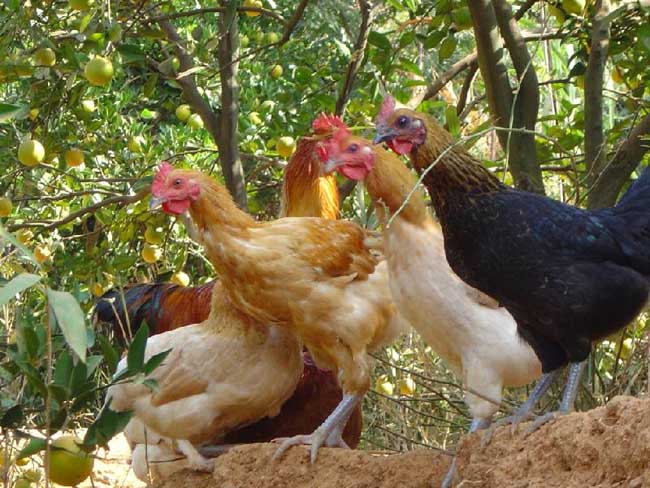
The characteristic of free-range native chickens is grazing, so when selecting breeds, it is advisable to choose native chickens or native crossbreed chickens that are suitable for grazing and have strong disease resistance. They tolerate coarse feed and have strong disease resistance. Although their growth rate is slower and their feed conversion ratio is low, their meat is delicious, the price is high, and the profit is large, so they should be the first choice for mountain rearing.
Construction of breeding sheds
1. Site selection: The site selection for free-range native chickens should follow the principles below.
① It should be conducive to epidemic prevention and also have convenient transportation.
② The site should preferably be chosen in a high, dry place with good drainage.
③ There should be shade facilities within the site to prevent heatstroke from exposure to the sun or colds from getting wet in the rain.
④ The site must have a water source and a power source, and be enclosed so as to prevent loss and the introduction of pathogens. A grassy slope that is sheltered from the wind, faces the sun, and has relatively flat terrain that does not accumulate water. It is best if there are trees, so the chickens can go under the trees to cool off.
2. Shed-building method: The design requirements for the chicken house are: ventilation, dryness, warm in winter, and cool in summer, and the orientation should preferably be north-south. Generally, the shed is 4-5 m wide, 7-9 m long, 1.7-1.8 m high in the middle, and 0.8-0.9 m high on both sides. Usually, three layers of felt, straw, and plastic film are used from the inside outward to cover the roof, for waterproofing and insulation. On both sides of the shed roof and at one end, sand, soil, bricks, and stones are used to press down the plastic film and felt, and an entrance is opened at the other end to facilitate the entry and exit of the keeper and the flock. The main supports of the shed are fastened firmly in four directions with wire to prevent the shed from being blown over by storms.
3. Shed cleaning and disinfection: After each batch of chickens is marketed, the chicken shed should be thoroughly cleaned, the surface soil on the ground replaced, and the tools washed. The ground and utensils inside the shed should first be disinfected by spraying and soaking with a 3-5% Lysol aqueous solution, and then fumigation disinfection should be carried out, using 25 ml of formalin plus 12.5 g of potassium permanganate per cubic meter of space. For grassy hills and slopes where chickens have previously been raised, a layer of lime should also first be spread on the ground, and then spray disinfection should be carried out. It is best to build a new shed on pollution-free grassy hills and slopes. Spread litter. Some litter material is needed for warmth. The litter should be fresh and uncontaminated, soft, dry, and highly absorbent, such as sawdust, small wood shavings, straw, and rice husks, which can be mixed for use. Before use, the litter should be sun-dried and moldy litter picked out. A thickness of 3-5 cm is appropriate.
Selection of feed for native chickens
Generally speaking, high-quality native chickens grow more slowly and have relatively low requirements for feed nutrient levels, but they should not be fed only a single feed, so as to avoid nutrient deficiency, which would affect growth and development and reduce the survival rate. High-quality complete pelleted feed or mixed feed for the native chicken series should be selected. In addition, miscellaneous grains such as pumpkins, sweet potatoes, and cassava grown in mountainous areas can be used to replace part of the mixed feed.
Feeding and management of chicks
The growth and development characteristics of chicks are poor body temperature regulation, fast growth, imperfect digestive function, poor disease resistance, strong sensitivity, liking to live in groups, and timidity. Therefore, the following points should be grasped well in feeding and management:
1. Drinking water and starting to eat. After chicks enter the brooding room, they can be given water after resting for half an hour to 1 hour. Generally, water is given before feed. The water temperature should preferably be around 32 degrees, and cold water must not be given. For the first 2 days, a dilute potassium permanganate solution can be given for drinking, which helps reduce inflammation, sterilize, and prevent pullorum disease in chicks. After chicks drink water, they can quickly pass meconium and this stimulates appetite. Generally, after the first drinking, they can start eating. Sprinkle the starter feed on light-colored plastic sheeting laid over the litter and let the chicks feed freely. Chicks have poor digestive ability, so they must be fed feed that is easy to digest and complete in nutrition. Two days after hatching, chicks have a strong appetite. When feeding, it should be done at fixed times and in fixed amounts, and generally feeding to about 80% full is appropriate. Overfeeding can cause indigestion; insufficient feeding will affect the growth and development of chicks and may even cause the vice of pecking. The amount fed each time should preferably be finished within 15-20 minutes.
2. Environmental temperature and humidity. The key to brooding is to give chicks a suitable temperature. Taking the temperature under the brooder as an example: at 1-2 days of age it is 34-35 degrees; at 3-7 days of age it is 32-34 degrees; in the 2nd week it is 30-28 degrees; in the 3rd week it is 28-26 degrees. In winter and spring, brooding temperatures decrease by 2 degrees each week, and in summer and autumn they decrease slightly by 3 degrees each week, until they drop to 21 degrees. As for the humidity requirements of chicks, the relative humidity in the 1st week is 70-75%, drops to 60% in the 2nd week, and after the 3rd week should be kept at a level of 55-60% as much as possible. Excessive humidity is favorable for the reproduction of pathogenic microorganisms and easily induces coccidiosis. Too little humidity and dryness will make chicks breathe faster, and a large amount of water in the body will be lost with breathing, the remaining yolk in the abdomen will be poorly absorbed, and the development of chicks will be affected.
3. Pay attention to grouping and strengthen inspection. Strong and weak chicks and sick chicks should be raised in separate groups. It is best to check weak chicks at the first feeding in the morning, when weak chicks are easily squeezed out. Chicks that are more seriously ill should be culled immediately. Frequently inspecting the flock has three meanings:
① Through observation, understand the palatability of the feed and the feeding amount;
② Timely discover, diagnose, and treat diseases from the chicks' eating, activity, and droppings;
③ Timely discover unexpected situations, handle them promptly, and reduce losses.
Feeding and management of growing chickens
Growing-period chickens grow quickly, have a strong appetite, and continuously increase their feed intake. The purpose of feeding is to allow the chickens to fully develop and lay the foundation for later fattening.
1. The feeding method is grazing combined with supplementary feeding. Generally, the following two points should be noted: raise male and female chickens in separate groups. Generally, chickens grow feathers relatively slowly and have a strong tendency to fight, and they have a relatively high utilization rate of protein and substances such as lysine in it, and high feed efficiency. Due to differences in endocrine hormones, hens gain weight slowly and have poor feed efficiency. Separate raising of males and females helps improve uniformity. During the growing period, timed supplementary feeding is used, placing the feed in troughs or directly scattering it on the ground, once in the morning and once in the evening, until they finish eating.
2. Deworming. Generally, after 20-30 days of grazing, the 1st deworming should be carried out, and after an interval of 20-30 days, the 2nd deworming should be carried out. This is mainly to expel internal parasites such as roundworms and tapeworms. Piperazine, levamisole, or albendazole can be used. For the 1st deworming, use half a tablet of piperazine per chicken. For the 2nd deworming, use 1 tablet of piperazine per chicken. It can be given directly orally at night, or the tablets can be ground into powder and then mixed evenly with feed for feeding. The drug must be mixed evenly with the feed carefully, otherwise drug poisoning is likely to occur. On the morning of the next day, check the chicken droppings to see whether worm bodies are expelled. The chicken droppings must also be cleaned up completely to prevent the chickens from eating the worm bodies. If adult worms are found in the chicken droppings, deworming can be carried out once the next night with the same dosage.
Feeding and management of fattening chickens
The fattening period is the period from 10 weeks of age to market. The key point of feeding in this period is to promote fat deposition in the chickens' bodies, increase the fatness of meat chickens, improve meat quality and the smoothness of feathers, and achieve timely marketing. In feeding and management, the following three points should be noted:
1. As the age of meat chickens increases, the main tissues growing in the body are very different from those in the middle chicken stage. Moderate fat deposition in meat chickens can improve the meat quality and enhance the aesthetic appearance of the carcass. In this period, the metabolizable energy of the daily ration should generally be increased and the protein content relatively reduced. The energy requirement for meat chickens in the fattening period generally reaches 12.54 megajoules per kilogram, and crude protein at about 15% is sufficient. In order to reach this level, it is often necessary to increase animal fat.
2. If grazing fattening is used during the fattening period, on the one hand it allows the chickens to eat insects, leaves, weeds, and so on in nature to save feed; on the other hand, it improves the meat flavor of the chickens, making the appearance and meat quality of the market chickens better. Upon entering the fattening period, the range of activity and exercise of the chickens should be reduced to facilitate fattening.
3. Do a good job in epidemic prevention and attach importance to insect killing, rodent control, and cleaning and disinfection work. To prevent the occurrence of diseases.