Detailed Analysis of Laying Hen Farming Costs and Profits
The Farming Cycle of Laying Hens
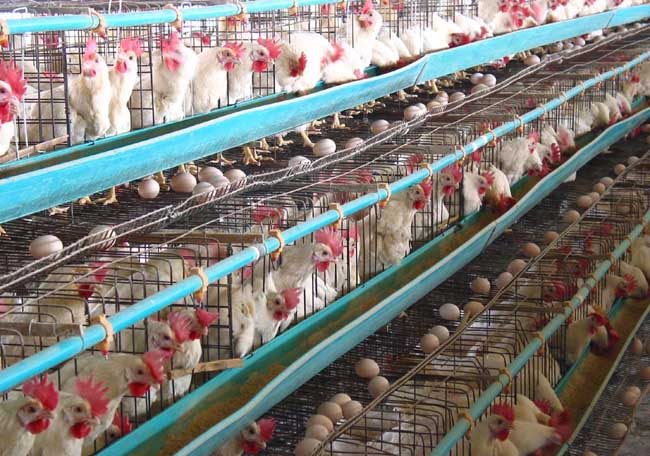
The farming cycle of laying hens (from newly hatched chicks to the final culling and sale) is generally 17 months, divided into two stages: the first stage is the growth period, i.e. from newly hatched chicks to the start of egg laying, generally 0-5 months, a total of 5 months; the second stage is the laying period, i.e. from the start of egg laying to the final culling and sale, generally 5-17 months, a total of 12 months.
Laying Hen Farming Cost Budget
The farming cost of laying hens generally includes the following aspects:
1. Chicks: According to surveys, the recent price of chicks in the whole city is around 3 yuan/bird.
2. Feed (feed cost = feed consumption × feed price): ① Consumption: During the brooding period (0-2 months), about 3.7 jin of feed is consumed. During the growth period (3-5 months), each chicken consumes about 0.17 jin of feed per day on average. From this it is calculated that each chicken consumes about 0.17×30=5.1 jin of feed per month, and each chicken consumes about 5.1×3=15.3 jin of feed during the growth period (3 months). During the laying period (5-17 months), each chicken consumes about 0.27 jin of feed per day on average. From this it is calculated that each chicken consumes about 0.27×30=8.1 jin of feed per month, and each chicken consumes about 8.1×12=97.2 jin of feed during the laying period (12 months). The growth period and laying period together consume about 3.7+15.3+97.2=116.2 jin of feed. ② Feed price: The price of feed purchased directly from manufacturers by farmers is generally around 1.18 yuan/jin, while some farmers mix their own feed, with a price generally around 1.13 yuan/jin. From this it is calculated that the cost of purchased feed = 116.2×1.18=137.116 yuan. The cost of self-mixed feed = 116.2×1.13=131.306 yuan.
3. Epidemic prevention fees: ① Growth period (0-5 months): In the absence of a major epidemic outbreak, the epidemic prevention cost per chicken during the 5-month growth period is generally about 2 yuan/bird. ② Laying period (5-17 months): In the absence of a major epidemic outbreak, the epidemic prevention cost per chicken during the 12-month period is generally about 1.5 yuan/bird. Therefore, the total epidemic prevention cost for one chicken in one farming cycle is about 2+1.5=3.5 yuan/bird.
4. Water and electricity fees: Since the methods of collecting water and electricity fees vary among the counties of the city, and many farmers have their own wells at home, water and electricity fees vary greatly. The average water and electricity cost per chicken in one farming cycle (17 months) is about 0.5 yuan.
5. Total cost (excluding labor cost): Without counting labor cost, the total cost of laying hen farming = chicks + feed + epidemic prevention fees + water and electricity fees. Calculated according to the cost of purchased feed: total cost = 3+137.116+3.5+0.5=144.116 yuan. Calculated according to the cost of self-mixed feed: total cost = 3+131.306+3.5+0.5=138.306 yuan.
Analysis of Laying Hen Farming Profits
1. Egg income (egg price × egg production): On average, each laying hen produces about 300 eggs in one farming cycle (17 months), and generally about 8 eggs make 1 jin, so the egg production of one laying hen in one farming cycle is about 300÷8=37.5 jin.
2. Income from culled hens: After 17 months, i.e. after 1 year of laying, laying hens are generally culled and sold. In May this year, the live weight price of culled hens was between 3.7 yuan/jin and 4.5 yuan/jin, averaging 4.6 yuan/jin. The average live weight of a culled hen is about 4.2 jin, and the average selling price of a culled hen = 4.6×4.2=19.32 yuan.
3. Income from chicken manure: In recent years, due to the heavy application of chemical fertilizers, which has caused serious soil compaction, many farmers have turned to using farmyard manure. The price of chicken manure has also risen, with the price per cubic meter ranging from 40 to 80 yuan, averaging 60 yuan. On average, every 300 chickens produce 1 cubic meter of chicken manure per month, i.e. each chicken produces about 1/300 cubic meter of manure per month. Then one chicken produces about 17×1/300=17/300 cubic meter of manure in one farming cycle (17 months). Calculated at 60 yuan per cubic meter, the chicken manure income per chicken in one farming cycle is 17/300×60=3.4 yuan.
4. Total revenue: Total revenue = egg income + culled hen income + chicken manure income. Then, egg income = total revenue - culled hen income - chicken manure income.
Calculation of the Egg Price Break-Even Point
At break-even, total cost (excluding labor cost) = total revenue. Then, egg income at break-even = break-even egg price × egg production = total revenue - culled hen income - chicken manure income. Therefore, the break-even egg price = (total revenue - culled hen income - chicken manure income) ÷ egg production = (total cost - culled hen income - chicken manure income) ÷ egg production.
1. Calculated according to the cost of purchased feed, the break-even egg price = (144.116-19.32-3.4)÷37.5=3.237 yuan/jin;
2. Calculated according to the cost of self-mixed feed, the break-even egg price = (138.306-19.32-3.4)÷37.5=3.082 yuan/jin.
From the above analysis, it can be seen that when farmers purchase feed, the egg price break-even point is 3.237 yuan/jin. When using self-mixed feed, the egg price break-even point is 3.082 yuan/jin.
Calculation of Farming Profits for Laying Hen Farmers
Now take a farmer who purchases feed to raise 10,000 chickens as an example to calculate the farmer's annual income situation. Since the feed is purchased, the egg price break-even point is 3.237 yuan/jin. Assuming the egg price is 0.1 yuan per jin higher than the break-even point, i.e. the egg price is 3.337 yuan/jin, then:
1. The income of one laying hen in one farming cycle (17 months) = 37.5×0.1=3.75 yuan (the average egg production of one laying hen in one farming cycle is 37.5 jin).
2. The income of one laying hen in one year (12 months) = 3.75×12/17=2.647 yuan.
3. The income of 10,000 laying hens in one year (12 months) = 2.647×10000=26470 yuan.
From this it can be seen that when the egg price is 0.1 yuan/jin higher than the break-even point, a farmer raising 10,000 birds can earn 26,470 yuan a year; conversely, if the egg price is 0.1 yuan/jin lower than the break-even point, the farmer will lose 26,470 yuan.
Finally, it should also be noted that the egg price break-even point is not fixed; it will adjust accordingly with the passage of time, changes in location, and increases or decreases in various farming costs and revenues on the market.