Do these few steps for roses, and they will bloom continuously, one flush after another, with a long flowering period and large blooms
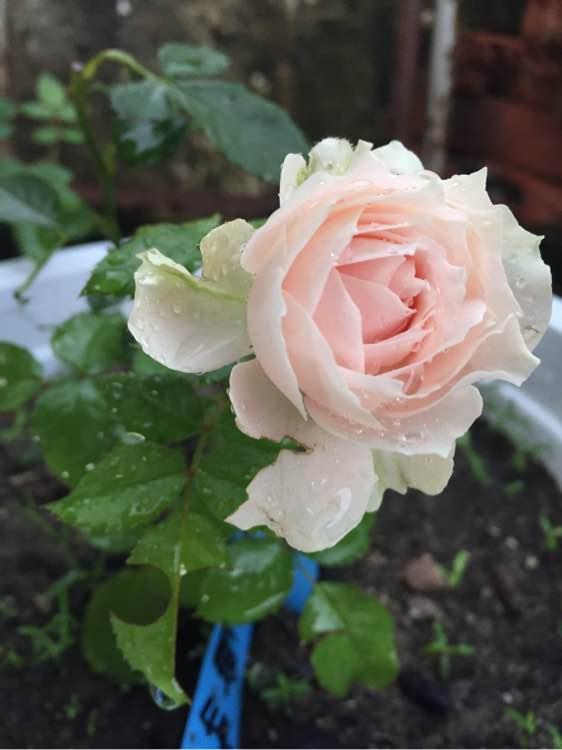
"People only say no flower stays red for ten days, but this flower knows spring every day" - this is exactly the ever-blooming, gracefully shaped rose. Roses are also called "monthly red," and in ancient times they were regarded as the "queen of flowers," blooming in all four seasons, with brilliant and rich colors and a graceful plant shape. There are many rose varieties, and they can be widely used for flower arranging, cut flowers, and decorating courtyards, making them very suitable for growing as ornamental flowers.
China is one of the places of origin of roses. Roses have extremely strong adaptability, with strong drought tolerance and cold tolerance. They like environments with plenty of sunlight and good air circulation, and are most suitably grown in slightly acidic sandy soil rich in humus.
Master the planting time.
Different rose planting methods need to be carried out at different times.
The grafting method mainly uses wild rose as rootstock, carrying out bud grafting or branch grafting. Relatively speaking, the survival rate of bud grafting is higher than that of branch grafting. Grafting should be done in August and September, when the climate is suitable and helps wound healing.
The sowing method is usually carried out in April, and transplanting is generally done in autumn or the following spring, but the germination rate of sowing is very low.
The division method is carried out in early spring or late autumn. Dig up the entire rose plant to be divided together with its roots, then transplant it along with the soil into a new flower pot or open ground.
The cutting method is the most commonly used, and also the simplest, most effective, and highest-survival-rate method, and it can generally be done in both spring and autumn. Cut one-year-old mature branches for cuttings and just keep the seedbed moist.
The layering method is also a method with a very high survival rate. It is generally carried out in summer. Bend the branch down, girdle and peel the part that needs to be buried in the soil, then bury the branch in the soil. After the branch grows new roots and sends out shoots, it can be divided.
The water cutting method also has a very high survival rate. This can generally be done in spring, summer, and autumn. In summer, pay attention to cooling measures.
Reasonable and appropriate fertilization is the key to blooming.
Roses also have a great demand for fertilizer. If roses do not bloom or bloom little and with small flowers, it is most likely caused by a lack of fertilizer.
The base fertilizer for roses should mainly be organic fertilizer. Fermented and decomposed cow, sheep, and pig manure, chicken, duck, and goose manure, bean dregs, and bean cake are all good base fertilizers. These fertilizers release nutrients slowly and last a long time, and can provide energy for roses over a long period.
In early spring, before roses sprout, apply a liquid fertilizer with a relatively high concentration once to promote flower bud germination. When fertilizing, be careful not to pour it directly on the roots, and water thoroughly once after fertilizing.
From sprouting in spring to before blooming, apply a dilute liquid fertilizer about every ten days to ensure the glossiness and texture of the leaves.
The first flowering period is around May, and no fertilizer should be applied at this time. After the flowers fade in June, apply a liquid fertilizer once, and apply a liquid fertilizer once in mid-September.
In early winter after the leaves fall, organic fertilizer can be deeply buried as fertilizer for overwintering. After that, do not fertilize again until the following spring.
Correct pruning is the only way to ensure continuous flowering.
After rose flowers grow out, carefully observe them and the nearby branches and leaves, and prune according to the principle of keeping one flower bud per branch. For thick, strong large branches, a few more can be appropriately kept. At the same time, part of the leaves around the flower buds can also be cut off to concentrate nutrients for the flowers.
Flowering branches after blooming must be pruned in a timely manner. Dry flower buds and branches and leaves are all targets for pruning. Weak branches and diseased branches should also be cut off together to reduce nutrient consumption and prepare for the next flowering period.
Summer pruning focuses mainly on preserving nutrients, with shaping as a secondary purpose. It should be light pruning, not heavy pruning. Just prune off spent flowers, overlapping branches, and leggy branches.
Rose pruning should be heavy pruning, mainly for shaping and maintaining a beautiful plant shape. For tree-form roses, with the main trunk as the center, keeping four to seven branches in pots is enough; for vine-form roses, keeping three main vines is enough. Prune according to shaping needs, mainly removing old, weak, and diseased branches, and avoid crossing and overlapping.