Key Points of Laying Hen Farming Technology and Daily Feeding Management Methods
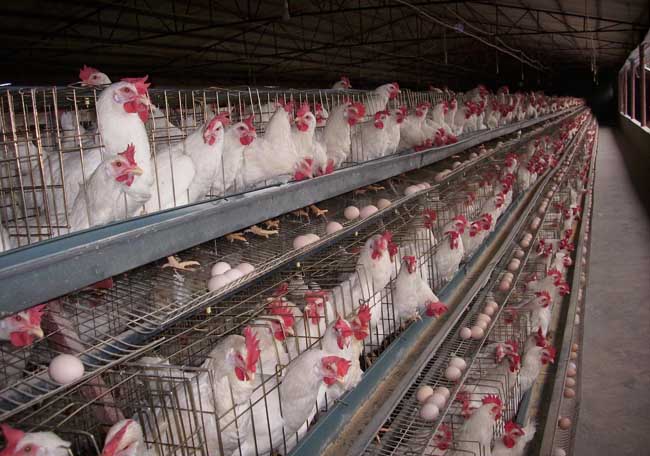
Laying hens are chickens raised specifically to lay eggs for egg supply. Eggs are the main source of income from raising laying hens. Unlike meat chickens, the main objective in raising laying hens is to improve egg quality and maintain or increase egg production, rather than improving meat quality. Scientific farming technology is the prerequisite for high egg production in laying hens.
Feeding and Management Technology for Laying Hens Before the Start of Laying
The weeks before laying are the transition period when hens move from the growing stage into the laying stage. During this stage, a series of tasks must be carried out, including transferring the flock to cages, selecting and culling, vaccination, feed switching, and increasing lighting, all of which cause great stress to the chickens. Moreover, during this period the hens undergo drastic physiological changes, are sensitive, have weak adaptability, and poor disease resistance. If feeding and management are improper, egg-laying performance can be easily affected. The following aspects should be noted in the feeding and management of laying hens before the start of laying.
1. Early Preparation for Transferring the Flock to Cages
The chicken house and equipment have a major impact on the health and production of laying hens. Before transferring the flock to cages, the chicken house and equipment must be overhauled, and the feeding system, drinking water system, power supply and lighting system, ventilation system, drainage system, and equipment such as cages and cage frames must be carefully checked. If any abnormality is found, it should be repaired promptly. The chicken house and equipment should be thoroughly cleaned and disinfected. The procedure is to sweep clean the manure and dust on the floor, roof, and walls of the chicken house and the dirt on the equipment, then rinse the chicken house and equipment clean with high-pressure water. After drying, spray disinfectant solution for disinfection, and also disinfect the items used. In addition, prepare the necessary tools, medicines, instruments, record forms, and feed, and arrange the feeding personnel.
2. Transferring Laying Hens to Cages
① Age at caging: Modern high-yield hybrid laying hens generally start laying at around 17 weeks, so they must be caged before 16-17 weeks of age, allowing the new hens to have a period of time before laying to become familiar with and adapt to the environment, form a harmonious flock order, and have sufficient time for vaccination and other tasks. If caged too late, the start of laying will be delayed, affecting the rise in laying rate. Hens that have already started laying may also stop laying due to strong stress such as transfer, and some chickens may even develop yolk peritonitis, increasing the number of deaths and culls.
② Selection and culling: Modern high-yield hybrid chickens are required to have good growth and development and to be uniform and even. If uneven, production performance will be seriously affected. When caging, cull chickens that are too small in body size, thin and weak, and disabled chickens with no rearing value according to breed requirements, and retain high-quality chickens that are lively, robust, and of suitable body weight.
③ Caging by category: Even with good feeding and management during the brooding and growing periods, due to factors such as genetics and feeding management, there will still be some smaller and larger chickens in the flock. If all are culled, costs will inevitably increase and cage space in the laying house will not be fully utilized. Therefore, when caging, keep the smaller and larger chickens and place them in different cages separately, taking special measures to strengthen management and promote uniformity. For example, chickens that are too small should be placed in cages on the south side and middle layer with higher temperature and sufficient sunlight, with appropriately increased nutrition to promote growth and development, while chickens that are too large should be appropriately restricted in feeding. According to the number of chickens each cage can hold, fill each single cage with the required number at one time to avoid chickens caged earlier bullying those caged later.
3. Vaccination of Laying Hens
Vaccination should be carried out before the start of laying. This vaccination is crucial for preventing disease outbreaks during the laying period. The immunization program should be reasonable and suited to the actual conditions of the farm; vaccine sources should be reliable, well preserved, and of guaranteed quality; the inoculation route should be appropriate, the operation correct, and the dose accurate. After inoculation, check the vaccination effect and conduct antibody testing when necessary to ensure the effectiveness of vaccination, so that the flock has sufficient antibody levels to defend against disease.
4. Deworming Treatment for Laying Hens
Deworming work should be done well before the start of laying. For chickens aged 110-130 days, use 20-40 mg of levamisole or 200-300 mg of piperazine per kg of body weight, mixed into feed, once a day for 2 consecutive days to expel roundworms; use 100-200 mg of bithionol per kg of body weight, mixed into feed, once a day for 2 consecutive days to expel tapeworms. When coccidial oocysts are heavily contaminating the environment, anti-coccidial drugs should be used continuously for 5-6 days after caging.
5. Lighting Control for Laying Hens
Lighting has an enormous impact on the reproductive function of chickens. Increasing light can stimulate hormone secretion and promote laying, while shortening light will inhibit hormone secretion, thereby inhibiting ovulation and laying. Through lighting control for laying hens, egg production balance is stimulated and maintained. In addition, lighting can regulate the sexual maturity of replacement pullets and make hens start laying uniformly, so lighting control before and after the start of laying is very critical. Modern high-yield hybrid strains already have the ability to start laying early, and appropriately advancing light stimulation to make new hens start laying earlier is beneficial for reducing feeding costs.
For flocks whose body weight meets the requirement or is slightly above the standard body weight, the lighting duration can be increased to 13 hours at 16-17 weeks of age, then increased by 20 minutes per week until the lighting duration reaches 16 hours. For flocks with lower body weight, light stimulation should begin at 18-20 weeks of age. The lighting duration should be increased gradually. If the sudden increase in lighting time is too long, it can easily cause prolapse of the cloaca. Lighting intensity should be appropriate, neither too strong nor too weak; too strong can easily cause feather pecking, while too weak will not achieve the stimulating effect. For new hens raised in enclosed houses, because the lighting intensity during the growing period was too weak, the lighting intensity before and after the start of laying should be 10-15 lux. For new hens raised in open houses, which are affected by natural light during the growing period and have strong light intensity, the lighting intensity before and after the start of laying should generally be maintained within the range of 15-20 lux; otherwise the lighting effect will be poor.
6. Feeding and Management of Laying Hens
Feeding before the start of laying not only affects the rise in laying rate and the duration of the peak laying period, but also affects the death and cull rate.
① Timely feed switching: Two weeks before the start of laying, the calcium deposition capacity in the bones is at its strongest. To enable high production in hens, reduce egg breakage rate, and reduce the occurrence of laying hen fatigue syndrome, the calcium content in the diet should be increased from 0.9% to 2.5% starting at 17 weeks of age, and when the laying rate reaches 20%-30%, switch to a laying hen diet containing 3.5% calcium.
② Ensure feed intake: Before the start of laying, free feeding should be restored, letting the chickens eat their fill, ensuring balanced nutrition, and promoting the rise in laying rate.
③ Ensure drinking water: At the start of laying, the chicken's metabolism is vigorous and water demand is high, so sufficient drinking water must be ensured. Insufficient drinking water will affect the rise in laying rate and cause more cases of prolapse of the cloaca.
7. Reducing Stress Responses in Laying Hens
① Reasonably arrange work schedules to reduce stress. The time for transferring the flock to cages and vaccination should preferably be arranged at night, and the movements for catching, transporting, and caging chickens should be gentle. Before caging, add feed to the troughs and water to the waterers in the laying house, and maintain appropriate lighting intensity, so that the chickens can immediately drink water and eat feed after being caged, and quickly become familiar with the environment. Keep the work routine stable, and provide a transition period when switching feed.
② Use anti-stress additives. There are many stress factors before the start of laying, so anti-stress agents can be added to feed or drinking water to alleviate stress. Commonly used ones include vitamin C, instant multivitamins, fumaric acid, and the tranquilizer chlorpromazine.
8. Hygiene of the Laying Hen Farming Environment
After caging, the chickens are unfamiliar with the environment, and a series of management procedures cause considerable stress to the chickens. As the laying rate rises, the chicken's metabolism is vigorous and resistance is poor, making them highly susceptible to pathogen invasion, so epidemic prevention and hygiene work must be strengthened. Prevent outsiders from entering the rearing area and chicken house; personnel entering must be disinfected; maintain hygiene of the chicken house environment, drinking water, and feed; carry out regular disinfection with chickens present and disinfection inside and outside the farm to reduce disease occurrence. In addition, pay attention to using some antibacterial drugs and Chinese herbal medicines to prevent the occurrence of colibacillosis and mycoplasmosis.
9. Strengthen Observation of Laying Hen Behavior
Observe the chickens' feeding, breathing, droppings, and the rise in laying rate, and solve problems promptly when found. Before and after the start of laying, chickens undergo drastic physiological changes, are sensitive and restless, and are prone to hanging their necks and wing injuries, so more patrolling should be done to detect and handle problems early to reduce deaths. Pay attention to observation, promptly identify chickens with prolapse of the cloaca, vent pecking, bullied chickens, and sick, weak, and disabled chickens, and pick them out for handling.
Feeding and Management Technology for Laying Hens During the Production Period
1. Phase Feeding for Laying Hens
The laying period of commercial laying hens is divided into three phases, with diets of different nutritional levels fed at each phase to meet their laying needs.
① Early laying period, from the start of laying to the peak of laying (40 weeks of age), with a laying rate greater than 80% (if raised well during the growing period, laying generally starts at around 20 weeks of age, reaches peak laying at 26-28 weeks of age, and remains above 80% until 40 weeks of age). During this period, the protein, calcium, and other nutritional contents in the diet should increase with the rise in the flock's laying rate. For light-breed laying hens, the crude protein content of the diet should be 18%, ME 2860 kcal/kg (at 29-35°C it should be reduced to 2640, at 10-13°C increased to 3080 kcal/kg), calcium 3.2%, and 3.4% in hot weather. Daily feed consumption per bird is 105 g. Ensure protein intake of 18.9 g (more important than the content indicator in the feed).
② Mid-laying period, the period after the peak of laying, with a laying rate of 70%-80% (40-60 weeks of age). During this period, the protein, calcium, and other nutritional contents in the diet should change with the flock's laying rate. For light-breed laying hens, the crude protein content of the diet should be 16.5%, ME 2860 kcal/kg (same as the early period), calcium 3.0% at 10-13°C, calcium 3.2% at 18-21°C, calcium 3.4% at 29-35°C. Daily feed consumption per bird is 104 g, ensuring protein intake of 17.2 g.
③ Late laying period, laying rate less than 70% (after 60 weeks of age). During this period, the protein, calcium, and other nutritional contents in the diet should change with the increase or decrease in the flock's laying rate. For light-breed laying hens: at 10-13°C, protein content 14%, ME 3080 kcal/kg, calcium 3.2%; at 18-21°C, crude protein content should be 15%, ME 2860 kcal/kg, calcium 3.4%; at 29-35°C, protein content 16%, ME 2640 kcal/kg, calcium 3.7%. Daily feed consumption per bird is 99 g. Ensure protein intake of 14.9 g.
There is also a two-phase feeding method: early laying period (from the start of laying to 42 weeks of age) and late period (after 42 weeks of age).
2. Properly Control the Age at First Laying
Using the fasting method during the sexual maturity period has a good effect on delaying the age at first laying of growing chickens, improving laying performance, and achieving high and stable production in the flock. The specific method is: starting from when the flock's laying rate reaches 5%, fast for 8-10 days.
3. Scientific Feeding Time and Frequency
To maintain the flock's vigorous appetite, there must be a certain period each day when the troughs are empty, to prevent feed from being stored in the troughs for long periods, which can cause chickens to develop the bad habits of anorexia and selective eating.
4. Timely Drinking Water
If the flock is deprived of water for 24 hours, egg production decreases by 30%, and it takes 25-30 days to return to normal. If the flock is deprived of water for 36 hours, egg production cannot recover to the original level. If deprived of water for more than 36 hours, some chickens will stop laying, leading to molting. Therefore, sufficient drinking water must be supplied in a timely manner.
5. Appropriately Feed Some Health Grit
Whether breeding chickens or commercial laying hens, grit must be regularly supplemented, especially important for caged chickens. The size of the grit should be moderate, preferably 4-5 mm in diameter. The feeding method is: for floor-raised chickens, grit troughs can be placed; for caged chickens, it can be mixed into the feed at a ratio of 0.5%.
6. Laying Hens Need Careful Care Before and After the Start of Laying, with Deworming and Epidemic Prevention Done Well
Epidemic prevention should be done well before the laying hens start laying; otherwise it will not only cause great stress to the flock but also affect the vaccine's effectiveness. Deworming should be arranged around 110 days of age.
7. Reorganizing the Flock Is Very Important
Before the laying flock starts laying, weak and small laying hens should be singled out for separate feeding to make the flock uniform and even, and to give special care to weak and small laying hens. At this time, beak trimming should be done once as appropriate.
8. Checking the Chicken Cages Is Indispensable
If laying hens are caged before the start of laying, the cages should be carefully checked, and any damage or deformation should be repaired promptly to prevent egg breakage. According to actual production findings, the egg breakage rate has remained high because of incomplete chicken cages.
9. Adjusting the Diet Is Essential
Around 110 days of age for laying hens, if their growth and development meet the standard, timely adjustment can be made, switching feed, and directly changing to laying feed (do not mix in shell powder at first). When 5% of laying hens are laying, feed a complete laying feed to meet the nutritional needs of the flock's egg production.
10. Increase Lighting Early
As the laying flock starts laying, lighting should be gradually increased. At the peak of laying, 17 hours of lighting is appropriate. Supplemental lighting in the early morning and evening is better, and lighting must not be reduced arbitrarily after the start of laying.
In addition, laying hens at first laying are highly excited and very nervous, so disturbing the flock and causing stress should be avoided as much as possible.
Management Technology for the Second Laying Period of Laying Hens
The laying rate and egg numbers in the second laying period of laying hens are slightly lower than in the earlier period. However, it can save a great deal of expense and trouble in purchasing chicks and brooding, and second-period laying hens generally have stronger disease resistance and lower mortality. If fed well, the feed-to-egg ratio is not much different. Overall, the economic benefits are still considerable. The utilization technology for the second laying period of laying hens is introduced as follows:
1. Forced Molting for Earlier Laying
Forced molting can bring laying forward by 3-4 weeks compared with natural molting. There are two methods:
① Starvation method: When the chicken's laying rate drops to around 30%, stop artificial supplemental lighting, stop feed for about 7 days but do not stop water, then for the next 9-10 days give each chicken 30-40 g of feed per day, then switch to free feeding of laying hen feed. In this method, a body weight loss of 20%-30% is appropriate for controlling molting.
② Chemical method: When 20%-30% of the flock is losing feathers, add 2%-3% zinc oxide to the chicken feed (3-4.5 g per chicken), and feed continuously for 10 days without stopping feed or water, with normal lighting. Both methods have good molting results.
2. Increase Egg Weight to Sell for More Money
The greater the body weight of chickens in the second laying period, the larger the eggs they lay. Therefore, from the late molting stage onward, feeding and management must be conscientiously strengthened, feeding a nutritious and comprehensive compound feed, appropriately limiting activity, and promoting weight gain and recovery, so that before resuming laying, body weight approaches or exceeds the weight before molting, laying the foundation for producing more large eggs in this period.
Hens in the second laying period have slightly higher feed requirements than in the first laying period. When laying rises, metabolizable energy should not be lower than 12.12-12.55 MJ/kg, and crude protein 18%-19%. The following feed formula can be used for reference: corn 62%, soybean meal 18%, wheat bran 5%, imported fish meal 7%, bone meal 1%, shell powder 7%, salt 0.4%, trace elements 0.1%, multivitamins 0.02%, and when laying declines, delay feed switching by 2-3 days until culling.
3. Feeding and Management Methods Should Be Changed
The focus of feeding and management in the second laying period is to create more laying conditions for hens, promote more laying and larger eggs. Feeding should be timed and quantified, fed 3 times a day, with 1 supplemental feeding of grain at night (such as corn, rice, sorghum, etc.). Each chicken should be fed no less than 120 g of feed per day, plus about 25 g of green feed. The chicken house temperature should be well regulated, preferably maintained at 10-25°C, warm in winter and cool in summer, with a comfortable environment. Lighting should be maintained at 16 hours per day and night. When supplementing artificial light, install one 25-40 watt incandescent bulb per 8-12 sq m. Density requirements should be appropriate: for floor (wire floor) raising, 6-8 birds per sq m is suitable; for cage raising, 3 birds per group is best. Strangers, dogs, cats, and rats should be prevented from entering the chicken house. During thunderstorms, someone should keep watch to strictly prevent flock panic, prevent sudden feed changes, and generally avoid transferring or merging flocks, as these will affect laying and cause losses. When used as breeding chickens, improved young roosters of the same breed should be introduced 2-3 weeks before incubation, which can increase the hatchability rate by about 10%.
4. Do a Good Job in Disease Prevention and Control
Before molting, hens that are low-yielding, weak, and frequently sick should be culled and removed. According to the farm's (household's) epidemic situation and immunization program, hens should be vaccinated and dewormed. Antibacterial and anti-inflammatory preventive drugs should be added to feed and drinking water regularly and alternately. Clean chicken house manure promptly, and commonly use 2% caustic soda water, 20% clear limewater supernatant, 30% hot plant ash water, or other chemical disinfectants for spray disinfection. Frequently add dry soil or fine sand as bedding, keep the air in the chicken house fresh and circulating, clean and hygienic, and deeply bury dead chickens, which can effectively control disease occurrence.
Management Technology for Laying Hen Farming in High-Temperature Seasons
The arrival of high-temperature seasons is again a serious threat to the poultry industry. When the rearing environment temperature exceeds 30°C, how to prevent chicken deaths caused by heat stress, increase feed intake, improve feed conversion, and raise the laying rate of laying hens.
1. Strengthen Heat Insulation and Cooling of the Chicken House. Investigations show that chicken houses built by most farmers are relatively simple, with small spans, low height, and poor heat insulation and cooling capacity. For this reason, a layer of low-priced asbestos tiles can be added on the roof, with a distance of about 20-25 cm between the asbestos tiles and the roof, which has a very good heat insulation effect and can also prevent rain. Apply limewater to the walls around the chicken house, which both disinfects and reflects light for cooling. Generally, the above measures can reduce the temperature by about 6°C. If there is no heat insulation setup, a roof sprinkler device can be used to lower the house temperature.
2. Do Good Greening Work and Create a Good Micro-Ecological Environment. Planting grass around the chicken house, without affecting ventilation of the chicken house, can effectively absorb solar heat radiation. Good greening can fully play its role in increasing humidity, lowering temperature, and regulating the microclimate of the environment.
3. Strengthen Ventilation and Prevent High Temperature and High Humidity. In hot and windless weather, when the house temperature exceeds 35°C, the chickens will suffer heatstroke. At this time, ventilation and cooling must be strengthened to facilitate heat dissipation from the chickens' bodies, improve the air quality in the house, prevent heatstroke, and reduce deaths. If conditions permit, use longitudinal ventilation, that is, ventilation along the longitudinal axis of the chicken house, with a wind speed generally of 76 m/min, and the cooling effect can reach 5-8°C. Secondly, maintain appropriate humidity. The most suitable humidity for laying hens is 60%-55%. When using water curtain cooling, note that if the relative humidity is greater than 72%, it is not conducive to heat dissipation from the chickens, and either too high or too low humidity can easily induce disease.
4. Reduce Rearing Density as Much as Possible. Reducing rearing density can reduce the chickens' own heat production, avoid stress from chickens crowding each other, help chickens dissipate heat, keep the chicken house quiet, and significantly increase feed conversion. For caged chickens, it is best not to exceed 15 medium-sized laying hens per sq m of cage bottom area. (Under good conditions, 5.3 birds per sq m on all-litter floor, 6.2 per sq m on net-and-floor mixed ground (40% litter floor, 60% net surface or slats), 8.3 per sq m on net and slat floor raising, and 20.8 per sq m for cage raising.)
5. Change Feeding Time and Reduce Disturbance to the Flock, Which Can Reduce Their Activity and Thereby Reduce Body Heat Production. If the flock encounters a major stimulus, it will be in a state of high tension, causing a large demand for vitamins in the body, thereby affecting its production performance and increasing mortality. At the same time, ensure a sufficient supply of fresh cool water throughout the day. This can avoid reduced feed intake and help chickens cool down.
6. Adjust the Feed Formula and Pellet Type, and Appropriately Supplement Anti-Heat-Stress Additives
① Adjust feed: Experiments have shown that after the house temperature reaches 30°C in summer, feed intake decreases by 1.5% for every 1°C increase, and when the house temperature exceeds 38°C, the chickens' appetite is completely lost. Therefore, while lowering the house temperature, feed with good palatability such as pelleted feed should be provided. For farmers who mix their own feed, they can reduce energy feed such as corn and oil by 5%, and replace part with cooked soybean powder to increase feed protein by 1%-2%, ensuring that laying hens still have enough protein for production needs even when feed intake is reduced. Appropriately increasing calcium such as crushed stone particles and shell powder can increase digestive function and eggshell thickness and reduce broken eggs. Supplementing vitamin C in the diet can significantly alleviate heat stress and increase the laying rate of laying hens by 9%, or adding 0.1-0.25% sodium bicarbonate to the feed can regulate the acid-base balance in the chicken's body, reduce the chickens' stress response to high temperature, and achieve normal production.
7. Remove Manure Regularly. Practice has shown that if manure is not removed for too long, a large amount of ammonia will inevitably be produced in the chicken house, and removing manure is especially important in high-temperature seasons. When the ammonia concentration in the house exceeds 30×10-6, laying will be affected. To provide a good production environment for the flock, manure must be removed regularly, the house environment improved, and the production level raised.
② Lighting management: According to the age of the chickens, the lighting duration remains unchanged. Set the light-on time in the early morning and the light-off time in the morning. This makes 80% of the daily egg production laid within 4-5 hours after lights-on, while during the high-temperature period at noon the chickens can drink freely and rest fully, reducing their activity. Do not turn on lights at night, so that the house temperature gradually drops and the chickens remain inactive, which can improve their ability to resist high temperatures.
Feeding and Management of Laying Hens in Autumn
After the impact of continuous high temperatures in the earlier period, chickens have reduced appetite, poor digestion, weak constitution, slow growth and development, low body weight, and laying hens show a decline in laying rate. After the weather turns cool in autumn, the following aspects should be noted.
1. Daily management. When feeding in the morning and evening each day, observe the flock's spirit, appetite, and droppings. Those with lethargy, poor appetite, and abnormal droppings must be further isolated and examined.
2. Strengthen nutrition. After the beginning of autumn, cold and warm air alternate. For hens that have been laying for a relatively long time, the body is fatigued, and if management is careless, they can easily stop laying and molt. At this time, the nutritional level of the diet should be increased, appropriately supplementing animal protein feed and multiple vitamins, and configuring enough troughs and waterers to ensure every chicken has a suitable position and eats and drinks enough.
3. Reduce the impact of climate change, keep the microclimate changes in the chicken house from fluctuating too much, and reduce the temperature difference between day and night. For meat chickens raised outdoors, when the daytime temperature is too high, drive the chickens to the shade of trees or into a cool shed; when the nighttime temperature is low, drive the chickens into the house.
4. Supplement artificial lighting. When natural light for laying hens is less than 12 hours, especially after late September, artificial lighting needs to be increased by 1 to 14 hours, supplemented in two sessions in the morning and evening, which is more convenient. As for meat chickens, lighting only needs to provide illumination convenient for feeding and drinking, and natural lighting is generally 8-14 hours per day.
5. Control density and reasonably divide groups. According to age, feeding, and ventilation conditions, the suitable density for general floor free-range raising is 30-25 birds per sq m for 1-20 days of age, and 20-15 birds per sq m for 21-40 days of age. Divide groups reasonably and promptly according to age and chicken house size.
6. The chicken house should be required to be dry and well ventilated. Keep the air in the chicken house fresh, with no peculiar smell.
7. “All-in, all-out” system. Generally, according to the capacity of the chicken house, the flocks in each house should be sold in sequence, and then the site should be left empty for three to five days. During this period, the entire chicken house and equipment and tools should be thoroughly disinfected, including disinfection of the environment around the chicken house.
Factors Causing a Decline in Laying Hen Egg Production
1. Environmental factors
① Changes in lighting program or lighting intensity: such as changing the light color at will, suddenly stopping lighting, shortening lighting time, weakening lighting intensity, irregular lighting time, sometimes long and sometimes short, sometimes early and sometimes late, sometimes on and sometimes off, forgetting to turn off lights at night, etc.
② Severely insufficient ventilation, no ventilation for a long time, etc.
③ Attacks from severe natural weather: lack of preparation or prevention in advance, suddenly suffering from heat waves, typhoons, or cold currents.
④ Long-term water deprivation: due to water supply system failure or forgetting to turn on the switch, causing long-term insufficient water supply or water deprivation.
2. Feed factors. Significant changes in feed composition in the diet or quality problems can cause changes in laying. For example, sudden changes in the types of raw materials in the diet, uneven feed mixing, moldy and deteriorated feed, replacement of fish meal and yeast powder, high salt content, too high stone powder addition, replacing cooked soybean cake with raw soybean cake, forgetting to add salt to the feed, etc., reduce the chickens' feed intake and cause indigestion. If the laying rate is normal and the chickens' body weight does not decrease, it indicates that the amount of feed given and the nutritional standards provided meet the physiological needs of the chickens, and there is no need to change the feed formula.
3. Flock illness. Acute and chronic infectious diseases can cause a sudden drop in the flock's egg production. For example, if the flock is attacked by a virulent strain of Newcastle disease, egg production often drops by more than 50%; infection with egg drop syndrome can reduce the laying rate by 20%-40%; if mixed with other diseases, the laying rate drops by more than 20%. In addition, infection of the flock with infectious bronchitis, infectious laryngotracheitis, fowl cholera, coccidiosis, colibacillosis, avian influenza, etc., will all cause a substantial drop in the laying rate.