A Detailed Guide to Turkey Farming Techniques and Feeding Management Methods
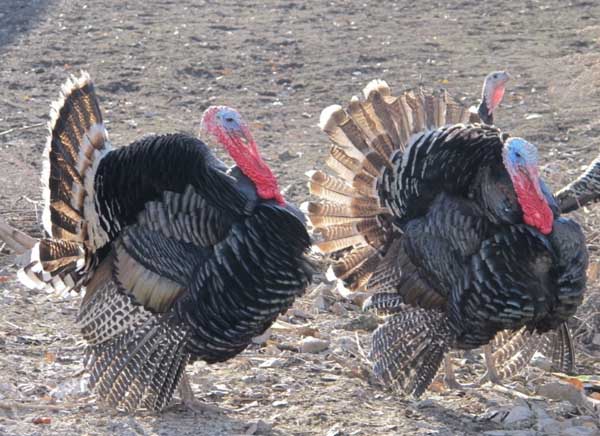
The turkey, also known as the bustard turkey, was first domesticated as poultry in the Oaxaca region of Mexico, roughly around the time of the European Neolithic period. Turkeys were introduced to Europe at the end of the 15th century, and were introduced to China even later. Similar to other birds of the order Galliformes, the female is smaller than the male and has duller plumage. The turkey's wingspan can reach 1.5-1.8 m, making it the largest bird in local open woodlands, and it is hard to confuse with other species. The farming techniques are described below.
Physical Appearance and Characteristics
Turkey feathers come in several different colors, including white, black, and gray. After turkeys reach adulthood, the feathers on the head and neck fall off and the skin is exposed, giving them an unremarkable look, yet they are proud and self-satisfied, and from time to time spread their tail feathers and wings as if hinting to people that they are better than domestic chickens and not inferior to peacocks. Turkeys have a unique appearance: a tall, sturdy body, a long and broad back, particularly well-developed chest and leg muscles, a bare head and neck, a fleshy cone above the nostrils, and a wattle on the lower part of the head.
When a male turkey is calm, the fleshy cone elongates and the wattle is light blue; when excited, the fleshy cone shrinks and the wattle turns bright red. Different breeds also have different plumage colors. Male turkeys have spurs on the shanks, a tuft of feathers on the chest like a bow tie, and well-developed tail feathers that fan out when excited. Female turkeys have a smaller head, a slender neck, an underdeveloped wattle that does not change color easily, no spurs on the shanks, and weigh only two-thirds of a male turkey.
Economic Value
The turkey's ancestral home is Mexico. The turkeys we farm today were gradually bred from wild turkeys. China has introduced many foreign breeds, but in actual farming practice, inbreeding has made many farmers' path to prosperity increasingly narrow, ultimately leading to farming failure. In 2005, turkey breeding experts collectively developed a new turkey breed——Baicao turkey, which is very suitable for farming in China, with a survival rate of over 95%. This marked a brand-new stage for China's turkey farming industry.
Turkey meat is tender and delicious with a good mouthfeel. Turkey meat has 20% more protein than other poultry, while its fat content is 21% lower, and its cholesterol content is low. Turkeys mainly eat grass, and their meat is tender, without gamey odor or off-smell, with no drug residues, and a pure, mellow, and tasty flavor. It suits both the high-end dining table and the needs of ordinary families, making it an excellent product that combines nourishment and fine food.
Living Habits
Turkeys have a gregarious living habit and strong flocking behavior, often foraging in groups of 30-50 in pastures or fields. Turkeys have strong adaptability and can adapt to various types of climate, tolerating both cold and heat. Turkeys are docile, quiet-loving, timid, and easily startled, and are very sensitive to changes in the external environment. If frightened, they will cause the turkey flock to become restless and call incessantly. Turkeys are also competitive and combative. Competing for female turkeys, rejecting outsiders, and fighting over tasty food can all become reasons for them to bite and fight each other.
Preparation Before Farming
1. Turkey site selection: An important principle for turkey site selection is that turkey production must not become a source of pollution for the surrounding environment, nor must it be polluted by other environments. The turkey site should be chosen in a high, dry, flat or slightly sloped area facing away from the wind and toward the sun. If the turkey farming method uses semi-grazing or requires a turkey exercise area, attention should be paid to ensuring the site has a clean water source and abundant forage. Now that we have a good living environment, we should build a warm and comfortable house for the turkeys.
2. Turkey coop construction: The construction of the turkey coop mainly needs to take temperature control and ventilation into account. It should be built on the principles of being economical and practical and conducive to sanitation and disinfection. Ordinary farmers can choose open-style simple sheds or semi-open coops, while farmers with the means can build more standard coops. The standard shape of the coop is similar to the tiled houses we humans live in, with attention to north-south ventilation, so it has the feel of a "slab building," and the turkeys also live comfortably. The coop area is 4 sq m, with a length and width of 2 m each. For ease of cleaning, a grid is built 20 cm from the coop floor. The grid openings are about 1.5 cm, just enough for chicken manure to fall through without damaging the chickens' claws. For convenient and hygienic feeding, feeding openings are made from wooden or bamboo strips, and troughs and water troughs are installed outside the openings. It is best to reserve an exercise area in front of the coop or have a free-range area where turkeys can feed freely. Now that we have a good house, we should add the necessities of life for these treasures.
3. Equipment required for turkey farming: Regarding insulation equipment, in actual farming practice we recommend using a heat channel or stove for heating. Incubation and brooding equipment mainly includes: incubators, brooding beds, brooding water troughs, feed troughs, debeakers, and so on. In addition, a turkey farm also needs some indispensable tools, namely feed mixers, disinfection sprayers, daily cleaning tools, and so on.
4. Feed preparation: Turkeys mainly eat grass in their daily life, so in feed selection we mainly choose green feed and concentrated feed.
① Green feed: Planting forage grass is the focus of the entire turkey feeding work. The green feed that turkeys like to eat is very wide-ranging; weeds, vegetables, leaves, water peanut, sweet potato vines, peanut vines, and so on are all good feed for turkeys.
② Concentrated feed: For concentrated feed we mainly choose corn, soybean meal, wheat bran, and so on. Special note: in actual feeding, chick-specific feed should be prepared.
Turkey Introduction
For turkey farming, you can introduce turkey poults. If you have an incubator, you can introduce turkey hatching eggs for incubation. Whether introducing poults or hatching eggs, they must be purchased from professional breeding farms.
1. Purchasing turkey poults: Turkeys are divided into breeding stock and commercial stock. Some farmer friends do not introduce stock from professional breeding sites and mistakenly buy commercial chicks as breeding chicks, ultimately ending in failure. When introducing stock from professional turkey breeding farms, turkeys are generally purchased in pairs of 1 male to 3 females, and those that are active should be selected; those that are listless should not be purchased.
2. Purchase of hatching eggs: Farmers who have their own incubators should also not be careless when buying hatching eggs, so as not to cause losses in future farming. These two eggs are one commercial egg and one hatching egg. This small one is a commercial egg, that is, an egg laid by a commercial chicken; it has already degenerated, the egg is small, and it can also hatch chicks, but the chicks it hatches are not necessarily healthy. For example, the one in my left hand is a hatching egg; it is from the parent generation, and the chicken hatched from this egg is of the parent generation. The chicks hatched from the eggs it lays are strong, healthy, and have a high survival rate.
3. Transport of turkey poults: After turkey poults are selected, they are generally packed in cardboard boxes. A complete package is 40 cm square and 20 cm high, divided evenly in the middle into 4 compartments, and each compartment can hold 1 male and 3 female turkey poults. Ventilation holes must be made around the box and in the lid to prevent turkeys from dying due to lack of oxygen during transport. Before loading, strict and comprehensive disinfection with disinfectant water must be carried out. Boxes containing poults can be stacked. During transport, it is enough to ensure normal ventilation.
4. Management after arrival: After the turkey poults reach their destination, they should rest fully and be supplied with enough clean drinking water and high-quality green feed, and be fed the next day. Within 7 days of the turkey poults' arrival, they should be fed the same feed as the original unit, and from the 8th day, the feed should be gradually changed to ensure the health of the turkey poults after transport. After the breeding turkeys have gone through the transition period, they can enter the normal feeding and management procedure. In order to cultivate affection with the turkeys and allow natural mating, we use cage housing for breeding turkeys in the farming method, generally housing them in cages at 1 male to 2 females. Male turkeys will mount female turkeys after 5-6 months of age, but mating after 8 months of age is better.
Feeding Adult Breeding Turkeys
Generally, the concentrated feed ratio for adult breeding turkeys is corn: 70%, bran: 10%, soybean cake: 20%, mixed and processed into concentrated feed for later use. Green feed is generally alfalfa grass; before feeding, the alfalfa grass is crushed and fully stirred with concentrated feed at a 1:1 ratio with water added. After mixing, as long as the moisture level is suitable, it is fine. If it is too dry, the feed will expand after the turkeys eat it, causing harm to the turkeys' bodies. Feeding is generally done 2 times a day, each time feeding about 3 liang of feed per turkey, once at 7 a.m. and once at 3 p.m. In addition, it is worth noting that the most important point in turkey farming is to maintain sufficient drinking water 24 hours a day.
1. Management of adult breeding turkeys: In addition to feeding, what is important for breeding turkeys is maintaining ventilation and hygiene in the coop. The coop should be frequently cleaned of manure to avoid breeding parasites that affect turkey health. The coop for breeding turkeys should be disinfected once every 3 days, and the disinfectant is generally prepared as an aqueous solution of benzalkonium bromide at a 1:300 ratio.
2. Turkey mating: Once breeding turkeys have adapted to your farm and the delicious feed, they will begin to bring you benefits, and the beginning of those benefits is the mating stage. Turkeys generally mate naturally, but to avoid inbreeding, we allocate breeding turkeys into groups when dividing pens. During the mating process, care must be taken not to disturb them, so as not to cause unsuccessful mating. Breeding female turkeys can be used for two years, and male turkeys can be used for 3-4 years. One phenomenon is very interesting: judging from farming practice, turkeys can truly be called loyal guardians of love; a female turkey that already has a mate will not allow other male turkeys to mate with her.
3. Management during the laying period: Generally, a female turkey can produce fertilized eggs two days after mating. To avoid damage to the laid eggs, we must specially prepare a soft, dry patch of soil for the female turkeys to lay eggs. Standardized farmers can place nesting boxes in the coop, and the nesting boxes can be baskets or cardboard boxes woven by farmers. Female turkeys begin their first laying cycle from 34 weeks of age, and the laying period is from January to September each year; after laying about 10-15 eggs, they will incubate them on their own. To make turkeys lay more eggs, it is generally not recommended to let turkeys incubate on their own; the eggs should be taken away at any time for artificial incubation. To prevent turkeys from going broody and not laying eggs, one analgin tablet can be chosen for the female turkey to swallow.
Turkey Incubation
1. Selection of hatching eggs: The quality of the hatching egg breed directly relates to the hatching rate and to the quality and survival rate of the chicks. Therefore, hatching eggs must be strictly selected before incubation. The hatching eggs are required to be oval-shaped, with light yellow shells and brown spots, and the shells should be neither too thick nor too thin, with no sandy texture, cracks, or damage on the surface, and the shell surface must remain clean. Hatching eggs are required to be over 90 g; eggs below 90 g cannot be incubated.
2. Storage of hatching eggs: Hatching eggs should be stored with the large end down. When set for incubation, they should be placed on the egg tray with the large end up. The storage temperature should be below 20°C. First store them at room temperature of 25-26°C for 1 day so the hatching eggs gradually cool down, then place them in a storage room at 12-16°C and relative humidity of about 75%. Hatching eggs should not be stored for more than one week; the shorter the storage time, the higher the hatching rate.
3. Disinfection of hatching eggs: Hatching egg disinfection uses the potassium permanganate disinfection method. Prepare a large basin of clean water, take a small amount of potassium permanganate, and put it into the water. Do not use too much potassium permanganate, so as to avoid excessive alkalinity and egg burning.
4. Artificial incubation: To increase the turkey laying rate, farmers are advised to use an incubator for artificial incubation. Using an incubator for incubation is basically the same as our traditional method of incubating chicken eggs in an incubator. It is worth mentioning that turkey eggshells are relatively thick. To help the turkey poults successfully break through the first line of defense in life, when incubation reaches 16 or 17 days, spray water once or twice every day, using a small spray bottle with a fine mist, and spray a little water at about 30°C. This can make the eggshell crisp and soft.
5. Incubation temperature: After turkey eggs are set for incubation, the temperature should be controlled at 38-38.4°C from days 1-18, 37.5-38°C from days 19-22, lowered to 37.2-37.5°C from days 23-25, and the chick hatching temperature from days 26-28 is 36.8°C.
6. Incubation humidity: The humidity in the early incubation period is 55%-60%, in the middle period 50%-55%, and at hatching it is raised to 65%-70%.
7. Candling: After turkey eggs are set for incubation, candle them on the 8th, 20th, and 25th days of incubation to check embryo development and promptly remove infertile and dead-germ eggs. When turkey eggs have been incubated for about 28 days, large numbers of turkey poults will break through the shell and hatch.
Feeding During the Brooding Period
Turkeys can be moved into the brooding room for brooding 2 days after hatching. The brooding period mainly refers to 0-8 weeks after turkey hatching. After hatching, turkey poults should have their own living space, so we prepare their own cribs for them. The bed dimensions are 150 cm long, 80 cm wide, and 100 cm high. A layer of hard plastic mesh is laid at a height of 60 cm, and water troughs and feed troughs are hung above the bed. The hanging height should be based on the standard that the chicks can just reach the food. A stove should be installed in the brooding room; the main function of the stove is to regulate the temperature and humidity of the brooding room.
1. Brooding room temperature: The temperature in the brooding room is maintained at 34°C in the first week, and then decreased by about one degree each week. If it is too high, the chicks drink more water, have loose droppings, open their mouths, and pant. If it is too low, the chicks huddle toward the heat source in piles and often make sharp cries.
2. Brooding room humidity: The generally suitable relative humidity in the brooding room is 55%-65%. If it is too low, excessive drinking can easily cause diarrhea, feathers grow slowly, lack luster, and toes become dry and shriveled. If it is too high, the chicks' feathers are dirty and messy, appetite is poor, and they are prone to disease.
3. Brooding room ventilation: When indoor ventilation in the brooding room is poor, the chicks show restlessness, inactive movement, dirty and messy feathers, poor appetite, poor development, and reduced disease resistance, and are prone to respiratory diseases.
4. Brooding room lighting: Light has a great effect on chick health. It can increase the chicks' appetite, promote metabolism, maintain normal bone development, and improve vitality. Therefore, more than 12 hours of light should be ensured every day. When there is no natural light, a 40-watt lighting lamp can be used for illumination.
5. Stocking density: Stocking density affects the normal growth and development of chicks. Just after leaving the hatching room, the stocking density is generally: 100 birds per bed, 80 birds after 5 days, and about 60 birds at 15 days.
6. Turkey debeaking: An important task for turkey poults on the 6th-7th day after hatching is debeaking. The purpose of debeaking is to prevent turkeys from pecking each other and developing feather-pecking vice. The debeaking method is to turn on the debeaker, hold the turkey poult with the left hand, place the right hand on the upper part of the turkey poult's body, press the upper and lower jaws of the turkey poult with the two index fingers, being careful not to let the turkey poult's tongue stick out, and then place the tip of the chick's beak into the debeaking hole to ensure safe debeaking. Note: the turkey poult's beak should be cut off by 1/3, not too long and not too short. If too long, the chick will become infected; if too short, the debeaking will have no effect at all.
Feeding Turkey Poults
Now that turkeys have come into this world, we must take meticulous care of them. In terms of food, we should feed them chick-specific feed. Because the temperature and humidity in the brooding room are relatively high, if too much feed is given at one time, the uneaten feed is prone to mold and spoilage, and the chickens are likely to get sick after eating it. Therefore, when feeding turkey poults, follow the principles of "feed little and add often" and "fresh feed," and feed an appropriate amount of feed multiple times a day.
Water management for turkey poults in the brooding room is also an important part of turkey farming. The drinking water for turkey poults must be clean and hygienic water at about 20°C. If the water quality is poor, it can also cause turkey poults to get sick. Keepers should replace the drinking water once every 4 to 6 hours to ensure the drinking water quality for turkey poults. The brooding work needs to be completed in 8 weeks.
Daily Feeding and Management of Growing Turkeys
After eight weeks, turkeys begin to enter the growing period. After the brooding period, the turkeys' physique and disease resistance are already relatively strong, ordinary temperature differences no longer pose much threat to them, and they are also easy to manage during farming. At this time, the farming method can adopt confinement, free-range, or a combination of both.
1. Free-range: In China, ordinary farmers can adopt the free-range method. For turkeys raised by confinement, attention should also be paid to cleaning the water troughs, and after cleaning, they can be disinfected with potassium permanganate solution. During grazing, turkeys can freely eat grass and insects to increase activity and save feed. Generally, turkeys are driven into the free-range area at around 7 a.m. and driven back at around 4 p.m. After a long time, the turkeys form the habit themselves. For free-range turkeys, feeding only requires feeding pelleted feed once a day and maintaining sufficient drinking water.
2. Confinement: In winter, turkeys are not suitable for free-range farming, and the coop should be sealed with plastic sheeting to begin confinement. The feed ratio for confined feeding is basically the same as that for breeding turkeys. Generally, the turkeys hatched from the breeding chickens we purchase are not recommended for use as breeding turkeys. They can only be sold as commercial turkeys. Commercial turkeys can be sold as commercial products after being raised for three to four months. At this time, the turkeys are tall and large; some breeds of turkeys can reach one meter in body height, and adult turkeys can weigh over thirty-plus kg.
Daily Management of Turkeys
The main daily management work for turkeys includes disinfection, disease prevention, and so on.
1. Do a good job of environmental sanitation: promptly remove various pollutants from the site, disinfect regularly, and choose disinfectants that are safe for humans and poultry, non-corrosive to equipment, and free of toxic residues. Outside personnel must undergo strict disinfection, especially the soles of their shoes. Cleaning and disinfection work at the farm is done 2 times a day, the first at around 7 a.m. and the second at around 4 p.m. For disinfection, use Chuangdao Classic Povidone-Iodine 1:300 aqueous solution and didecyldimethylammonium bromide solution 1:300 aqueous solution alternately to avoid developing drug resistance. Disinfect once, then clean, and then disinfect once more.
2. Prevent feed from becoming moldy: Because there is more rain and high humidity in summer, concentrated feed is very prone to mold, thereby causing turkey mold poisoning. Therefore, management personnel must be conscientious and responsible, use sunny weather to dry the feed, prohibit the use of moldy feed, and put an end to poisoning incidents. When using feed, it should be timed and rationed, given little and added frequently. Usually pay attention to group management, appropriate exercise, maintaining quiet, and attention to hygiene.
3. Disease prevention and control of turkeys: "With wealth of ten thousand guan, those with fur are not counted." Therefore, in the farming process, doing a good job of turkey disease prevention is very important. The common diseases of turkeys are mainly ordinary pecking injuries and Newcastle disease.
① For ordinary pecking injuries, we only need to use a cotton ball dipped in potassium permanganate to reduce inflammation at the wound.
② Newcastle disease is a common disease in poultry farming. As long as we do a good job of disease prevention, this disease can be avoided. We generally carry out disease prevention once a year: at 7-9 days of age, turkeys are given Newcastle disease strain IV vaccine 2 doses in drinking water; at 30 days of age, Newcastle disease strain IV vaccine 2 doses in drinking water; at 56 days of age, Newcastle disease strain I vaccine by subcutaneous or intramuscular injection.