What does the safety production management system for chicken farms include?
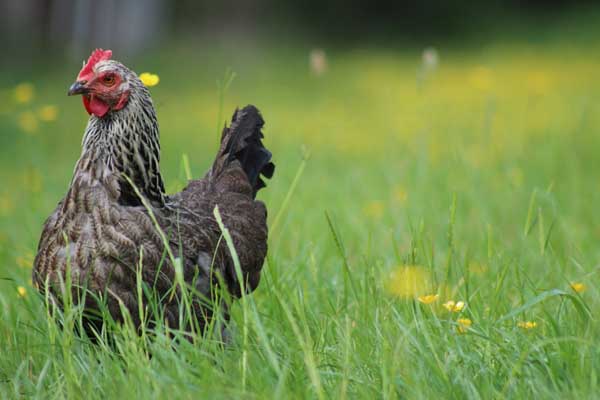
The main contents of the safety production management system for chicken farms include: technical training, chicken house cleaning and preparation, day-old chick reception, temperature control, ventilation, humidity, density, feeding, drinking water, lighting control, daily management, handling of dead chickens, disease treatment, culling of laying hens and daily records, etc. The details are introduced below.
Technical training
In the chicken farm, technical and production management personnel shall be reasonably allocated in accordance with the requirements of NY5043 "Pollution-free Food - Guidelines for Feeding and Management of Laying Hens", and all personnel shall implement a certificate-based (training certificate) employment system without exception. The farm shall regularly provide continuing training and education to production technical personnel on pollution-free food production management knowledge, etc., to effectively improve personnel quality.
Chicken house cleaning and preparation
The chicken farm adopts an "all-in, all-out" system. After a house of laying hens is transferred and culled, all equipment in the chicken house (including manure, diseased and disabled chickens and various tools, etc.) should first be removed, and then the chicken house and equipment should be washed and disinfected thoroughly. After the house has been empty for 14 days, put all clean tools into the chicken house, place them properly as required, and install the feeding equipment and drinking water equipment properly. For the automatic drinking water system (including filters, water tanks and water lines, etc.), use iodine tincture, Baidusha, chlorine preparations, etc. for soaking and disinfection, then rinse clean with clear water before use.
Day-old chick reception
Two days before receiving day-old chicks, the chicken farm shall heat the brooding house so that the temperature reaches 33-35degC, then fill the drinkers with water, and 3% glucose may be added to the water. After the chicks arrive, provide drinking water first, and start providing feed 2 hours later.
Temperature control
The temperature in the chicken house shall be maintained at 33-35degC in the first week, then may decrease by 2-3degC each week, and after 21 days the temperature shall be controlled at around 20degC. The exact temperature of the chicken house shall be determined according to the activity of the flock. The cooling process should not be too fast, so as to avoid chilling stimulation of the chicks, and the day-night temperature difference shall be controlled within 1degC.
Ventilation
It is necessary to ensure frequent ventilation and air exchange in the chicken farm to remove harmful gases. In winter, coal stoves are strictly prohibited for heating, to prevent carbon monoxide poisoning. Ventilation shall be done step by step: open the windows slightly when it is cool in the early morning and evening, and open them wide when it is hot at noon; open them slightly when it is windy, and open them wide when there is no wind. When entering the chicken house and smelling a pungent odor, open the windows promptly for ventilation, while also paying attention to ensuring the indoor temperature.
In the early stage of rearing, the focus shall be on heat preservation while also giving attention to ventilation; in the later stage, the focus shall be on ventilation while also giving attention to heat preservation.
Humidity
After the chicks arrive at the chicken farm, in the first 7 days, disinfection with chickens present or sprinkling water shall be done frequently to increase humidity, and the relative humidity shall be maintained at around 70%. After 8 days, keep the chicken house as dry as possible, and control the relative humidity below 50%. In winter, when the air is excessively dry, increase humidity through spray disinfection.
Density
In the early brooding stage, the rearing density may be higher. As the chickens grow, expand the group frequently to ensure that the flock can move around. Generally, at 1 day of age, 50 birds/sq m; at 20 days of age, 30 birds/sq m; at 40 days of age, 8 birds/sq m; at 120 days of age, they are concentrated and put into cages (three-tier full stair-step standard laying hen cages) for rearing.
Feeding
The feed used in the chicken farm shall meet the requirements of NY5042 "Pollution-free Food - Guidelines for Feeding Feed of Laying Hens". Multivitamin additives may be mixed into the feed, but additional drugs or medicated feed additives are not allowed. Under special circumstances, the drugs and medicated feed additives added must meet the requirements of NY5040 "Pollution-free Food - Guidelines for the Use of Veterinary Drugs in Laying Hen Feeding". During the laying period, the drug withdrawal period shall be strictly implemented, and feed containing drugs and drug additives shall not be fed. The amount of feed for the flock shall be determined according to need, ensuring that the feed is fresh and hygienic. Rearing personnel shall remove scattered feed and bedding materials in the feeding system at any time in daily work, and shall not feed the flock moldy, spoiled or insect-infested feed, etc.
Drinking water
The chicken farm shall fully adopt a circulating free drinking water supply system. In the first 10 days, provide warm water at 18-20degC. Rearing personnel shall brush and disinfect the drinking water equipment every day, and the disinfectants used shall be selected from Baidusha, bleaching powder, halogen, etc., which comply with the provisions of the "Veterinary Pharmacopoeia of the People's Republic of China". After disinfection, rinse the drinking water equipment thoroughly with clear water. Glucose or electrolyte multivitamin additives may be appropriately added to the drinking water; drugs and medicated feed additives shall not be added. Under specific circumstances, the medicated feed and medicated additives added must meet the requirements of NY5040 "Pollution-free Food - Guidelines for the Use of Veterinary Drugs in Laying Hen Feeding".
Lighting control
In the first 30 days, the chicken house shall use 24-hour lighting, and thereafter 23 hours of lighting per day. Lighting intensity: in the first 30 days, the lighting intensity shall be 20 lux or 5.4 watts/sq m; after 30 days, the lighting intensity may be reduced to 2.5-5 lux or 6-1.2 watts/sq m by reducing the power or number of bulbs. Try to use multiple low-power bulbs to ensure uniform lighting, and also regularly test the lighting intensity.
Daily management
Rearing management personnel shall carry out the routine "six checks and one handling" every day: first, check hygiene, to see the dirty and messy conditions inside and outside the chicken house; second, check ventilation, to see the ventilation conditions in the chicken farm; third, check disinfection, to inspect the disinfectant liquid in the disinfection pool and disinfection basin, so as to prevent it from expiring and becoming ineffective; fourth, check flock dynamics, to see whether the chickens' spirit, feed intake, etc. are normal; fifth, check feeding, to see the freshness of the feed, etc.; sixth, check egg production, to inspect the size, color, etc. of the eggs; and one handling, that is, promptly carry out harmless treatment of dead, diseased and culled chickens, etc.
Handling of dead chickens
When an epidemic disease occurs or is suspected to occur in the chicken farm, the following measures shall be taken in accordance with the "Animal Epidemic Prevention Law": promptly report to the official veterinarian stationed at the farm for confirmation, and report the epidemic situation to the animal epidemic prevention supervision agency in the locality as required. If a highly pathogenic disease is confirmed, cooperate with the animal epidemic prevention supervision agency to implement strict isolation and culling measures for the flock; when diseases such as Newcastle disease and tuberculosis occur, implement flock clearance and purification measures for the flock; the carcasses of dead or culled chickens, etc., shall, under the supervision of the official veterinarian, undergo harmless treatment in accordance with the requirements of GB16548 "Protocol for Harmless Treatment of Diseased Livestock and Poultry Carcasses and Their Products", and the chicken house and related sites, tools, etc. shall be strictly disinfected.
Disease treatment
When the flock develops a disease and needs treatment, under the guidance of veterinary technical personnel, select therapeutic drugs that comply with the provisions of NY5040 "Pollution-free Food - Guidelines for the Use of Veterinary Drugs in Laying Hen Feeding". Especially during the laying period, it is strictly prohibited to abuse drugs at will or in increased doses, causing excessive drug residues and affecting the quality and safety of egg products.
Culling of laying hens
Culled laying hens shall stop being fed feed 6 hours before sale, and the local animal epidemic prevention supervision agency shall be applied to for origin quarantine. Those that pass quarantine shall be marketed and traded with the "Origin Quarantine Certificate"; those that do not pass shall be promptly given harmless treatment to prevent the spread of the epidemic. Transport vehicles shall be clean, with no chicken manure or chemical waste, etc., and transportation shall be carried out with the "Animal Quarantine Certificate" and the "Transport Vehicle Disinfection Certificate".
Daily records
The chicken farm shall establish and improve a corresponding archive record system, recording the whole process (data) of the chicken farm, such as the date of chick arrival, number of chicks received, source, production performance, rearing personnel, daily production records such as date, age in days, number of deaths, cause of death, number in cages, temperature, humidity, epidemic prevention and quarantine, immunization, disinfection, medication, names of feed and additives, feeding amount, flock health status, egg production date, quantity, quality, sale date, quantity and purchasing unit, etc., timely and accurately into the archives. The record archives shall be filed uniformly and kept for more than two years.