Detailed Explanation of Key Management Techniques for Xinghua Chickens During the Breeding Period
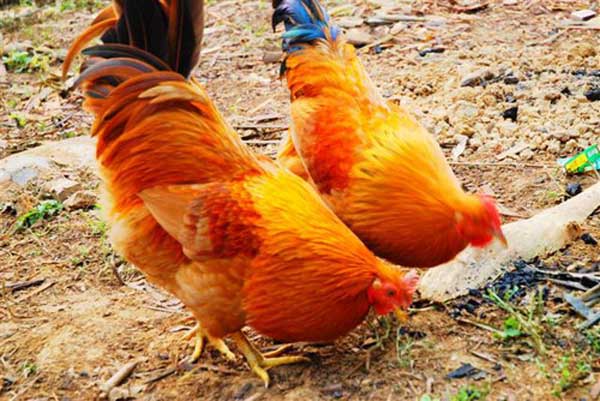
Xinghua chickens have the excellent characteristics of strong disease resistance, wide adaptability, and tolerance to both cold and heat. Their rearing conditions are relatively more extensive than those for fast-growing broilers. The chicken house structure can be a brick-and-tile building, iron-sheet building, asbestos-shingle building, or asphalt building.
Breeder House Construction and Stocking Density
1. Stocking density: for open-sided houses with cages, one bird per cage of 30 cm × 45 cm; for houses with litter on the floor, 6 birds per sq m.
2. Rearing methods: breeders are generally raised by three methods: floor rearing, pen-floor rearing, and cage rearing. In addition to the methods already described, there is also the deep-litter rearing method, which means that in a fixed chicken house, a 5-10 cm thick layer of litter is spread at the start, the breeders live on the litter and their droppings are also deposited on it, and fresh litter is frequently spread over the original litter afterward, with the litter and droppings cleaned out together only after a certain period. This method has the advantages of low investment, low labor intensity, and reduced broken-egg rate, but when this method is used in rainy regions, moisture-proofing must be done well to prevent the litter from becoming damp and filthy and inducing coccidiosis and respiratory diseases in the chickens.
(1) Rearing on hillside land is also a practical floor-rearing method. Its benefits are: ① Hillside land is found everywhere in rural areas, the land price is cheap, and it does not occupy cultivated land. ② The area is open and the air is fresh, which is conducive to the growth and reproduction of breeders. ③ The terrain is high and dry, clean and dry, and not prone to harboring dirt and filth, which is good for disease prevention. ④ The density is low, and it allows the breeders to take in various trace components, so feather-pecking behavior does not occur. ⑤ It can be combined with planting fruit trees on the hillside, achieving both poultry and fruit income.
(2) The cage-rearing method for breeders is also accepted and used by more and more chicken farms. Its advantages are: ① It increases the number of chickens raised per unit area by 50%. ② It reduces chicken house investment by 30% -50% per bird. ③ The laying rate increases by 10%. ④ The utilization rate of roosters increases by 2-3 times, and the male-to-female ratio changes from 1:8 to 1:25. ⑤ It reduces epidemics, because under cage rearing there are fewer opportunities for feather-pecking, mounting, and contact transmission. ⑥ Management is convenient and growth is uniform. ⑦ Roosters and hens can be fed feeds of different nutritional levels. ⑧ It reduces pen repairs and reduces fencing. ⑨ It facilitates injection, selection, and culling.
Feed Nutrition
The feed for breeder hens during the breeding period should contain 2750 kcal/kg metabolizable energy, 15% -16% crude protein, 2.8% calcium, 0.60% total phosphorus, 0.40% available phosphorus, and 0.37% salt; in terms of amino acids, it should contain 0.27% methionine and 0.60% lysine.
Feeding Methods
Dry mash feed is preferable for breeder feed; pellet feed is not suitable, because pellet feed has high nutrient density and small volume. When feed is supplied in a fixed daily amount, the breeders will quickly eat up these pellets, and there will be no feed left to eat at other times, which easily leads to feather-pecking, vent-pecking, and egg-pecking. If feed is not supplied in a fixed amount and the breeders are allowed to eat pellets freely, they will eat too much feed and suffer from excess nutrition, causing them to become overweight.
1. Feeding method: the daily feed can be given in two feedings, and the amount added each time must not exceed 1/3-1/2 of the feed trough; each time the chickens should completely finish the feed added, that is, there must be no leftover feed in the trough at the next feeding. This is because what is usually left after the chickens have selectively eaten is fine powder, which contains relatively more vitamins and amino acids; if there is often leftover feed in the trough that the chickens cannot finish, it easily causes a deficiency of some nutrient component.
① Feeding method when the flock begins laying: increase the feed amount before egg production rises. Within 2-3 weeks after egg production reaches 5%, increase the feed, with hens consuming an average of 80-85 g per bird per day, and at peak production it can be supplied at 90 g per bird.
② After the flock's peak laying period, adjust the feeding amount (reduce feed): after egg production begins to decline by 4% -6%, about 200 g of the daily ration per 100 chickens can be reduced within 3-4 days; if this causes an abnormal decline in the laying rate, the original feed amount must immediately be restored.
2. Water supply: when chickens do not drink enough water, feed is poorly digested, the blood becomes thick, and body temperature rises, all of which have extremely adverse effects on chicken health, growth, and egg production. After water supply is stopped for 24 hours, the laying rate of hens drops by 20%, and it is not easy to restore to normal. Therefore, supplying sufficient water that meets drinking standards is one of the key measures to ensure chicken health and high production. If trough-type drinkers are used, each chicken must have at least 2.5 cm; if round drinkers are used, there must be one drinker for every 60 chickens. In hot weather, such as when it reaches 32-38 °C, chickens need to drink about 2 times the amount they drink at 21 °C, so clean and fresh water should be supplied at all times, and the drinkers should be cleaned thoroughly every day.
3. Light intensity: reasonable lighting must reflect the following points.
① The total daily lighting hours during the breeding period must never be gradually reduced; instead, they should be maintained at a constant level or gradually increased on the basis of the lighting during the rearing period.
② Supplemental lighting for breeders must never be switched on and off erratically. Practice has proved that turning the lights off for one night will reduce the laying rate of breeders for several days afterward, and it takes 7-10 days to return to normal. Therefore, if power supply and daily switching of lights cannot be guaranteed, it is better not to provide supplemental artificial lighting at all.
③ Supplemental lighting must be timed accurately. It is more appropriate to maintain 16 hours of light per day for yellow-feathered breeders, and generally it should not be too long or too short.
④ The intensity of supplemental lighting must be moderate. For supplemental lighting of breeders, ordinary bulbs can generally be used, with one incandescent lamp installed every 3 m, 2 m above the ground, with a shade, and each bulb 60 or 40 watts. In addition to artificial lighting, the intensity during daytime natural lighting must be sufficient; generally it is not advocated to shade the chicken house with black cloth; on cloudy and rainy days, lighting should also be appropriately increased during the day.
⑤ The time for adding artificial lighting each day is generally to turn on the lights when it begins to get dark, until the required total number of hours is reached. For example, if the total daily lighting is required to be 16 hours, of which the breeders receive 12 hours of natural light from dawn to dark, then the lights need to be on for 4 hours at night, for a total of 16 hours of light.
Collection of Hatching Eggs
When raising breeders, eggs must be collected five times a day: the first time after starting work in the morning, when there are not many eggs but some were laid by individual hens after work yesterday; the second time at 10 a.m.; in addition, collect once more before the morning work period ends, once after the afternoon work period begins, and once before the afternoon work period ends, for a total of five times; if one collection can be made at 13:00, so much the better, as there are more eggs at that time and failure to pick them out promptly easily leads to egg-pecking vice.
Each time, collect the clean eggs first, then the dirty and broken ones, and place them separately. Eggs laid in the exercise yard or on the ground that are too filthy should all be discarded and not used as hatching eggs.
The collected hatching eggs should be handed in once a day, before the end of the afternoon work period; in hot weather it is best to hand them in once in the morning and once in the afternoon.
Prevention and Control of Abnormal Eggs
Abnormal eggs include abnormally shaped eggs, soft-shelled eggs, broken-shell eggs, and so on. Egg size is mainly determined by genotype and the laying age in months of the breeders, but small eggs can also be produced when the feed lacks methionine and essential fatty acids such as linoleic acid. When chickens are overstimulated by light or subjected to stress, the egg stays in the uterus for too short a time and is laid as a shell-less egg; nutritional imbalance can sometimes also produce shell-less eggs, and after laying such nutrition-deficiency shell-less eggs, breeders often subsequently develop weak and powerless legs. Incomplete or deformed eggshells are caused by abnormal peristalsis of the oviduct induced by adverse stimulation in breeders, or by certain diseases, such as pullorum disease, Newcastle disease, and infectious bronchitis.
The causes of a high broken-egg rate are deficiency of calcium or vitamins A and D, as well as imbalance of related nutritional components; it is also related to poor management, such as insufficient nest boxes, nest box bottoms that are too hard or have too steep a slope, and too few egg collections; in addition, when hens have the vice of egg-pecking, broken eggs also increase.