Detailed Explanation of Fly Maggot Chicken Farming Technology, Methods and Key Points of Feeding Chickens with Fly Maggots
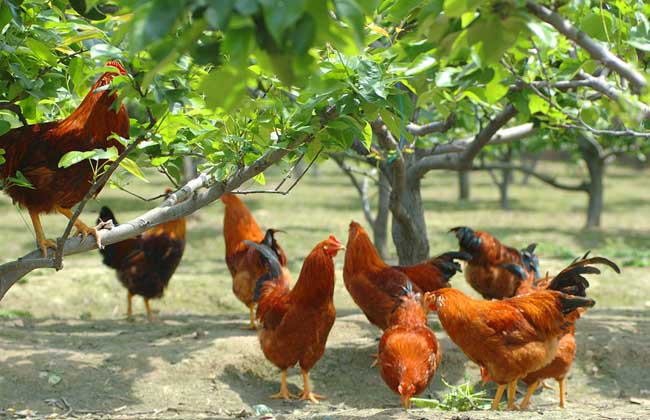
There are many methods of raising chickens, such as raising insect-fed chickens, orchard chicken farming, woodland free-range chickens, and so on. We should choose the appropriate type of chicken farming according to local geographical conditions, and also select varieties that are well-suited to the market according to local consumption characteristics. Here we briefly introduce fly maggot chicken farming technology.
1. Living Habits of Flies
At a temperature of 20-30, after 5 days of development, the pupa changes from soft to hard, from cream yellow, light brown, and dark brown to black, and finally the adult fly breaks out of the front end of the pupal shell. The newly emerged adult fly cannot fly, and after 1 hour it spreads its wings and begins to eat and drink. Adult flies are lively and active during the day and rest motionless at night. After 3 days they reach sexual maturity, and males and females begin to mate and lay eggs. From 1 to 8 days of age is the peak egg-laying period, and by 25 days of age they basically lose the ability to lay eggs. Fly eggs hatch into maggots in half a day to 1 day, and generally become pupae on the 5th day. One generation of flies is about 28 days. Temperature and the nutrients in the maggot feed have a great influence on the growth and development of maggots. Generally, within a room temperature range of 20-30°C, the higher the temperature and nutrients, the faster the maggots grow and develop, and the larger the pupae they become.
2. Rearing and Breeding of Breeding Flies
Breeding flies should be kept in a fly house. The size of the breeding fly house can be built according to need, or an old house can be converted. Glass and screen windows are installed on doors and windows to help regulate temperature, and fans are installed on the walls to regulate air. Heating equipment should be provided in the house to keep the winter temperature at 20-23°C, and the relative humidity in the house should be kept at 60%-70%. Black cloth curtains are installed in the passageways to prevent breeding flies from escaping. Rearing racks are set up in the house, divided into 3 layers: upper, middle, and lower. The rearing racks are made of iron or wood. On each layer of the rack, fly cages made of nylon mesh are placed. The cages are 100 cm long and 80 cm high. The breeding flies are kept in the cages for rearing, with 12,000 breeding flies per cage. Each cage is fitted with a cloth sleeve for adding feed, adding water, and collecting eggs. 12,000 adult flies are fed 20 grams of milk powder per day. The feed is placed in a feed basin with a gauze pad surface, allowing the adult flies to stand on the gauze and feed. Feed and water are changed once a day. Gauze is placed in the water basin, and wet wheat bran is placed in the egg-laying cage for the breeding flies to lay eggs. Eggs are collected once a day from the breeding fly cages and sent to the maggot house for maggot rearing. Breeding flies lay the most eggs from 8 a.m. to 3 p.m. each day, so the egg collection time should be appropriate. Each batch of breeding flies is kept for 15-20 days and then culled, killed with hot water or steam, dried and ground into powder as feed for livestock and poultry, and then a new batch is replaced. While producing fly maggots, the fly maggots pupate. There are 2 methods for obtaining new breeding flies. One is to let them pupate naturally and wash out the fly pupae with water; the other is to take out the fly maggots when they have been raised for about 5-6 days and turn yellow, prompting them to pupate.
Cultivation of Fly Maggots
For fly maggot breeding, a maggot rearing pool with brick sides 20 cm high and an area of 1-3 sq m can be used, or bamboo or wood can be used to build racks with plastic trays for maggot rearing. A plastic tray with a diameter of 50 cm can rear 1.5 kg of maggots, requiring only 3 kg of wheat bran, and they can be collected for use after 3-4 days of rearing. The sources of maggot rearing material are relatively broad, and different maggot materials have different costs, so they can be reasonably selected. Wheat bran has relatively high nutritional content and is also slightly more expensive, and is generally used to breed breeding flies. Low-priced distiller's grains, bean dregs, and the like can be used as material for commercial maggots. If wheat bran is used as maggot material, generally 1 kg of wheat bran can produce 0.5 kg of fly maggots. When using it, water should be added and mixed evenly. The suitable degree of dryness and wetness is that water comes out when squeezed by hand and the material breaks apart when touched (water content 60%-65%). If semi-dry and wet materials such as distiller's grains and bean dregs are used, they can be cultured without adding water. The specific maggot rearing operation method is to pour the laid eggs and wheat bran material into a tray, add maggot materials such as distiller's grains, bean dregs, or wheat bran, and mix slightly evenly. Note that fly eggs should not be exposed on the surface of the maggot material, so as to avoid loss of water and loss of vitality. The thickness of the maggot material is based on the standard that the fermentation temperature inside the maggot material is not higher than 40°C and not lower than 20°C, generally 5-10 cm. In summer, when the temperature is relatively high, the maggot material should be appropriately thinner; conversely, in winter, when the temperature is relatively low, the maggot material can be appropriately thicker. Human and livestock manure needs to be treated to kill bacteria and parasites before use. For the ratio of material to maggots, taking chicken manure as an example, generally 3.5-4.0 kg produces 0.5 kg of fresh maggots. Regardless of which raw material is used for maggot rearing, the dryness and wetness of the maggot material should be controlled at 60%-65%.
Collection of Fly Maggots
Collection is carried out by taking advantage of the fact that fly maggots are afraid of light. Use a manure rake to keep stirring the surface layer of the drinking water in the maggot rearing pool, and the fly maggots will burrow inward. Remove the surface layer of manure material. Repeat this method many times, and finally a small amount of manure material and fly maggots remain. The separated fly maggots can be directly used to feed livestock and poultry after washing, or dried at 200-250°C for 15-20 minutes for processing and storage.
Selection of Chicken Breeds
For fly maggot chicken farming, local native chicken breeds can be directly selected. They generally have relatively strong stress resistance and disease resistance, and whether raised in sheds or free-range or confined in orchards and fields, a relatively high survival rate can be obtained. When selecting chicks, choose male chicks that are all black or of other colors according to market demand, so as to ensure good sales and prices.
Feeding Methods
After fly maggots are taken out from the collected maggots and pupae, they can be directly fed to chickens after being rinsed with clean water, and the amount can account for 30% of the total feed. If the fly maggots are scalded to death with boiling water before feeding, the mixing amount can account for 40%. Because fly maggots have a relatively high protein content, other feeds should mainly be energy feeds such as cornmeal and wheat bran, and there is no need to add protein feeds such as soybean meal and fish meal.