What precautions should be taken when raising free-range native chickens in mountain forests?
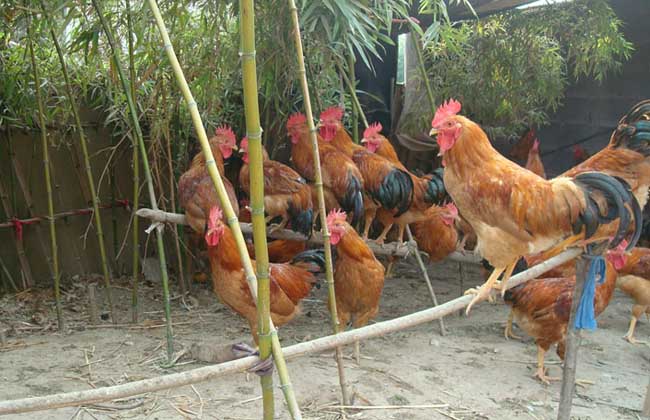
When raising native chickens free-range across a large area of mountain forest, the chickens can effectively control forest pests, and their droppings provide high-quality organic fertilizer for forest growth, saving costs on feed, fertilizer and pest and disease control, and forming a sound ecological cycle. The precautions for raising free-range native chickens across a large area of mountain forest are as follows:
The trees should not be too dense and lush. Too much shade is not good for the coloring of the chickens' combs (because appearance quality matters most when native chickens go to market). Choose a spot where the trees are relatively sparse, or thin out some trees to artificially improve the rearing environment.
When the mountain forest area is large, the vegetation in it is usually quite lush and the ecological environment is fairly intact, so it is inevitable that there will be predatory wild animals and birds of prey in the woods, such as wild cats, foxes, weasels, wild dogs and hawks. Preventive measures must be taken in this regard, and the pens should be built sturdy. Having a few chickens eaten by these animals is still a minor matter. Especially at night, if such a creature suddenly breaks into the chicken pen, the flock will be startled, leading to many chickens being trampled and crushed to death and causing unnecessary losses.
Do not assume that because the free-range woodland area is large, you can ignore the damage the flock does to the mountain forest's ecological environment. In fact, when the flock is too large or is kept for a long time, the damage it causes to the surrounding ecological environment cannot be ignored, especially in areas where the ecological environment has a poor capacity for self-regulation. After each batch of chickens is sold, the site should be given a proper rest period before the next batch of chickens is brought in, practicing rotational grazing. Of course, this requires building several more pens for rotational rearing. This not only reduces the flock's damage to the woodland ecology, giving the damaged ground surface time to grow small grasses and wild vegetables, allowing the vegetation to recover briefly and the ecological balance to self-regulate, but also provides a certain amount of green feed for the next batch of chickens.
At the same time, pay attention to chicken immunization and site disinfection. Do not assume that because the site is spacious you can neglect these most fundamental preventive measures. Once any one step is not done properly, the consequences that follow will cause you heavy losses and you will lose everything.