A Detailed Guide to Gamefowl Farming Techniques and Feeding Management Methods
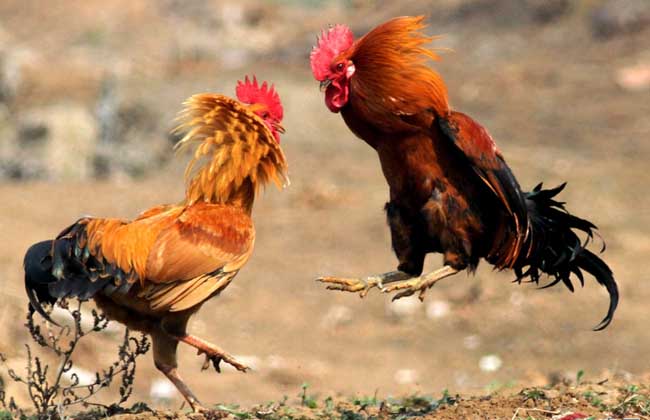
Gamefowl, also known as fighting chicken, biting chicken, soldier chicken, and so on, is a rare poultry breed famous for being good at fighting and combat. When two roosters meet, or when fighting over food, or when battling each other for a mate, they may disregard life and death and fight to their last breath. It is a chicken breed used for competition and entertainment, and it has very high farming prospects. Let us take a look at gamefowl farming techniques below!
Gamefowl Farming Techniques
1. Breeding superior stock: Male gamefowl are required to have a large body and strong bones, a thick and powerful neck, thick and tall legs, well-developed breast muscles, a bright red comb with a flat tumor-like shape, large and spirited eyes, close-lying feathers, a majestic posture, and a body weight of over 3.5 kg. Female gamefowl should have a well-proportioned structure, good development, be lively and active, have large and spirited eyes, and weigh over 2.5 kg.
2. Scientific feed formulation: Gamefowl grow quickly, are highly active, and consume a lot of energy, so the nutritional composition should be comprehensive, with crude protein above 23% and a complete range of essential amino acids. The feed formula for young gamefowl is 5% corn, 16% soybean cake, 5.5% sorghum, 8% fish meal, 2% shell powder, 1.5% bone meal, 0.5% salt, and 0.5% additives, paired with some green feed such as vegetable leaves.
3. Feeding management: Provide water and food at fixed times every day, and always keep sufficient clean drinking water available. Conduct regular running and fighting training. During running training, sandbags weighing 50-100 grams can be tied to the legs. Persist in 2 hours of fighting training and 1 hour of running training every day; only in this way can you train gamefowl with agile movements and tenacious combat ability. Gamefowl feed consumption is relatively stable. If feed consumption decreases, or if they only drink water and do not eat feed, it may indicate that the chickens have been infected with diseases. The cause should be identified as early as possible and treatment given early.
4. Do a good job of disease prevention: Only by keeping gamefowl in healthy physical condition can training and breeding be beneficial. Therefore, disease prevention and control work should be done well in spring. The coop must be kept clean. A 1:1000 dilution of Baidusha or Miejunling can be sprayed once a week for disinfection, and the disinfectant solution can be sprayed onto the gamefowl themselves. Feed troughs and water troughs should be scrubbed once a day with a 0.1% potassium permanganate solution, and vaccination against Newcastle disease should be carried out well.
Gamefowl Feed Formulas
1. 0-6 weeks: 69-71% corn, 24-26% soybean meal, 5% premix, 2% bran (or millet chaff).
2. 7-14 weeks: 69-71% corn, 18-20% soybean meal, 5% premix, 2% bran (or millet chaff), 1% shell (or stone powder) (fine).
3. 15-22 weeks: 67.5-69.5% corn, 16-18% soybean meal, 5% premix, 8% bran (or millet chaff), 1.5% shell (or stone powder) (coarse).
4. After 23 weeks: 71-73% corn, 14-16% soybean meal, 5% premix, 6% bran (or millet chaff), 2% shell (or stone powder) (coarse).
Precautions for Gamefowl Farming
1. Harmful gases: The gases most harmful to gamefowl are ammonia, hydrogen sulfide, and carbon monoxide. When these three harmful gases are found to be excessive, corresponding measures should be taken immediately, such as appropriately increasing ventilation and replacing litter, to reduce and eliminate harm to the chickens.
① Ammonia: This is a volatile and strongly irritating gas. If a large amount of ammonia is produced in the chicken coop, it will be noticed first upon entering. When the smell of ammonia is detected, it indicates that the ammonia level in the coop has long exceeded the standard.
② Hydrogen sulfide: Its specific gravity is greater than that of air, and it is a gas with a rotten egg smell, often accumulating on the ground. The closer to the ground, the higher the concentration. If the smell of hydrogen sulfide is detected slightly higher up in the chicken coop, it indicates that the hydrogen sulfide in the coop has seriously exceeded the standard. From these changes, it can be determined whether the air contains excessive hydrogen sulfide: the surface of copper utensils suddenly turns black. White precipitates appear on the surface of galvanized ironware. Black art pigment fades in color.
③ Carbon monoxide: This is an odorless gas. Especially in chicken coops heated with coal stoves, carbon monoxide poisoning of people and chickens should be prevented.
2. Temperature: In raising gamefowl, temperature is crucial. This is especially true for young chicks. The level of temperature can also be discovered by observing dispersion. When gamefowl huddle together and density is high, it indicates that the temperature is on the low side. When gamefowl move away from the heat source and scatter to the sides, it indicates that the temperature is on the high side. Checking the indoor thermometer can directly reveal whether the temperature is high or low. When the temperature on the thermometer does not match the actually required temperature, measures to raise or lower the temperature should be taken immediately, and the temperature must be controlled within the required range.
3. Ventilation: Whether ventilation is good is key to successful farming. In cold winter, when temperatures are low, people often focus only on keeping warm and neglect ventilation. When ventilation is good, gamefowl are lively and active, there is no peculiar smell in the coop, and it feels fresh and comfortable. Once gamefowl are found to be listless without disease, breathing with slight panting, and the coop has a strong peculiar smell and is filled with dust, ventilation and air exchange should be strengthened immediately. During ventilation, be careful that cold air does not blow directly onto the gamefowl.
4. Droppings: The droppings of normal gamefowl are thin and soft, in light gray strips, with a small amount of white urate on top. Once a change in droppings color is found or bloody droppings appear, it is a sign of disease. Infectious bursal disease and infectious bronchitis can cause diarrhea in chickens, with yellow-white droppings. When gamefowl suffer from Newcastle disease, they pass green and yellow-white watery droppings. The appearance of bloody droppings in the coop indicates that the gamefowl have been infected with coccidiosis. When the above abnormal droppings are found, the chicken that passed them should be found and isolated for treatment.
5. Humidity: Humidity should also meet standards. When humidity is high, microorganisms survive easily, and if it is accompanied by low temperature, the harm of low temperature is further increased. When humidity is low, the chicken coop is dry, and gamefowl are prone to respiratory diseases, especially chicks. A long period of dry environment can cause dehydration and weakness in chicks. Therefore, adjusting the humidity of the gamefowl coop should not be neglected either.
6. Number of dead chickens: During the growth of gamefowl, whether chicks, growing chickens, or laying chickens, a very small number of weak chickens may die every day for various reasons. This is a normal phenomenon. Under normal circumstances, the mortality rate of chicks should not exceed 0.05%, that of growing chickens should not exceed 0.01%, and that of laying chickens should not exceed 0.03%. If the number of deaths is found to be too large, attention should be paid.
7. Light: In addition to the need for light during brooding, laying chickens also need supplemental lighting. In addition, attention should be paid to the intensity of the light.
8. Sound: Under normal circumstances, chickens will not make abnormal sounds. When certain diseases occur, such as infectious bronchitis, chronic respiratory disease, and Newcastle disease, sick chickens will make coughing sounds.