Detailed Explanation of Key Technical Points for Free-Range Native Chickens on Barren Hills
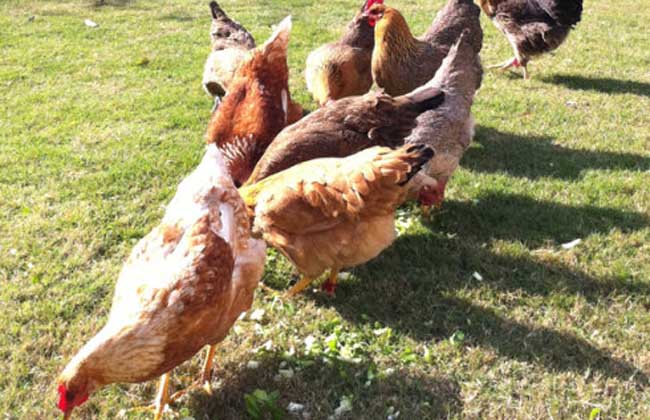
With rapid economic development, people's living standards are rising day by day, and dietary structures have undergone great changes, with increasingly higher demands for meat quality. Previous broiler chickens can no longer meet people's needs, and more and more consumers seek rural native chicken products with pure flavor, delicious meat, and safety and hygiene. Using barren hills for free-range native chickens not only requires small investment and is simple and easy to implement, but also helps improve chicken meat quality and flavor. Based on years of work experience and visits and surveys of chicken farmers on barren hills, combined with local actual conditions, the author has summarized the key points of free-range native chicken raising on barren hills for the reference of farmers.
Chicken Farm Construction
1. Site selection: Choose a certain area of barren hills, barren slopes such as hills, mountains, forest land, and grassy hills, far away from major traffic roads and residential areas, and with clean and sufficient water sources.
2. Construction of simple chicken coops: The chicken coop should be on high ground, sheltered from the wind and facing the sun, preferably facing south. To reduce fixed asset investment, a simple shed with a steel pipe structure can be built, and 5-10 cm thick bedding material should be laid inside the coop for the chickens to rest. Ventilation openings, doors, and windows should preferably be fitted with wire mesh to prevent birds and animals from intruding.
Breed Selection
Local native chicken breeds can be selected because they are small in size, quick to react, lively and active, good at flocking, able to adapt to the local climate and environment, and have strong disease resistance, making them suitable for free-range raising. In addition, native chickens have pure flavor and delicious meat, meeting public requirements.
Feeding Management
1. Feeding management during the brooding period: According to the local prevalence of chicken diseases, formulate a reasonable immunization program, and then strictly follow the immunization program to carry out vaccination work such as Marek's vaccine (vaccinate immediately after chicks hatch), Newcastle disease vaccine, and infectious bursal disease vaccine. After the chicks enter the brooding room, the brooding temperature should be controlled at 35-36 degrees C in the first week, then decrease by 2-3 degrees C each week, and generally the chicks can be taken off heat at 4 weeks of age. Provide drinking water and start feeding on time. At 1-5 days of age, add ofloxacin, mequindox, etc. to the drinking water to prevent pullorum disease; starting from 10 days of age, add albendazole, avermectin, anticoccidial drugs, etc. to the feed to prevent coccidiosis. Chickens like dryness and fear dampness, so humidity control is very important (excessive humidity easily breeds pathogenic microorganisms). It is recommended to use online brooding; if ground brooding is used, bedding material must be added and replaced regularly, and after taking off heat, it should be completely cleaned out at once and thoroughly disinfected.
2. Feeding management during the growing period: During the growing period, native chickens mainly eat green feed, with appropriate supplementation of concentrated feed. As long as the weather is sunny, the temperature is suitable, and the temperature difference between indoors and outdoors is not too great, the chickens can be released onto the open ground in front of the shed to move freely and forage, so as to maintain the natural flavor of the native chickens. At the same time, do a good job in training the chickens; for example, blowing a whistle during regular feeding can help the chickens form a conditioned reflex.
3. Feeding management of hens: Hens entering the laying period should receive enhanced lighting, with no less than 16 h of light per day; if daytime light is insufficient, supplementary light can be provided in the chicken shed at night. After the chickens are familiar with the environment, appropriately reduce their range of activity, and at the same time place nest boxes in the chicken shed, lay clean and soft bedding material inside the nest boxes, and put in “decoy eggs” to guide the flock to lay eggs in the nest boxes.
4. Feeding management of roosters: In order to reduce fighting among roosters, put roosters into the hen flock at a ratio of 1:20; the remaining roosters should be fattened, or castrated and then fattened, to increase body weight and chicken meat quality.
Safety Management
When the flock is active in the wild, there should be dedicated personnel to watch over them to prevent birds of prey and wild beasts from harming the flock. Dogs can also be trained to patrol the flock, which plays a good role in warning, chasing away enemies, protecting the flock, and preventing theft; however, when training dogs, do not feed dogs dead chickens, chicken bones, chicken innards, etc., and the flock and dogs should establish a good rapport.