Detailed Explanation of Key Points for Brooding Plateau Partridge Chickens
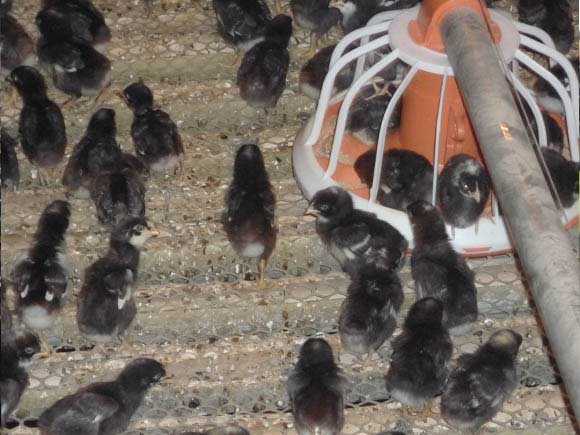
Ecological free-range rearing is seasonal, and the best time to introduce chicks is from April to August each year; other months are too cold and not suitable for this rearing method. For brooding, indoor rearing on wire netting is generally preferred. As for air quality, the general requirement is that a person does not feel a pungent, acrid odor upon entering the brooding room; during the day, make full use of natural light, and at night rely mainly on artificial supplemental lighting, with the intensity generally set at continuous day-and-night lighting in the early stage, after which, as the chicks grow older, the lighting duration and intensity should be gradually shortened and reduced; during the brooding period, it is best to feed a complete formula chick feed, with crude protein controlled at 17%-19%. Allow free feeding and free access to clean water every day.
Key Points of Feeding and Management for Chicks in the First Week
The survival rate of Partridge chicken chicks, aside from being related to the quality of the purchased chicks, is most importantly affected by the feeding and management in the first week. In addition, the body weight and uniformity of chicks at 1 week of age have an extremely significant effect on the following several weeks, so doing a good job of feeding and management in the first week is very important. In the first week of brooding, the following goals should be achieved: a healthy flock, a mortality rate below 2%, body weight reaching 45g, and uniformity reaching above 85%. To accomplish these goals, it is necessary to grasp the key control points of daily management and provide the chicks with a stable and suitable growing environment.
1. First feeding: It is advisable to start feeding about 2-3h after the chicks' first drink, beginning with expanded pellet feed (complete formula feed for small broilers), feeding 1g of feed per chick each time, once every 2-3h, mixing the feed and evenly scattering it on the feed tray; from the 4th day, begin using feed buckets to make it convenient for the chicks to eat; feed at least 4 times a day.
2. Drinking water: The first drink for chicks. Generally, the earlier the first drink, the better, because after hatching the chicks consume a large amount of body moisture. According to research reports, 24h after hatching, body moisture is depleted by 8%, and after 48h by 15%, so early drinking can promote intestinal peristalsis, absorb residual yolk and promote defecation, increase appetite and feed absorption, and improve the survival rate of chicks. Add 6% glucose to the water to supplement energy, and at the same time add water-soluble vitamins to enhance the chicks' disease resistance. On the 2nd day after the first drink, add antibacterial drugs to the water (for example, 0.2% BaiJunXiao) to improve the survival rate of chicks and promote growth. As for the drinking method, according to actual conditions, use drinkers for the first 3-7d, changing the water 4-6 times a day, then gradually transition to using automatic drinking pipes; water interruption must be prohibited. Drinkers should be cleaned once a day, and drinking pipes should be flushed and disinfected once every half month.
3. Lighting: The effect of light on chick growth is not direct, but occurs indirectly through its effect on the chicks' feed intake. It should be ensured that the light intensity reaches above 20lx. In the first week, 60W ordinary bulbs can be used, maintaining 24h lighting for 1-3d, and from the 4th day, the lighting duration should be reduced by 1h each day.
4. Temperature and humidity: For the first 3d, the temperature should generally be controlled at 33-35°C; if the chicks are weak, it can be appropriately raised by about 1°C; from 4-7d, the temperature should be controlled at 32-34°C. Maintaining suitable, uniform and stable temperature is crucial to the health and growth of chicks and is the key to raising chicks well. First, ensure that the temperature inside the chicken house is uniform, with differences between locations not exceeding 1°C. Uneven temperature directly causes uneven chick development and uneven physique, increasing the difficulty of brooding; second, keep the chicks' weaning from heat stable, and the daily temperature drop must not exceed 1°C. It is best to formulate a detailed daily temperature control plan based on the target temperature at the end of brooding. For example, if the target temperature at 42d is 23°C, during the brooding period the temperature can be lowered by 1°C every 3d, thereby achieving the goal of smoothly removing heat. During brooding, it is also necessary to combine this with “adjusting temperature by observing the chicks.” Humidity should be maintained at 40%-60%. If humidity is too low, chicks are prone to dehydration, and increased dust in the air can easily damage the chick's respiratory mucosa and induce respiratory diseases. Under high temperature and low humidity, humidity can be increased and temperature lowered by disinfecting with chickens present, while also purifying the environment inside the house; under high temperature and high humidity, the adverse effects of high temperature and high humidity on the flock can be reduced by increasing ventilation; for low temperature and high humidity, while increasing the temperature inside the house, ventilation can be appropriately increased.
5. Ventilation: The purpose of ventilation is to ensure sufficient oxygen content in the chicken house (19.6%), remove excess heat from around the chickens' bodies, expel moisture, reduce dust inside the house, and reduce the accumulation of harmful gases inside the house, such as ammonia and carbon dioxide. Ventilation methods: in the early brooding stage, focus on keeping warm, with ventilation as a supplement. The purpose of ventilation is appropriate air exchange. During the day, when the outside temperature is high and the chicks are more active, ventilation can be appropriately increased; at night, when the outside temperature is low and the flock is less active, ventilation should be reduced. In the first week, wind speed and ventilation volume should not be too large; it is best if a person feels the temperature is comfortable and not stuffy.
Management of Growing Chicks
First, in combination with outdoor climate, choose a sunny midday to drive the chicks out to outdoor grassland or relatively open slopes for free-range rearing, allowing them to freely feed on plant seeds and insects. The release time should be flexibly controlled according to the outdoor climate and the chicks' activity. While free-ranging, carry out training for returning to the fold. The specific measures are: during the free-range process, consciously scatter a small amount of grower pellet feed and grain on the grassland or slopes, and while scattering, tap the feed basin or blow a whistle to form a conditioned reflex, so that when they hear the sound, they know there is something to eat, making it easier to gather them later.
Feeding and Management of Young Chickens
After a period of training, once the young chickens have gradually adapted to the outside climate and environment and developed the habit of going out to range and returning, they should then be ranged all day. The range should preferably be selected as open woodland (commonly called bright-legged forest), and a place without animal hazards should also be chosen. For field ranging, sheds should be built. When building sheds, choose a place with shelter from the wind, facing the sun, high and dry terrain, and flat ground. Sheds can be built with local materials, as long as they can shelter from rain and shade the sun during the day and provide appropriate warmth at night. Whether the ranging woodland needs fencing should be decided according to the management personnel's ability to gather the chickens. For fencing, fish nets with a mesh of 2cm × 2cm can be used, with a net height of 2.5m. During the ranging period, patrol frequently and promptly repair any broken netting to prevent chickens from escaping. Stocking density: 800-1,200 birds per 667m2 is appropriate.
Supplement feeding appropriately according to the young chickens' specific ranging and feed intake to improve the growth rate and uniformity of the birds. In addition, clean drinking water should be placed in multiple locations in the ranging area. During the ranging period, the chickens must be gathered every evening; in combination with the gathering situation, consider whether supplemental feeding is needed, count the number of birds, observe their health status, and summarize the daily ranging situation.