Key Points and Methods of Fermentation Bed Chicken Farming Explained
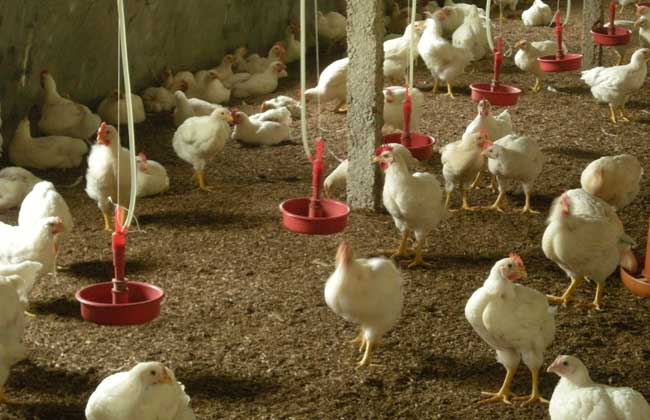
Fermentation bed chicken farming technology is an effective and more reasonable ecological chicken farming technique. It not only achieves effective treatment of chicken manure, realizing zero emissions, no pollution and no odor, but also provides the most suitable ecological environment for the healthy growth of chickens. Chickens raised in this environment grow fast, lay more eggs, produce eggs of better quality and get sick less often. Labor, water and feed are greatly saved, and the benefits of chicken farming are significantly improved. Let us take a look together below!
Principle of Fermentation Bed Chicken Farming
The digestive tract of chickens is relatively short, and about 70% of the organic matter in the manure has not been decomposed. As manure treatment, it has high water content and high organic nutrient content. If not decomposed in time, it will deteriorate and stink. After the chicken excretes manure, it is decomposed by the EM bacteria on the fermentation bed into bacterial protein. Chickens can also eat this bacterial protein to supplement nutrition. This reduces the amount of feed required. Odor is generally produced in the chicken coop, which is scientifically called ammonia. When the ammonia level inside is high, it affects the health of the chickens and induces respiratory diseases. In mild respiratory cases, it causes a decrease in feed intake and egg production; in severe cases, it leads to death. EM bacteria can effectively deodorize, fully decompose manure, and reduce the ammonia level in the chicken coop. The chicken coop will no longer produce unpleasant odors. While the manure is being decomposed, it can also effectively prevent the spread of parasites and reduce the incidence of disease in chickens.
Construction Methods for Chicken Sheds
1. Build the chicken shed according to your own farming needs, with a length-to-width ratio of 5:1.
2. Consider ventilation when building the chicken shed. Regulate the indoor temperature and humidity, and be able to normally maintain the temperature between 15 and 20 degrees.
3. Build according to the requirements of environment-safe livestock and poultry housing and chicken coops, ensuring that dust and ammonia are effectively controlled.
Fermentation Bed Chicken Farming Technology
1. Dilute the bacterial species: each kilogram of dry-spread fermentation bed bacterial agent can cover 15-20 sq m of chicken bed. Mix and dilute it with rice bran, cornmeal or wheat bran at a ratio of 1:5 without adding water. The purpose is to increase the spreading volume and spread it evenly into the bedding.
2. Bedding preparation: a chicken bed with an area of 20 sq m requires about 8 cubic meters of sawdust. The sawdust must be non-toxic, harmless, free of impurities, and used after being dried in the sun.
3. Spread the bacterial species: you can spread while laying, or mix evenly before laying. Remember that no water is needed. The top layer should be spread with a slightly larger amount of bacterial species.
4. Lay enough bedding: the chicken bed requires a sawdust thickness of 40 cm. If sawdust is not easy to obtain, rice husks, peanut shells or straw can be partially used as substitutes, laid at the bottom of the fermentation bed, while the surface 15-20 cm of the bed still needs to use sawdust.
5. Put the chickens into the bed: after laying, the chickens can be put in. Do not wait until fermentation is complete before putting them in. If the surface is dry, you can first sprinkle a little water, just enough that the sheep running around does not raise dust.
Benefits of Fermentation Bed Chicken Farming
1. Reduce operating costs: fermentation bed chicken farming can reduce operating costs, save labor, and there is no need to clean the chicken coop every day.
2. Save feed: chicken manure on the fermentation bed is generally decomposed by microorganisms in just three days. The manure provides rich nutrients to the microorganisms, prompting beneficial bacteria to continuously reproduce and form bacterial protein. Eating this bacterial protein not only supplements nutrition for the chickens but also improves their immunity. In addition, because the chickens' feed and drinking water are also supplemented with matching microecological preparations, a large number of beneficial bacteria exist in the gastrointestinal tract. Some cellulases and hemicellulases among these beneficial bacteria can decompose cellulose, hemicellulose and so on in straw. Using this farming method can increase the proportion of roughage and reduce the amount of concentrate feed, thereby lowering feeding costs. According to production practice, feed savings are generally above 10%.
3. Reduce medicine costs: chickens living on the fermentation bed are healthier and less likely to get sick, reducing medical costs.
4. Other benefits: after the bedding and chicken manure are mixed and fermented, they directly become high-quality organic fertilizer, improving the quality of chicken meat and eggs and giving them more market competitive advantage.
Precautions for Fermentation Bed Chicken Farming
1. Regularly drink a 1:200 dilution of EM liquid and feed EM-fermented feed, which can decompose the nutritional components of the feed in advance and facilitate full absorption by the chickens.
2. Properly control the stocking density of chickens. If too dense, there will be too much manure per unit area, and the bacteria in the fermentation bed cannot effectively decompose the manure. Five to six chickens per square meter.
3. EM bacteria need a moist environment. Observe the humidity of the fermentation bed and spray a 1:200 dilution of EM liquid. Control the humidity at around 30%.
4. Pay close attention to the activity of probiotics. When necessary, add a 1:50 dilution of EM bacterial liquid to regulate probiotic activity to ensure that fermentation can proceed normally.
5. The use of chemical drugs and antibiotic drugs is prohibited in the chicken coop to prevent killing and inhibiting probiotics and reducing their activity.
6. Must pay attention to ventilation and air exchange, and carry out normal epidemic prevention.
Maintenance and Management of the Fermentation Bed
1. Bedding permeability management: maintaining proper permeability of the bedding over the long term, that is, always keeping the oxygen content in the bedding at a normal level, is one of the key factors for the fermentation bed to maintain a high capacity for decomposing manure and urine, and is also an important means of inhibiting the reproduction of pathogenic microorganisms and reducing disease occurrence. A relatively simple method is to turn the bedding frequently. Usually this can be combined with loosening manure or replenishing water to turn the bedding evenly. In addition, every once in a while (30 days), the bedding must be thoroughly turned once, and the bedding layer must be mixed evenly from top to bottom.
2. Moisture regulation: due to the natural evaporation of moisture from the bedding in the fermentation bed, the moisture content of the bedding will gradually decrease. However, after the bedding moisture drops to a certain level, the reproduction of microorganisms will be blocked or stop. Regularly or timely replenishing water according to the moisture condition of the bedding is another key factor in maintaining the normal reproduction of bedding microorganisms and maintaining the bedding's ability to decompose manure and urine. The suitable moisture content of the bedding is usually 38-45%, with slight differences depending on the season or air humidity. Conventional water replenishment methods can use humidifying spray, or can be combined with bacterial supplementation.
3. Manure loosening management: because pigs have the characteristic of concentrated fixed-point excretion of manure and urine, the distribution of manure and urine on the fermentation bed will be uneven. Where manure and urine are concentrated, humidity is high and the speed of digestion and decomposition is slow. Only by dispersing and spreading the manure and urine onto the bedding (that is, manure loosening management) and mixing it evenly with the bedding can the moisture of the fermentation bed be kept uniform and consistent, and can the manure and urine be digested and decomposed cleanly in a relatively short time.
4. Bacterial supplementation: regularly supplementing Shenzhong EM probiotic liquid is an important means of maintaining the normal microecological balance of the fermentation bed and maintaining its continuous ability to decompose manure and urine. Supplement EM probiotics once a week, spray after dilution at 1:50-100, spraying while turning the pig bed 20 cm. Bacterial supplementation can be carried out in combination with moisture regulation and manure loosening management.
5. Bedding replacement
① Usually the highest temperature section of the fermentation bed bedding should be located in the middle-lower part of the bed body, at 20 cm down in the fermentation bed. If, under daily maintenance according to operating procedures, the high-temperature section still shifts toward the surface of the fermentation bed, it indicates that the fermentation bed bedding needs to be replaced. Bedding with a smaller organic matter content can be added and mixed in, such as sawdust.
② The water-holding capacity of the fermentation bed weakens, and the moisture content of the bedding gradually increases from top to bottom. When the bedding reaches the end of its service life, its carbon supply capacity weakens, the speed of manure and urine decomposition slows down, and moisture cannot volatilize through the high heat generated by fermentation, so it will seep downward, and the speed will gradually accelerate. After this batch of pigs is sent to market, the bedding should be replaced in time.
③ If odor appears in the pen and the ability to decompose manure is incomplete and gradually worsens, then bacterial supplementation or replacement is needed.