What are the harms of laying too early in laying hens?
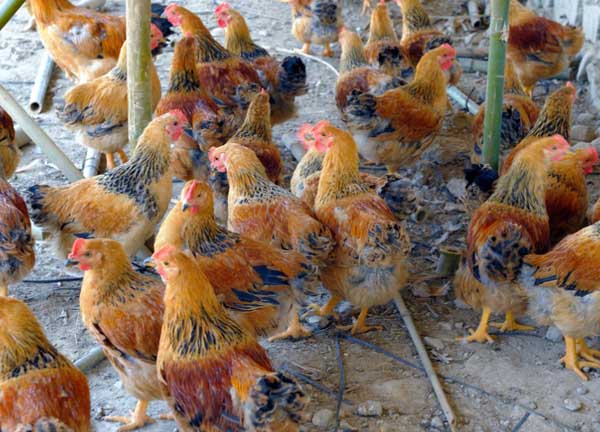
According to its production cycle, the laying hen can be divided into three stages: the brooding period (0-6 weeks of age), the growing period (7-20 weeks of age), and the laying period (21-72 weeks of age). Among these, the growing period is the period when the reproductive organs of the laying hen mature; during this period, the body weight and light of the hen have a major influence on how early or late the laying hen reaches sexual maturity (how early or late it starts laying), especially light.
In some places, specialized poultry farmers all use open-sided chicken houses and mostly adopt the natural lighting method. With this method, if the chicks are introduced in spring and summer (April 15 to the end of August), the growing period happens to fall in a period when daylight is gradually shortening or is relatively short, so natural light can be fully used, and sexual maturity and the start of laying are ideal. Conversely, if the chicks are introduced in autumn and winter (September 1 to April 14 of the following year), the growing period happens to fall in a period when daylight is gradually lengthening or is relatively long; if natural light is still fully used and no other measures are taken, it will stimulate the reproductive organs of the pullets to develop faster, causing early sexual maturity, early laying, small eggs, and early aging. This is precisely the fundamental reason why certain batches of laying hens introduced by some farmers in winter start laying early and lay small eggs.
Light has an extremely large effect on the reproductive function of chickens. Increasing light can stimulate hormone secretion, strengthen the activity function of the ovary and oviduct, promote the formation of ova and accelerate ovulation, and has a great influence on the sexual maturity, body maturity, egg production, and age at first egg of laying hens, so light control during the growing period is very critical.
During the growing period, after the pullets reach 10 weeks of age, extending the light duration will stimulate the rapid development of their reproductive organs, causing premature sexual maturity, which is unfavorable for later egg production. Therefore, the principle of light management at this stage is: the light duration must not be gradually extended, and the light intensity should be weak.
However, the natural light duration is not constant; in different regions and different seasons, the light duration has periodic annual changes. Our country is located in the Northern Hemisphere, and the vast majority of regions are located between 20 and 45 degrees north latitude. In a year, the daylight duration is shortest at the winter solstice and longest at the summer solstice; from the winter solstice to the summer solstice the daylight duration gradually lengthens, while from the summer solstice to the winter solstice it gradually shortens again, and the higher the latitude, the more obvious this changing trend. Seen from the map, our local area happens to lie exactly on the line of 36 degrees north latitude, belonging to a typical warm temperate monsoon climate zone, with four distinct seasons and a large annual change in daylight duration.
To prevent laying hens from starting to lay too early, for chicks hatched from September 1 to April 14 of the following year, artificial supplemental lighting should be used to change the natural light pattern during the growing period, thereby avoiding the premature sexual maturity caused by the gradual lengthening of the light duration. There are two specific methods as follows:
1. Constant light during the brooding and growing periods, gradually increasing light during the laying period. According to the local sunrise and sunset times, counting from the day of hatching, find out the longest daylight hours of the flock before 20 weeks of age and use it as the constant light duration. Except for using 24 hours of continuous light per day at 4-7 days of age, the above constant light duration is maintained from 8 to 140 days of age, and when the daylight duration is insufficient, artificial supplementation is used. Starting from 21 weeks of age, increase by 0.5 hour each week until it reaches 16 hours per day. This method is simple and easy to carry out, but its effect on controlling sexual maturity is not good.
2. Gradually decreasing light during the brooding and growing periods, gradually increasing light during the laying period. At 4-7 days of age, provide 24 hours of continuous light per day. The lighting plan from 8 to 140 days of age is: find out the daylight duration of the flock at 20 weeks of age, then add 7 hours as the light duration from 8 days of age to 2 weeks of age, and supplement with artificial light when natural light is insufficient; starting from 3 weeks of age, reduce by 23 minutes each week, so that by 20 weeks of age a total of 7 hours has been reduced, exactly reducing it to the natural daylight hours; starting from 21 weeks of age, increase by 0.5 hour each week until it reaches 16 hours per day. This method is not very convenient to implement in production, but its effect on controlling sexual maturity is relatively good.
Of course, practice shows that, according to the requirements of restricted feeding, the method of controlling sexual maturity simply by controlling the body weight of the chickens cannot be fully effective. Therefore, it is best to combine restricted feeding with light management according to the standard body weight of the laying hen, so as to achieve timely laying.
It is particularly worth pointing out that some modern high-yield hybrid commercial lines of laying hens already possess the ability to start laying earlier, and appropriately advancing light stimulation so that the new hens start laying at an appropriately earlier time is beneficial for reducing feeding costs. Therefore, the above two methods must be flexibly applied in combination with the characteristics of the breed.