Silkie Chicken Feed Formula and Scientific Mixing Methods
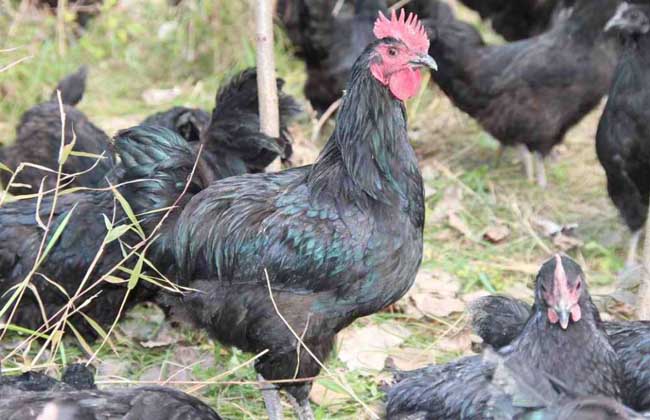
The Silkie chicken not only has a black beak, eyes, and feet, but its skin, muscles, bones, and most internal organs are also black. Its nutritional value is far higher than that of ordinary chickens, and its taste is also very tender. As for its medicinal and dietary therapeutic effects, ordinary chickens cannot compare. It is called the "precious dietary therapeutic rare poultry" and has high breeding prospects. Let us take a look at the Silkie chicken feed formula below!
Principles of Silkie Chicken Feed Formulation
1. Diversify feed ingredients as much as possible. The complementary effects of amino acids, vitamins, and other nutrients in different feeds can be utilized. Different physical and chemical properties of feeds may cause the destruction of nutrients in another feed, which must be noted when formulating diets. For example, bone meal is alkaline and cannot be directly mixed with yeast, vitamin B, and vitamin C, otherwise the latter will be destroyed.
2. When mixing diets, attention should be paid to feed quality, palatability, and diet volume.
3. Diet formulation should pay attention to feed processing and preparation. For example, rapeseed cake, cottonseed cake, and flaxseed cake require detoxification treatment. Mixed diets must be stirred evenly. Trace elements, vitamins, salt, amino acids, and other components used in small amounts should be gradually diffused to ensure feed uniformity and avoid poisoning caused by uneven mixing.
Silkie Chicken Feed Formulation Techniques
1. Make full use of local feed resources, select high-quality and low-cost feed, and reduce feed costs.
2. Feed should be fresh, clean, highly palatable, and have a crude fiber content below 5%.
3. Diversify feed raw materials as much as possible, with comprehensive nutrition, appropriate proportions, and even stirring.
4. Volume should be appropriate to prevent the diet volume from being too large or too small. If the volume is too large, the rare poultry will not consume enough nutrients; if the volume is too small, the rare poultry will not feel full, and phenomena such as scrambling for feed and uneven intake are likely to occur.
5. Feed ratios should be relatively stable, and the amount prepared should be appropriate to prevent excessive feed amounts that cause compression and waste. When formulating Silkie chicken diets, cereal feed accounts for 50-70% of the total feed, bran feed accounts for 5-10% of the total feed, plant protein in protein feed can account for 15-20% of the total feed, animal protein accounts for 5-10% of the total feed, inorganic salt feed generally accounts for 3% of the total feed, and additive feed accounts for 0.5-1% of the total feed.
Reference Formulas for Silkie Chicken Feed
1. Formula 1: yellow corn 55%, wheat flour 4%, millet flour 3%, bran 2.2%, soybean meal 27%, fish meal 6%, bone meal 1%, shell powder 1%, salt 0.3%, additives 0.5%.
2. Formula 2: yellow corn 50%, wheat flour 8%, millet flour 6%, bran 6%, soybean meal 22%, fish meal 5%, bone meal 1%, shell powder 1.2%, salt 0.3%, additives 0.5%.
3. Formula 3: yellow corn 52%, wheat flour 6%, millet flour 6%, bran 9%, soybean meal 18%, fish meal 5%, bone meal 1.2%, shell powder 2%, salt 0.3%, additives 0.5%.
4. Formula 4: yellow corn 46%, wheat flour 6%, millet flour 13%, bran 10%, soybean meal 12%, fish meal 5%, bone meal 1.7%, shell powder 1.5%, grass powder 4%, salt 0.3%, additives 0.5%.
5. Formula 5: yellow corn 51%, wheat flour 6%, millet flour 14%, bran 7%, soybean meal 9%, fish meal 4%, bone meal 2%, shell powder 1.2%, grass powder 5%, salt 0.3%, additives 0.5%.
6. Formula 6: yellow corn 38%, wheat flour 10%, millet flour 12%, bran 10%, soybean meal 13%, fish meal 5%, bone meal 2.2%, shell powder 3%, grass powder 6%, salt 0.3%, additives 0.5%.
7. Formula 7: yellow corn 42%, wheat flour 6%, millet flour 9%, bran 10%, soybean meal 13%, fish meal 6%, bone meal 2.2%, shell powder 3%, grass powder 6%, salt 0.3%, additives 0.5%.
8. Formula 8: yellow corn 43%, wheat flour 7%, millet flour 9%, bran 10%, soybean meal 14%, fish meal 5%, bone meal 2.2%, shell powder 3%, grass powder 6%, salt 0.3%, additives 0.5%.
9. Formula 9: corn 62.64%, wheat bran 3.9%, soybean meal 28%, fish meal 3%, calcium phosphate 1.46%, stone powder 0.65%, salt 0.25%, methionine 0.11%.
10. Formula 10: corn 62.89%, wheat bran 1.6%, soybean meal 32.8%, fish meal 1%, calcium phosphate 1.92%, stone powder 0.5%, salt 0.35%, methionine 0.14%.
11. Formula 11: corn 65.67%, wheat bran 6.5%, soybean meal 23.4%, fish meal 2%, calcium phosphate 1.35%, stone powder 0.75%, salt 0.25%, methionine 0.08%.
12. Formula 12: corn 65.63%, wheat bran 5%, soybean meal 26.6%, fish meal 1%, calcium phosphate 1.66%, stone powder 0.66%, salt 0.35%, methionine 0.10%.
13. Formula 13: corn 73.96%, wheat bran 3.8%, soybean meal 18.1%, fish meal 2%, calcium phosphate 1.14%, stone powder 0.73%, salt 0.25%, methionine 0.02%.
14. Formula 14: corn 73.93%, wheat bran 2.3%, soybean meal 21.3%, fish meal 1%, calcium phosphate 1.44%, stone powder 0.64%, salt 0.35%, methionine 0.05%.
15. Formula 15: yellow corn 54.13%, sorghum 5%, wheat bran 4%, barley 5%, fish meal 10%, soybean cake 16%, sophora leaf powder 3%, bone meal 2.5%, salt 0.37%.
16. Formula 16: yellow corn 32%, broken rice 27%, soybean flour (roasted) 10%, peanut bran 12%, rice bran 2%, wheat bran 3%, fish meal 12%, gypsum powder 0.75%, mineral powder 0.24%, bone meal and growth hormone 1%, multivitamins 0.012%, appropriate amount of cod liver oil and vitamin B aqueous solution.
17. Formula 17: corn flour 55%, broken rice 10%, soybean flour 8%, peanut bran 10%, fish meal 9%, wheat bran 3%, unified bran 3%, mineral powder 0.25%, gypsum powder 0.75%, bone meal and growth hormone 1%, multivitamins 0.012%, and an appropriate amount of grit.
18. Formula 18: corn flour 20%, broken rice 30%, soybean flour 8%, peanut bran 14%, fish meal 8%, wheat bran 9%, unified bran 7%, mineral powder 1%, gypsum powder 2%, bone meal and growth hormone 1%, multivitamins 0.012%, and an appropriate amount of grit.