Detailed Explanation of Cost Budget and Equipment Configuration for Modern Chicken Farms
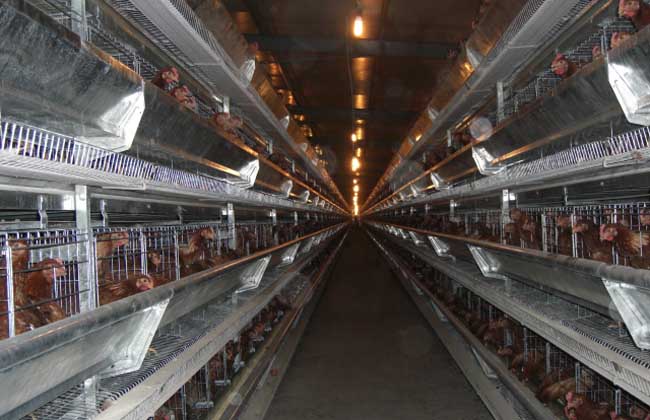
Modern chicken farming is an inevitable development in China's chicken farming industry. It means equipping the chicken farming industry with modern industrial equipment, arming it with modern science and technology, and operating it with modern management theories and methods. Its basic characteristics are scientific, intensive, commercialized and market-oriented operation; its basic features are high yield, high quality, low consumption and high efficiency; and its basic requirements are specialization, integration and modernization. Let's take a look together below!
Advantages of Modern Chicken Farms
1. Resource conservation: Due to its high degree of automation, modern chicken farming can save land and labor resources. At the same time, according to the requirements of broiler production and the growth and development patterns of broilers, it can provide good environmental conditions (temperature, humidity, light, ventilation) for broilers, ensuring the healthy growth of the flock.
2. Easy management: Modern chicken farms can effectively control the environment and are not easily affected by adverse external factors (high temperatures, severe cold, strong winds, heavy rain), allowing the flock to grow and develop healthily in a stable environment and giving them the ability to withstand risks. Chicken farms adopt closed housing management, which is conducive to disease control and drug residue control. Ultimately, the broilers raised are of excellent quality, which helps protect consumer health.
Costs of Modern Chicken Farms
1. Buildings: The cost of building chicken houses is calculated at 400 yuan per sq m.
2. Chicks: Chicks cost 0.6 yuan per bird.
3. Chicken cages: Prices vary by region, and broilers do not need chicken cages.
4. Veterinary drugs: 1.5 yuan per bird.
5. Feed: For the feed used, generally every 100 egg-type chickens require about 26.67 kg of feed when raised to 6 weeks of age, dual-purpose breeds require about 30.17 kg, and meat-type breeds require about 62 kg. When broiler chicks are raised to 10 weeks of age, each bird requires about 5.58 kg of feed on average. Adult chickens consume about 120 grams per day, and the feed price is 2.2 yuan per kg.
Equipment for Modern Chicken Farms
1. Drinking water equipment: From the perspective of saving water and preventing bacterial contamination, nipple drinkers are the most ideal water supply equipment, and high-quality leak-free drinkers must be selected. At present, the most commonly used for cage-raised growing chickens and laying hens is still the V-shaped water trough, which provides a continuous flow of water, but effort must be spent every day scrubbing the water troughs. For floor-raised chicks, hanging bell-type automatic drinkers can be used, which are both hygienic and water-saving.
2. Feeding equipment: Cage-raised chickens all use feed troughs, and this feeding method can also be used for floor-raised chicks. The shape of the feed trough has a great impact on how much feed the chickens scatter during eating. If the feed trough is too shallow and has no protective edge, it will cause considerable feed waste.
3. Manure cleaning equipment: It is mainly composed of a manure scraping plate, steel wire rope and reduction motor, and generally one unit serves two.
4. Heating equipment: As long as the purpose of heating and insulation can be achieved, electric heating, hot water heating, coal stove heating, and even heated brick beds and ground kang can all be selected. However, note that coal stove heating is relatively dirty and prone to gas poisoning, so a chimney must be added. When designing the house, pay attention to heat preservation and insulation.
5. Ventilation equipment: Closed chicken houses must use mechanical ventilation. According to the direction of airflow inside the house, it can be divided into two types: transverse ventilation and longitudinal ventilation. Transverse ventilation means the airflow direction inside the house is perpendicular to the long axis of the chicken house, while longitudinal ventilation means concentrating a large number of fans in one place so that the airflow inside the house is parallel to the long axis of the chicken house.
6. Manure treatment: Mainly through a solid-liquid separator, the chicken manure in the chicken house flows into a manure collection tank, is evenly stirred, and is then pumped by a cutting pump to the solid-liquid separator and extruded through a screw to separate solids and liquid. The solids can be anaerobically fermented into organic fertilizer, and the liquid can be sprayed on crops, achieving two goals at once and giving the chicken farm extra income.