Detailed Explanation of Key Points on Golden Pheasant Breeding Techniques
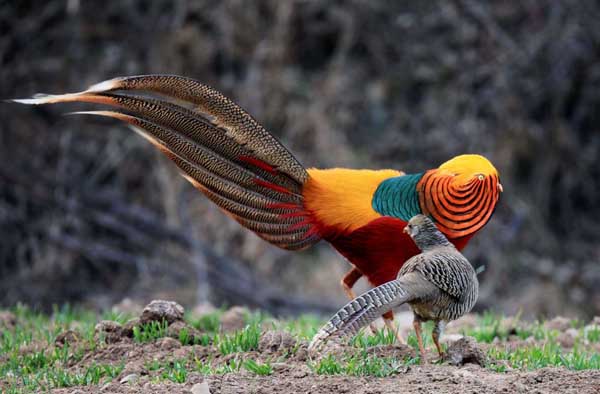
The body weight of the Golden Pheasant is generally around 750 grams, and females reach sexual maturity at one year of age. When spring arrives and flowers bloom, the pheasants begin laying eggs in early April each year, and gradually stop laying by July. Generally, each bird lays about 20 eggs. Through artificial breeding and multiple generations of reproduction, the highest has reached 43 eggs. The male-to-female ratio is 1:2~3. Generally, male birds reach sexual maturity one month earlier than females. When forming paired activities, they call to each other. Estrus males constantly chase females, jumping and skipping to perform strange courtship displays, with obvious mate selection preferences.
The Golden Pheasant has the ability to build nests, lay eggs, and brood and raise chicks independently. During artificial breeding, eggs laid on the same day are collected to reduce the female bird's brooding behavior upon seeing eggs.
Golden Pheasant seedlings can be hatched by female Golden Pheasants themselves or by domestic hens with strong brooding instincts. Generally, those with strong physique, good health, strong brooding instincts, and gentle temperament are selected. However, for artificially raised Golden Pheasants, artificial incubation should be adopted to increase the egg production rate. The incubation period is 22 days. Hatching earlier or later will affect the quality of the chicks, so incubation conditions such as temperature and humidity must be controlled, along with strict hygiene and operational management.
The incubation temperature for Golden Pheasants should be controlled at 38~38.5°C, with humidity at 65~75%, and they hatch in 24 days. The average body weight of newly hatched chicks is 20 grams. The temperature for chicks aged 1~3 days should be maintained at 38°C, 35°C for 4~7 days, 33°C for 8~12 days, then decreased by one degree per day. By 20~25 days of age, they can be raised without heating. The heat source for the insulation shed can use infrared lamps or electric heating tubes to ensure uniform and stable temperature inside the shed. Light intensity should be appropriate, as too strong light can easily lead to feather pecking.