Key Points and Detailed Methods for the Prevention and Treatment of Fowl Pox
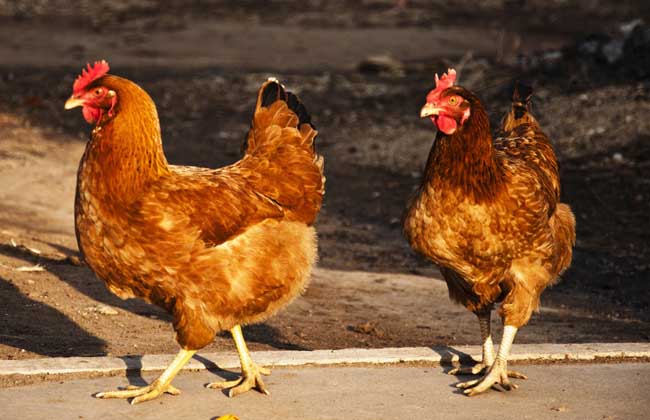
Fowl pox is a highly contagious viral infectious disease, prone to epidemics in autumn and winter, especially in humid environments where there are more mosquitoes, which accelerates the spread of the disease. Once a flock contracts this disease, the consequences are very serious, directly affecting broiler carcass quality and causing death. If many birds are affected, either slaughterhouses refuse to buy them, or they are purchased at half price, causing heavy losses to farmers. Every year from August to November is the susceptible period for fowl pox. Currently this disease is quite common, so please pay close attention, with prevention as the priority, because once the whole flock is affected, treatment becomes extremely difficult.
Manifestation Characteristics of Fowl Pox
The transmission route of fowl pox virus is mainly through wounds in the skin or mucous membranes to invade the body; in some cases, beak trimming can also become a trigger for fowl pox onset. Some blood-sucking insects, especially mosquitoes, can carry the virus and are an important transmission vector for autumn fowl pox epidemics. The virus-carrying period in mosquitoes can last 10 to 30 days.
The incubation period of fowl pox is about 4-10 days. According to symptoms and the site of lesions, it can be divided into two types: the skin type and the diphtheritic type. Generally, the skin type is more common in autumn, while the diphtheritic type is more common in winter. In addition, there are also mixed cases.
Skin-type fowl pox lesions occur in featherless and sparsely feathered areas, such as the comb, wattles, face, nostrils and around the eyes, forming wart-like pox nodules.
Affected chickens initially develop small grayish-white nodules on the skin. The nodules rapidly enlarge and turn yellow, fusing with adjacent nodules to form dry, rough, brownish scabs that protrude from the skin surface. If the scab is peeled off, a bleeding lesion is exposed on the skin. The number of scabs varies; when numerous, they can cover the entire featherless portion of the chicken's head. Scabs can persist for 3-4 weeks, after which they gradually fall off, leaving a smooth grayish-white scar. Skin-type fowl pox generally has no systemic symptoms, but in severely affected chickens (especially young chicks), listlessness, loss of appetite, and even death may be seen. If the pox grows on the eyes, there will be tearing, photophobia, eyelid adhesion and even blindness.
Diphtheritic-type fowl pox lesions occur on the mucous membranes of the oral cavity, pharynx and trachea. First, yellowish-white small nodules form on the mucous membrane, which then rapidly enlarge and fuse together to form a layer of yellowish-white caseous pseudomembrane covering the mucosal surface, hence it is called fowl diphtheria. If this pseudomembrane is torn off, a red bleeding ulcerative lesion is exposed underneath. Affected chickens have difficulty breathing and swallowing, often breathing with the mouth open. Due to difficulty in feeding, body weight rapidly decreases, general growth is poor, and individual chickens may die from suffocation due to respiratory difficulty.
Diagnosis is relatively simple. Based on the scab lesions on the comb, wattles and other featherless areas of affected chickens, as well as the diphtheritic pseudomembrane in the oral cavity and pharynx, a definitive diagnosis can be made.
Preventive Measures for Fowl Pox
The most reliable method for fowl pox prevention is vaccination. The currently used fowl pox vaccine is safe and effective, suitable for young chicks and chickens of different ages. At the time of use, dilute the vaccine at 1.5-2 times the amount. (Add 3-5 ml of physiological saline per 1000 doses.) Dip a vaccination needle into the vaccine and prick it into the subcutaneous tissue on the inner side of the chicken's wing, (there is a thinnest triangular area on the chicken's wing with only a thin layer of skin. Prick the fowl pox vaccine right there.) one prick per chicken. Broilers can be vaccinated against fowl pox at the same time as young chicks are vaccinated against Newcastle disease vaccine.
Usually on the 4th day after vaccination, swelling pox eruptions appear at the vaccination site, and on the 9th day pox scabs form. Otherwise, the immunization has failed and revaccination is required. Laying hens are generally vaccinated once at around 25 days of age and once at around 80 days of age, which can achieve good preventive results. During vaccination work, the following points should be noted:
① The vaccine must be used for healthy flocks.
② Immunize all chickens on the same day. If used for emergency vaccination, start with the flock farthest from the affected flock and proceed until reaching the affected flock.
③ Shake the vaccine thoroughly before use, and use it up in one go.
④ For chicks brought in during autumn or the transition between summer and autumn, immunization should be advanced to within 15 days; in other seasons it can be delayed to 30-40 days of age (except for broilers).
⑤ Immunization should be spaced more than 3 days apart from beak trimming, otherwise it is easy to induce disease onset.
⑥ After finishing the work, disinfect both hands and dispose of residual liquid (by burning or boiling).
Treatment Methods for Fowl Pox
For large flocks, mix moroxydine into the feed at a ratio of one-thousandth for 3-5 consecutive days. To prevent secondary infection, (mainly staphylococcal infection after fowl pox), simultaneously add Lin Gan Qing Er Dai, and combine with the traditional Chinese medicine Ji Dou San for better efficacy.
Formula of Ji Dou San: gentian root 90 g, Isatis root (banlangen) 60 g, black cohosh (shengma) 50 g, wild chrysanthemum flower 80 g, licorice 20 g. Process the above traditional Chinese medicines into powder, 2 g per adult chicken per day, mix evenly into feed, and feed in concentrated portions in the morning and afternoon, for 3-5 consecutive days.
For chickens whose pox scabs grow on the eyelids, causing eyelid adhesion and tearing, injection treatment can be used for individual treatment. The method is: one vial of penicillin (400,000 units), one vial of streptomycin (100,000 units), one vial of ribavirin, one vial of dexamethasone sodium phosphate (DMS), mix well and inject intramuscularly. For chickens under 40 days of age, inject 10 chickens per dose; for those over 40 days of age, inject 5-7 chickens per dose. Generally, continuous injection 3-5 times will lead to recovery.
After chickens are infected with fowl pox, if only tearing, ruffled feathers on the head and neck appear, the affected chickens' mental state is not diminished, there is anorexia, and green feces are passed. For this type, use the following formula:
Traditional Chinese medicines: alum 40 g, Fritillaria thunbergii 55 g, Coptis chinensis 55 g, Angelica dahurica 40 g, Curcuma aromatica 45 g, Scutellaria baicalensis 45 g, rhubarb 45 g, Descurainia sophia seed (tinglizi) 30 g, licorice 45 g, together with moroxydine hydrochloride 1000 g, mix into 1000 jin of feed, and feed continuously for 5 days. This formula functions to clear heat and detoxify, and to support healthy qi and relieve the exterior. It is mainly indicated for skin-type and mixed-type fowl pox, as well as mixed staphylococcal infection.