Detailed Explanation of Key Technical Points for Raising Native Chickens Under Forest
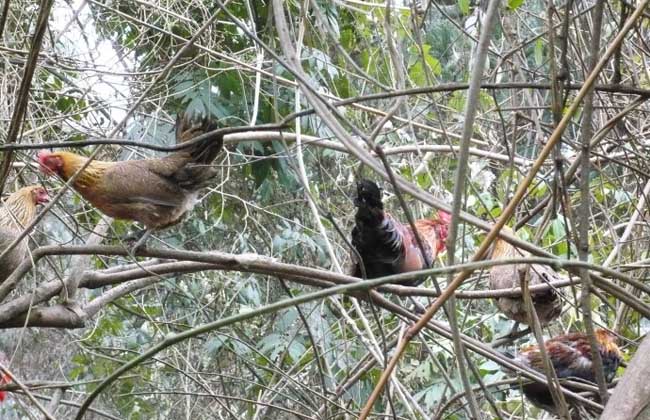
Raising native chickens under forest is an ecological circular industry that has emerged in recent years, following the principle of "protecting livestock with forest, promoting forest with livestock." It mainly uses natural ecological resources such as woodlands and orchards, combining grazing with rearing. The trees provide a good and suitable environment for the growth of native chickens; in turn, the chickens peck at forest pests, and their manure provides high-quality organic fertilizer for the trees. Raising native chickens under forest not only solves the employment problem of surplus rural labor, but also increases the income of local farmers, achieving a high degree of unity of economic, social and ecological benefits.
Advantages of Raising Native Chickens Under Forest
1. Weed control and pest removal: Chickens have the habit of eating grass and grass seeds, and have a certain inhibiting and controlling effect on weeds. According to experiments, when 20 chickens are raised per 700 sq m of woodland, weeds amount to only about 20% of that in control woodland; as the number of chickens increases, weeds become even fewer. When chickens forage for natural food in orchards, they can eat most pests on the ground and in the grass, such as insects, ants and earthworms, thereby reducing pest damage to trees and improving the yield and quality of fruit.
2. Providing fertilizer: Chicken manure contains nitrogen, phosphorus, potassium and other elements needed for the growth of fruit trees and forest trees. According to analysis, the manure excreted by one chicken in a year contains 900 grams of nitrogen, 850 grams of phosphorus and 450 grams of potassium. Calculated at 20 chickens per 700 sq m of mountain forest, this is equivalent to applying 18 kg of nitrogen fertilizer, 17 kg of phosphate fertilizer and 9 kg of potassium fertilizer, which improves soil fertility, promotes tree growth, saves fertilizer and reduces investment.
3. Enhancing physique: Raising chickens under forest provides fresh air, clean water and a comfortable environment, which is conducive to the growth and development of chickens and reduces the occurrence of disease. Raising chickens under forest is far from village houses, which can avoid and reduce mutual transmission of disease.
Preparation for Raising Native Chickens Under Forest
1. Woodland selection: The woodland should be spacious and open, with a slope between 5 and 30°, lush grass, far from villages and with convenient transportation. For raising hens, the area should be controlled at about 40 to 50 birds per 700 sq m; for raising roosters, the area should be controlled at about 50 to 100 birds per 700 sq m.
2. Chicken coop construction: The chicken coop should be built close to the grazing area, maintained at about 200 m away, and as far as possible one coop should be built for each flock, with each coop close to a pasture. The building area of the coop should be about 200 sq m, ensuring capacity for 1500 to 2000 chickens. Inside the coop, perches should be constructed; the brooding house should have a 3 m high movable board room, and the hen house should have laying nests or laying boxes.
3. Chicken breed selection: The breed should be an improved breed containing 75% local chicken bloodline. In raising native chickens under forest, roosters are generally the main focus; if hens are to be added, the two should be raised separately, and never raised together. The rearing period for roosters is about half a year, and for hens more than half a year.
Techniques for Raising Native Chickens Under Forest
1. Brooding techniques
① Disinfection: One week before the chicks arrive, clean the floor of the brooding house, and use Baidusha or caustic soda to carry out comprehensive disinfection of the brooding house.
② Feeding: Three hours after the chicks enter the coop, start feeding them; the feeding amount is 6 to 8 times per day. After two weeks, reduce it to 3 times per day, and ensure that the feed given each day can all be eaten.
③ Density: For chicks within 2 weeks of age, ensure a density of 50 to 70 birds per sq m; by 3 to 5 weeks of age, control the density at 30 birds per sq m, and adjust according to season, climate and other factors.
④ Temperature control: After the chicks enter the coop, strictly control the coop temperature and avoid the temperature rising and falling abruptly.
⑤ Lighting control: Within 3 days of age, ensure 24 hours of light for the chicks, which is conducive to their rapid growth and improves the survival rate. Within 7 days of age, ensure 18 hours of light per day. After one week, natural light can be used.
2. Daily management
① The best grazing period is from April to October, because at this time insects and grass are abundant, and the chickens can eat enough natural feed.
② Transfer to greenhouse rearing at the appropriate time: when the chicks have been raised for about 30 days, that is, when they weigh about 0.4 kg, begin transferring them to greenhouse rearing. Begin adapting them to field grazing; at first the grazing time should be shorter, then gradually extended, and the range should also expand gradually from near to far, so that the flock adapts to free-range raising.
③ Reasonable feeding adjustment: Supplementary feed during the grazing period is also crucial, and the principle of "less in the morning, appropriate amount in the evening" should be followed. That is, in the early stage their foraging ability is limited, so an appropriate amount of supplementary feed needs to be added to the feed to help their growth. When they gradually become accustomed to grazing, considering the quality of the chicken meat itself, it is enough to supplement feed in appropriate amounts.
④ Pay attention to building some simple shade shelters, and place drinking waterers at the same time. The purpose is to help the flock shade themselves, rest, drink water and so on under harsh weather conditions such as high temperature and storms, reducing losses to the flock caused by unexpected situations.
⑤ Strictly control the grazing range; the density should not be too high, and wire netting can be used to separate the grazing areas. During the grazing period, increase the frequency of patrols to prevent chickens from escaping, which can effectively improve feed utilization.
4. Nutritional configuration: In the chick stage, because their growth rate is relatively fast and closely related to later growth, feed should be supplied at the appropriate time, providing complete broiler feed. In the later stage, after transfer to grazing, begin reducing the number of feedings, transitioning from three times to one time.
5. Prevention of pecking vice: You can choose to debeak the native chickens at 20 to 25 days of age. The method is to cut off 1/2 of the tip of the upper beak, and cut off the sharp front tip of the lower beak. This can effectively prevent the occurrence of pecking vice. Once individuals with a serious habit of pecking are found, a second debeaking and trimming can be carried out.