What are the advantages of raising chickens under trees? A quick guide
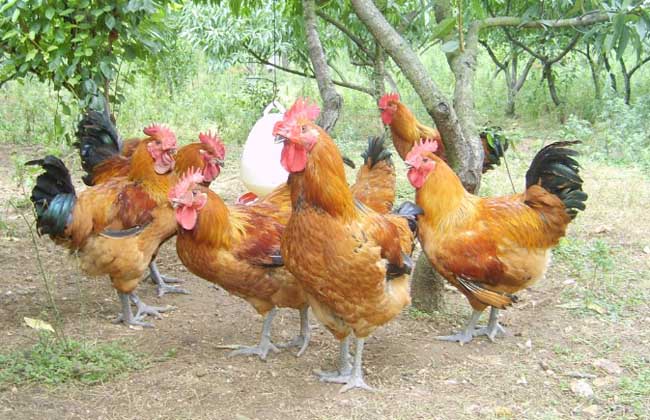
Free-range chicken farming under trees is generally done by setting up a chicken farm in a woodland area 300-500 m from the village, on the premise of not destroying the vegetation. It is recommended to stock 50-60 chickens per mu, in units of 1000, and then build a simple chicken coop in the center of the tree belt or at a suitable location facing south, with the roof made of straw, asphalt paper, asbestos tiles and other materials, the posts made of wooden strips and other materials, and the walls enclosed with corn stalks or woven plastic bags. A coop of this structure has a low cost; raising 1000 chickens (about 50 sq m) requires an investment of only about 500 yuan, 50% lower than the cost of a traditional coop.
Low feed nutrition standards, low feed consumption, low feed cost
For free-range native chickens raised under trees, chickens 1-42 days old are given complete feed; after 41-60 days of age, the chickens are switched to transitional feed with 25% rice, corn and wheat added; at 61-100 days of age, on the basis of whole grains, 40% complete feed is added; at 101-150 days of age, they are fed entirely on whole grains and agricultural by-product feed. The advantage is that whole grains cost about 1.8 yuan per kg on average, while complete feed costs about 2.7 yuan per kg. Each chicken can reduce feed cost by about 3.6 yuan during the 61-120 days. The chickens are released in the broad woods, where they can freely eat grass, pasture seeds, insects, trace elements, etc., supplementing part of the nutrients they need, thereby reducing feed cost.
It can reduce pathogen contamination and increase the survival rate of chickens
For raising native chickens under trees, high-quality native chicken breeds are generally selected. The chickens move freely in the fresh-air woodland and maintain enough exercise, which helps enhance their disease resistance. Because the coops for raising chickens under trees are simple, and the coop building materials are easy to move, they are generally moved once every 2-3 years to avoid sources of disease as much as possible, resulting in less contamination. Raising chickens under trees can reduce disease incidence; in particular, respiratory diseases, colibacillosis, Newcastle disease and others occur less often, greatly increasing the survival rate. Based on a summary of the survival rates of raising chickens under trees in some parts of China, the highest can reach 96.8%, the lowest 91.3%, with an average of 94.9%.
Native chicken meat is of good quality and commands a high price
Native chickens raised under trees have good meat quality, a delicious taste and a high market price. Because native chickens raised under trees walk all day in the broad woods, they are also called free-range chickens. Second, native chickens raised under trees freely eat insects and grass, and after 60 days of age are raised on grain, which gives the native chicken the advantages of thin skin, firm meat, tenderness and good taste, close to native chickens raised by farming households. The market price is generally 14-22 yuan per kg, 40%-50% higher than caged chickens.