A Detailed Guide to Free-Range Chicken Farming Techniques and Feeding Management in Rural Areas
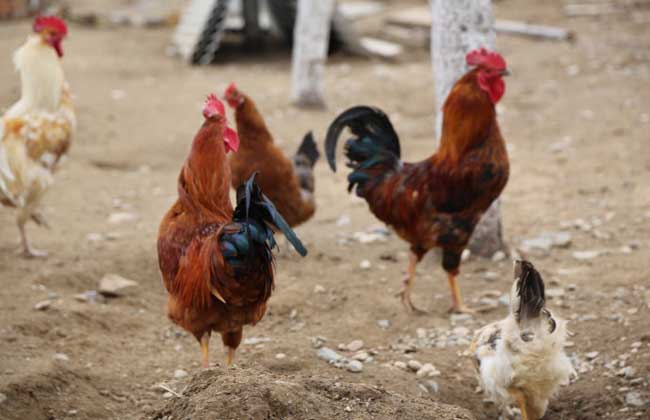
The management techniques for rural free-range chickens share common characteristics with other farming methods. The main stage when chickens die is from 0 to 30 days of age. Due to the influence of temperature, environment, feeding and other factors, plus human factors, the morbidity and mortality rates are relatively high. Let's take a look at rural free-range chicken farming techniques below!
Brooding Stage
1. Temperature: After the chicks hatch and are brought back, the temperature in the first week should be controlled within 34—35°C. Starting from the second week, reduce it by 2°C each week until the sixth week when heating is stopped. The method of keeping warm depends on the number of chickens. For a small number of chickens, a cardboard box and a light bulb can be used: place the chicks in the box, hang a light bulb of about 60W, and also place a water bottle and a feed trough. For a large number of chickens, a brooding room can be used, heated with a coal stove or similar, but the coal smoke should be discharged outdoors through an iron pipe. To ensure temperature accuracy, in addition to observing the state of the chicks, a thermometer should be hung indoors, and the droppings should be cleaned frequently.
2. Lighting: In the first week of brooding, 24-hour lighting is required to ensure that the chicks can eat and drink both day and night and to promote growth and development. After that, reduce it by 2 hours each week until the light is not turned on at night. Lighting and warmth can be combined. For brooding in a cardboard box, if the temperature is not enough, boiled water can be added to a container, wrapped in cloth, and placed in the box for heating.
3. Density: 1 to 14 days of age, 50 to 60 birds per sq m; 15 to 21 days of age, 35 to 40 birds per sq m; 21 to 44 days of age, 25 birds per sq m; after 60 days of age, 12 birds per sq m. After heating is stopped, the chicks can be raised in cages, on the floor, or by free-range grazing, as long as the density does not exceed the above standards.
4. Drinking water: 24 hours after hatching, the chicks can drink and be fed. Put the brooding feed in a feed bucket for free access, and place clean water in the water cups. For the first 20 days of brooding, give cooled boiled water; afterward, well water or tap water can be used. Because chicks eat little and have vigorous metabolism, to prevent malnutrition, within the first 10 days, glucose at a concentration of 8 to 10% and water-soluble multivitamins must be added to the water.
Raising After Heating Is Stopped
1. Cage raising: Transfer the chicks that no longer need heating to adult chicken cages for raising. Its advantages are that space can be fully used, the chickens do not come into contact with droppings, there is less disease, and it is convenient to catch the chickens, reducing the labor intensity of the keeper. The disadvantages are that for flocks raised for a longer time, the stress response is greater, and lesions are more likely to appear on the chest and legs of the chickens.
2. Floor raising: Floor raising can be further divided into raised-net floor raising and ground floor raising. Raised-net floor raising is similar to cage raising, but the chickens have a larger range of activity and are less likely to get sick; of course, the cost is higher. Ground floor raising is when wheat straw, rice husks, rapeseed hulls and other litter are spread on a cement floor, and the chicks are placed on it for raising. Its advantages are saving cost, and the chest and legs of the chickens are less likely to develop lesions. Because native crossbred chickens have a large range of activity, the litter also does not need to be replaced. The shortcoming is that the chicks defecate directly on the litter, which easily induces some diseases.
3. Free-range raising: That is, in the morning, let the chickens out outdoors to receive sunlight and contact the soil, and at the same time they can find some mineral feed and insects. At noon and in the evening, drive the chickens back into the coop to supplement feed. The advantage of this method is that it lets the chickens return to nature, the meat quality is especially good, and the selling price is high. The shortcoming is that it requires a relatively large area, so the raising scale is limited. This method is suitable for farmers to raise a small number of chickens free-range.
Farming Management
1. Feeding and adding feed: In production practice, the method of small amounts and multiple times is usually adopted to stimulate the chickens' desire to eat. Therefore, during the brooding period, feed should be added no fewer than 5 times a day, and the amount added each time should not be too much. After the chickens finish eating, leave the feed bucket empty for a period before adding the next feed.
2. Changing feed and adding sand: When changing chicken feed, there should be a transition, and it generally takes three days to complete the process. On the first day, feed 70% original chicken feed and 30% new chicken feed; on the second day, feed 50% original chicken feed and 50% new chicken feed; on the third day, feed 30% original chicken feed and 70% new chicken feed; on the fourth day, feed all new chicken feed. After 20 days of age, provide 500 grams of clean fine sand per hundred chickens each week. Free-range chickens do not need sand added.
3. Raising by groups: In the end, chickens should be grouped by strength and by sex for raising. For roosters, increase the thickness of the litter and raise the levels of protein and lysine in the diet. Roosters grow faster and have higher requirements for feed nutrition. The purpose of increasing nutrition is to meet their needs so that they can be marketed earlier.
4. Coop ventilation: The coop should have good ventilation conditions. Especially in summer, conditions must be created to give the coop cross-ventilation. Even in winter, appropriate air exchange should be carried out to keep the air in the coop fresh. In a coop with good ventilation and air exchange, when a person enters, it does not feel stuffy, and it does not irritate the eyes or nose.
5. Appropriate density: If the density is unreasonable, even if other feeding and management work is good, it is still difficult to raise a high-yielding flock. During the growing period under floor raising conditions, the suitable density per sq m is 8 to 10 birds at 7 to 12 weeks of age, 8 to 6 birds at 13 to 16 weeks of age, and 6 to 4 birds at 17 to 20 weeks of age.
6. Reduce stress: Daily management work should be carried out strictly according to operating procedures, and interference from adverse external factors should be avoided as much as possible. Do not use rough movements when catching chickens. Be cautious when vaccinating. Do not suddenly appear in front of the flock wearing special clothing, to prevent the flock from panicking and affecting the normal growth and development of the chickens.