Detailed Explanation of Muscovy Duck Breeding Technology and Feeding Management Points
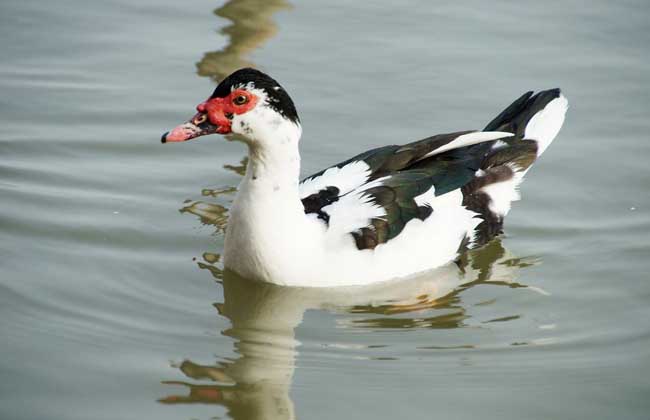
The Muscovy duck is the world's finest large lean-meat duck, developed through genetic breeding of the land fowl wild duck and the Chinese Jian duck. It can be raised on dry land, in pens, or through grazing, and is a new variety of rare poultry for both medicinal and meat use with characteristics of grain saving, low consumption, and high yield. It features high survival rate, fast growth, tolerance to high temperatures, resistance to severe cold, and especially strong disease resistance, and is suitable for raising across the whole country. Let us take a look at Muscovy duck breeding technology together below!
Growth Habits of Muscovy Ducks
1. Water-loving nature: The Muscovy duck is a waterfowl, and foraging, playing in water, and courtship mating can take place in water, but can also be carried out completely on land. Through investigation, the mating frequency of Muscovy ducks on land is higher than in water, so the fertilization rate of land mating is higher than that in water. Swimming and bathing in water can keep the feathers tidy, help dissipate body heat, promote metabolism, and maintain good health, but they do not like to stay in water for long periods.
2. Gregariousness: Muscovy ducks are highly gregarious. As long as there is a relatively suitable breeding site and conditions, they can live well in groups in terms of feeding and reproduction. They are docile in temperament, not afraid of people, tolerant of coarse feed, and good at foraging. They can be raised in small free-range groups or in large confined flocks.
3. Cold tolerance: Muscovy ducks have strong adaptability to climate and environment, tolerating cold but not heat. As long as feeding conditions are relatively good, lower temperatures in winter and spring do not affect egg production and weight gain. Their adaptability to hot climates is poor, and they often stop laying and molt in summer and autumn.
4. Omnivorous nature: Muscovy ducks have underdeveloped senses of smell and taste, and have low requirements for feed and aroma. They can swallow relatively large food masses and store them in the esophageal crop. The gizzard has high internal pressure and often retains grit, which can grind food well. Therefore, meat-type Muscovy ducks eat a relatively large amount at one time, and their feeding habits are quite broad, allowing them to widely consume plant and animal feed.
Production Performance of Muscovy Ducks
1. Meat production: The average birth weight of Muscovy ducks is 40 grams. At 11 weeks of age, male Muscovy ducks weigh 3.64 kg, with the heaviest reaching about 5.0 kg, and adult female Muscovy ducks weigh 2.6 kg. The meat-to-feed ratio is 1:2.80-3.00. The half-eviscerated dressing percentage of adult male Muscovy ducks is 80%, and that of females is 84%; the fully eviscerated dressing percentage of males is 74%, and that of females is 75%, with an average liver weight of more than 260 grams.
2. Egg production: Female Muscovy ducks begin laying eggs after 6 months of raising, and can lay 180-210 eggs per year. The average egg weight is 65-85 grams, and the maximum egg weight is 100 grams.
Muscovy Duck Feed Formulas
1. Ducklings: The feed formula for ducklings (0-6 weeks of age) is 56% cornmeal, 18% soybean cake, 10% wheat bran, 10% rice bran, 2% bone meal, 2% fish meal, 1.5% yeast powder, and 0.5% salt, plus additional multivitamins and trace elements.
2. Growing ducks: The feed formula for growing ducks (7-10 weeks of age) is 45% cornmeal, 10% soybean cake, 15% wheat bran, 15% rice bran, 9% grass meal, 2% bone meal, 1.5% fish meal, 2% yeast powder, and 0.5% salt.
3. Adult ducks: The feed formula for adult ducks (11-24 weeks of age) is 54% cornmeal, 17% soybean cake, 18% wheat bran, 3% grass meal, 3% fish meal, 3% bone meal, 1.5% yeast powder, and 0.5% salt, plus additional multivitamins and trace elements.
Muscovy Duck Breeding Technology
1. Site selection: In plain areas, choose a place with high, dry terrain facing north to south. In mountainous and hilly areas, choose the south-facing or southeast-sloping part of a hillside to build the site. Sandy loam soil is preferable to facilitate drainage after rain. The Muscovy duck house should have good ventilation, lighting, and drainage, be able to avoid the northwest wind, and be warm in winter and cool in summer.
2. Feeding methods: The male-to-female ratio of Muscovy ducks is 1:3-5. Mixed raising, pen raising, and free-range raising are all acceptable. Facilities can be simple and crude. The pen should have a water pool and an appropriate exercise area, and the house should have laying nests.
3. Epidemic prevention and disease elimination: Before the Muscovy ducks enter the house, the house and equipment must be thoroughly disinfected once. Use quicklime to prepare a 15%-18% lime solution to thoroughly disinfect the walls, floor, and equipment of the Muscovy duck house once, cutting off pathogens. Antibacterial drugs are added to the diet at irregular intervals for epidemic prevention and disease elimination.
4. Duckling management: Ducklings are sensitive to temperature within 1-3 days after hatching, like warmth and sleep. The temperature should be kept no lower than 30°C, and gradually lowered after 3 days. They can begin eating 18-24 hours after hatching. Place the feed in a large shallow dish and let them eat freely, feeding 5 times a day, 4 times during the day and 1 time at night. After 16 hours from hatching, give 0.02% potassium permanganate water for 1-2 days, then directly provide clean water. From 1-3 weeks of age, provide artificial supplementary lighting at night, and the light should be sufficient. After 4 weeks of age, use natural lighting. Pay attention to frequently changing the litter. After 2-3 weeks of age, the litter can be removed.
5. Growing duck management: Growing ducks need to be raised in separate groups, with 100-300 ducks per group and a density of 5-8 ducks per sq m.
6. Adult duck management: For adult ducks, select large and robust males and females to keep for breeding, with a male-to-female ratio of 1:3-5. Replacement breeding ducks should be restrictively fed, the nutritional content of the feed should be reduced, and body weight should be appropriately controlled to prevent excessive fatness from affecting reproductive capacity. The body weight of breeding female ducks should be controlled at 2.3-2.8 kg, and that of male ducks at 4-5 kg. The daily feed intake per duck is 100-150 grams, and 25-50 grams of green feed can be fed daily.