Follow the rules for fertilizing orchids, and your flower quality will not be poor
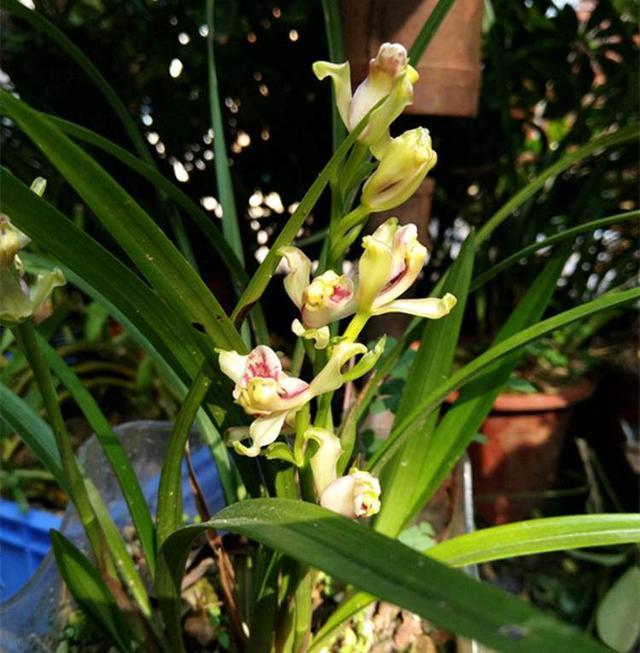
Many flower lovers who grow orchids have never figured out the correct way to fertilize them. Because many flower lovers have not grasped the "rules" of orchid fertilization, the orchids they grow not only produce flowers of poor quality, but some even suffer fertilizer burn, with yellow leaves or root rot. Therefore, below is an introduction for flower lovers to the rules of orchid fertilization.
1. Fertilization period
(1) It varies depending on the growing medium used: granular hard medium has the advantages of aeration and water drainage, which is beneficial to root growth and development. However, the nutrient elements it contains are lacking or not comprehensive enough, and the hard medium is granular with large gaps and poor fertilizer retention. Therefore, about every 7 days, use a general organic nutrient solution for orchids, dilute it with water 500 times, and water the roots once.
(2) Fertilize according to growth conditions: those growing vigorously and free of disease can be fertilized; those with light green, thin and soft leaves due to nutrient deficiency should be fertilized; weak seedlings with poor growth and disease should not be fertilized or should receive a reduced amount of fertilizer, and must never be given too much; orchids should be fertilized only after 1 year of cultivation, once new roots are normal; newly planted orchids should not be given root fertilizer (within half a year); for those with dark green leaves and black spots and scorched leaf tips due to excessive fertilization, stop fertilizing; do not fertilize during the flowering period; after flowering, apply a post-bloom fertilizer at the end of semi-dormancy (about 5 days); generally do not fertilize during the winter dormant period.
2. Choice of fertilizer
If flower lovers want to promote the growth of leaf buds, mainly use nitrogen fertilizer; to promote well-developed roots and bud development, mainly use phosphorus fertilizer; to keep plants robust and improve disease resistance, mainly use potassium fertilizer. Therefore, the ratio of each element should be adjusted according to the different growth and development stages of orchids.
From the emergence of new buds until they are half mature is the vegetative growth period, during which more nitrogen fertilizer should be applied (N-P-K ratio 2:2:1); from reproductive growth to the plant maturity stage, more phosphorus and potassium fertilizer should be applied (N-P-K ratio 1:4:3) to promote flowering or new bud sprouting. During the leaf bud growth period, spray orchid organic liquid fertilizer and monopotassium phosphate; from plant maturity to the flower bud formation stage, spray monopotassium phosphate or superphosphate.
3. Fertilization time
When the temperature reaches as high as 32°C, orchids stop growing, and fertilizing does more harm than good; on cloudy and rainy days, air humidity is high and water evaporates with difficulty, so orchid roots cannot easily absorb fertilizer. Therefore, when fertilizing in cold winter and hot summer weather and at noon, special attention must be paid; if there are no facilities for keeping warm and cooling down, do not fertilize when the temperature is above or below the suitable temperature. It is best to fertilize after 5 p.m., and early the next morning water thoroughly once (if spraying fertilizer on the leaf surface, spray the leaf surface once with clean water the next day).