How to prevent and treat Riemerella anatipestifer disease? A detailed explanation of the key methods
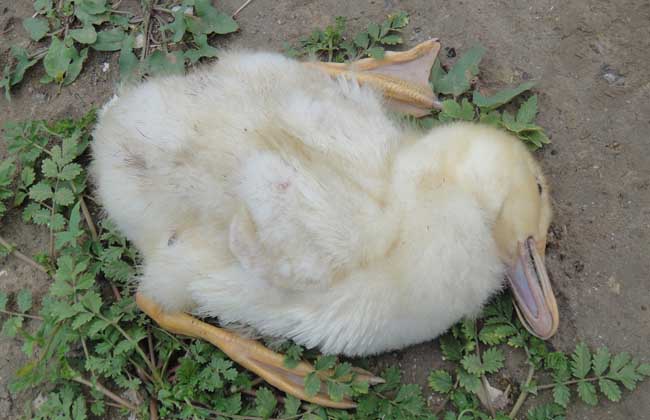
Riemerella anatipestifer disease is a contagious infectious disease caused by Riemerella anatipestifer (Ra). It is also known as duck infectious serositis, new duck disease, duck septicemia, duck disease syndrome, duck pasteurellosis, and so on. Let's take a look below at the prevention and treatment methods for Riemerella anatipestifer disease!
General prevention and treatment of Riemerella anatipestifer disease
1. Feeding and management work should be strengthened, feeding conditions should be improved, and high-quality complete feed should be provided to ensure that the growth requirements of the ducks can be met, so as to enhance the constitution of the ducklings.
2. The stocking density of the duck flock should be adjusted appropriately, and attention should be paid to controlling the temperature and humidity inside the duck shed. Especially in the rainy spring, hot summer, and cold winter seasons, good work should be done in keeping ducklings warm, preventing dampness, and ventilating, so as to minimize the effects of cold, rain, driving, sun exposure, and other adverse factors.
3. Implement an "all-in, all-out" feeding and management system. Ducks of different batches and different ages cannot be raised together. After the duck flock is sold, all kinds of tools, sites, sheds, water pools, and so on must all be disinfected.
4. Good site sanitation work should be done, and disinfection and epidemic prevention systems should be adhered to. Drinking waterers and feed troughs should be cleaned and disinfected regularly, and vaccination and prevention and control for other diseases such as duck plague, duck viral hepatitis, Muscovy duck three-week disease, Muscovy duck "flower liver" disease, and avian influenza should also be done well to reduce the occurrence of other diseases. By adopting the above measures, the infection and occurrence of this disease can be effectively reduced.
Drug prevention and treatment of Riemerella anatipestifer disease
1. When Riemerella anatipestifer disease occurs, drug treatment can effectively control the occurrence and development of the disease. According to many years of clinical experience, drugs such as gentamicin, kanamycin, sulfamethoxypyrimidine, cephalosporins, and quinolones all have relatively good effects. Chloramphenicol is now banned in poultry farms. Florfenicol (thiamphenicol) can be used in feed. Mix 5% florfenicol into feed at a ratio of 0.2% and use continuously for 5 days. For individual severe cases, 25 mg/kg body weight can be injected intramuscularly and used continuously for 2 days, which can achieve significant therapeutic effects.
2. Cefazolin can be injected intramuscularly at 15-25 mg/kg body weight, or gentamicin can be injected intramuscularly at 8-10,000 units, combined with medication in feed for the whole flock, continuously for 3-5 days. Or ciprofloxacin or enrofloxacin at 25-50 ppm can be dissolved in water for free drinking, while adding multiple vitamins. All of these can achieve obvious therapeutic effects.
3. Because bacteria can develop resistance to antibacterial drugs, it often happens on production farms that a certain drug has a significant effect when first used, but after being used for a period of time, the effect becomes insignificant or ineffective. If conditions permit, pathogen isolation can be carried out on dead ducks, and drug sensitivity tests can be conducted on the isolated strains to screen highly sensitive drugs for cross use, while also choosing drugs based on the farm's medication history.
4. Adopting a combination of Chinese and Western medicine to prevent and treat Riemerella anatipestifer disease can also achieve relatively satisfactory results. For example, while injecting cefazolin, decoct and administer Coptis chinensis, Aristolochia debilis, Pulsatilla chinensis, dandelion, and Houttuynia cordata, either mixed into feed or given orally, continuously for 3-5 days. Gentamicin can also be injected continuously for 3 days, while Houttuynia cordata, Phellodendron amurense, Sophora flavescens, Salvia miltiorrhiza, and Artemisia capillaris are decocted and administered, continuously for 3 days. Or the Chinese herbal preparation "Kangnangyi" developed by the Guangdong Provincial Institute of Poultry Science can be directly diluted and drunk freely for 3-5 days, while adding multiple vitamins, with obvious effects.
Vaccine immunization for Riemerella anatipestifer disease
Because drug prevention and treatment easily leads to drug resistance of strains, duck flocks suffer from repeated outbreaks, and it is difficult to cure completely. This situation is relatively common in older farms. Not only do medication costs increase and therapeutic effects become poor, but at the time of sale, the culling rate of ducks is also high. Using vaccines for immunization can achieve relatively good preventive effects.
1. At present, Riemerella anatipestifer vaccines developed abroad include monovalent and polyvalent inactivated vaccines, attenuated vaccines, subunit vaccines, and bivalent inactivated vaccines made with mixed Escherichia coli, and so on. In our country, inactivated vaccines with various adjuvants are currently used more often (such as formalin-inactivated vaccine, oil-adjuvant inactivated vaccine, propolis-adjuvant inactivated vaccine, and inactivated vaccines with other adjuvants), such as monovalent inactivated vaccine of type 1 Ra, bivalent inactivated vaccine of types 1 and 2, or polyvalent vaccines of other serotypes, bivalent inactivated vaccine of Ra and Escherichia coli, trivalent inactivated vaccine of Ra, fowl cholera, and Escherichia coli, and so on.
2. Using inactivated vaccines to immunize duck flocks generally requires two immunizations to obtain relatively effective protection. Meat ducks are first immunized at 7-10 days of age by intramuscular or subcutaneous injection at 0.2-0.5 mL per duck. After an interval of 1-2 weeks, a second immunization is carried out at 0.5-1 mL per duck, which can achieve relatively good prevention and treatment effects. Compared with other adjuvant vaccines and vaccines without adjuvant, oil-adjuvant inactivated vaccine provides longer immunity. For meat ducks, generally one use is enough throughout the entire growth period, but oil-adjuvant inactivated vaccine often causes local inflammatory reactions at the injection site. When vaccinating, adding an appropriate amount of multiple vitamins helps reduce stress reactions.
3. Riemerella anatipestifer has many serotypes. The main epidemic serotypes differ among various countries and regions, and the serotypes prevalent in different periods also differ. Moreover, on the same duck farm, or even in the same batch of ducks, multiple serotypes may exist at the same time. It is generally believed that there is no cross-immunity among the various serotypes, which brings certain difficulties to vaccine prevention and treatment of Ra. At present, more than 9 serotypes have been confirmed to exist in our country. A relatively effective method is to develop vaccines against the main local epidemic serotypes by selecting corresponding strains, which can achieve more effective prevention and treatment results.
Summary: According to the occurrence and epidemic characteristics of this disease, the most important and fundamental thing in preventing and treating this disease is to do good prevention work, improve the feeding management and sanitary conditions of the duck farm, minimize adverse stress, do good work in keeping ducklings warm and cold-proof, and establish a reasonable and complete epidemic prevention and disinfection system to reduce the concurrent occurrence of other diseases. While doing good management measures, rationally carry out vaccine immunization, and combine highly sensitive drugs with comprehensive prevention and treatment measures, which can effectively prevent and treat this disease, thereby reducing the incidence and death of the duck flock.