2016 Duck Farming Cost and Profit Analysis
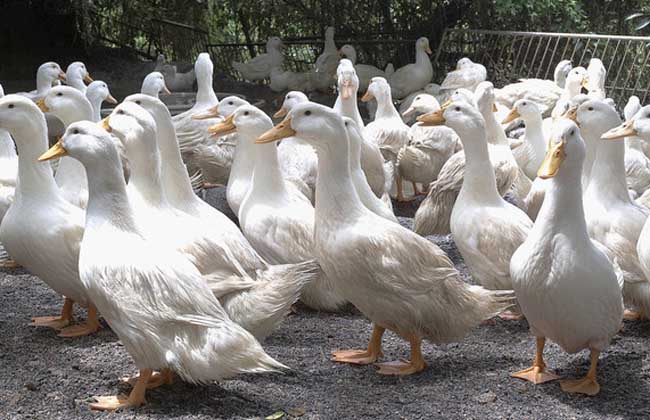
With the rise in labor and feed prices, the duck farming industry has also been affected to a certain extent, so many duck farmers are worried that the cost of raising ducks has increased and the profitability of duck farming has declined, and they are hesitating about whether to continue raising ducks. For those friends who are already engaged in duck farming, or those who plan to or are newly joining as duck farmers, let us take a look below at the 2016 duck farming costs and profits!
2016 Duck Farming Costs
1. Duckling cost: one duckling costs 1.5 yuan, and the cost for 3000 ducklings is 1.5*3000=4500 yuan.
2. Duck feed cost: duck feed costs 1.7 yuan per jin, and one duck raised from entering the shed for 45 days eats about 13 jin of feed. The feed cost for one duck is 1.7 yuan*13 jin=22.1 yuan, and the feed cost for 3000 ducks is 22.1 yuan*3000 ducks=66300 yuan.
3. Total cost: 4500+66300=70800 yuan.
2016 Duck Farming Profits
1. Duck farming income: one duck at market weighs about 6.5 jin, at 3.9 yuan per jin, one duck can be sold for 25.35 yuan, totaling 25.35 yuan*3000 ducks=76050 yuan.
2. Duck farming profit: benefit minus cost=76050 yuan-70800 yuan=5250 yuan. Raising 6 batches a year can yield more than 30,000 yuan in returns.
How to Reduce Duck Farming Costs?
1. Select good breeds: meat ducks of superior breeds have higher genetic potential for production performance, fast growth, strong disease resistance, and high feed utilization. At the same age and consuming the same amount of feed, their weight gain is much greater than that of other breeds of meat ducks. For example, Beijing commercial meat ducks at 45 days of age weigh 3.2 kg, with a feed conversion ratio of 2.4 and a breast meat rate of 13.5%. Among Cherry Valley ducks, commercial ducks of the white-feathered L line at 47 days of age weigh 3.0 kg, with a feed conversion ratio of 3, a lean meat rate of over 70%, and a breast meat rate of 23.6-24.7%. For Muscovy commercial ducks at 3 months of age, male ducks weigh 2.7 kg and female ducks 1.8 kg, with a feed conversion ratio of 3 and a lean meat rate of about 75%. In addition, the Digo duck originally from Australia is also a good breed.
2. Temperature control: the feed consumption of ducks will change due to the ambient temperature, humidity, water supply, dryness of the feed, reproductive status, feed quality, etc., among which temperature has a relatively obvious effect on feed consumption. The suitable growth temperature for meat ducks is generally between 12-24°C. Within this temperature range, feed can be utilized effectively. Therefore, conditions should be created as much as possible, such as building sheds for enclosed raising in winter and building sheds for shade in summer, so as to preserve warmth and lower temperature to improve feed returns.
3. Fresh feed: first, the raw materials must be fresh; second, after the feed is mixed, it should be stored in a ventilated, dry place, with a layer of moisture-proof material placed between it and the ground. The mixed feed should be used up as soon as possible, and mixed and fed frequently to prevent caking and mildew. Moldy feed easily causes poisoning, diarrhea, etc. in meat ducks, thereby reducing feed utilization.
4. Balanced diet: the ratio of protein to energy in meat duck feed should be balanced, and the energy value in the feed should be appropriate. When the energy value is too high, feed consumption increases, causing waste of certain nutrients.
5. Rational use of additives: nutritional additives such as minerals, vitamins, and amino acids are essential, and other non-nutritional additives also help improve the growth rate and feed utilization of meat ducks. For example, antibacterial growth-promoting agents such as zinc bacitracin, oxytetracycline, furazolidone, and olaquindox have obvious effects on improving weight gain and feed utilization in meat ducks.
6. Timely marketing: market the ducks at the appropriate time according to their purpose. If they are meat ducks for roasting, it is generally suitable to market them at around 30 days; meat ducks for cutting are generally more suitable to be marketed at 40-48 days, because at this time the weight gain and feed returns of meat ducks have reached their peak. After 50 days of age, the weight gain of meat ducks declines and feed returns decrease.