Analysis of Laying Duck Farming Costs and Profits in 2016
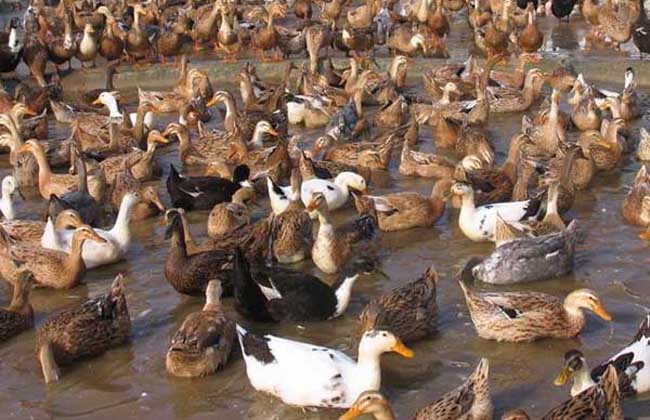
At present, China's duck farming industry is booming, with farming scale gradually expanding. Among the many local laying duck breeds, Jinding ducks, Shaoxing ducks, Putian black ducks and others have already carried out breed selection and strain selection work, and have achieved remarkable results. Let's take a look at the laying duck farming costs and profits in 2016!
Laying Duck Farming Costs
1. Young ducks 14 yuan/bird × 3000 birds = 42,000 yuan; young ducks refer to laying ducks around 100 days of age before starting to lay.
2. Feed cost 0.2 kg/day·bird × 1.75 yuan/kg × 360 days × 3000 birds = 378,000 yuan.
3. Wages, water and electricity, disease prevention: 25,000 yuan.
4. Duck shed construction: 25,000 yuan. Total investment for all the above items: 470,000 yuan.
Laying Duck Farming Profits
1. Raising 3000 laying ducks for one year, calculated at 280 eggs/bird, yields a total of 60,000 kg of eggs. At a selling price of 7.5 yuan/kg, the total output value is 60,000 × 7.5 = 450,000 yuan.
2. Culled laying ducks calculated at 18 yuan/bird: 3000 × 18 = 54,000 yuan.
3. Total: 504,000 yuan.
4. Net profit: 504,000 yuan - 470,000 yuan = 34,000 yuan. Raising one improved-breed laying duck generally yields a profit of more than 10 yuan per year.
Precautions for Laying Duck Farming
1. For large-scale laying duck farming, it is best to choose a phased semi-open housing method. The introduced young ducks should be 80-110 days old, weighing about 1.2 kg; try to choose young ducks that have been grazed.
2. In large-scale laying duck farming, stress should be minimized as much as possible, keeping the ducks in a quiet and comfortable environment. Normally, do not shout loudly inside the duck house or frighten the flock. During the laying period, do not cut off power or water, and pay attention to proper feed transition at each stage.
3. Manage laying ducks well across different seasons. In spring, keep the house dry and ventilated; if a cold snap occurs, pay attention to keeping warm; if it is cloudy and rainy, shorten the duck release time. In the plum rain season, open doors and windows, frequently change the bedding straw, clear drainage ditches, and strictly prevent feed from becoming moldy. In midsummer, pay attention to heat prevention and cooling; a shade shed can be set up on the duck beach, duck house doors and windows should be opened, and ducks should be released early and brought in late each day, with ducks driven into the house before thunderstorms. In autumn, light should be no less than 16 hours, the microclimate inside the house should be stable, and nutrition should be appropriately increased. In winter, do a good job of cold protection and warmth.
4. Ducks during the laying period should be observed frequently. Mainly observe egg shape, laying time, duck body weight, egg weight, the rise in laying rate, the feathers of laying ducks, appetite, the ducks' water-play condition, mental state, and manure color.
5. During the laying period, pay attention to increasing the feeding of aquatic plants to improve egg quality. The best aquatic plant varieties are hornwort (Ceratophyllum demersum) and Hydrilla verticillata (commonly known as wei grass), with a daily feeding amount of 0.3 kg per bird, which can both save concentrate feed and increase the red yolk degree of duck eggs.
6. For routine disinfection with ducks present, be careful not to use bleaching powder, so as to avoid producing soft-shelled eggs and sand-shelled eggs and affecting egg quality.