Complete Collection of Laying Duck Feed Formulas and Scientific Proportioning Methods
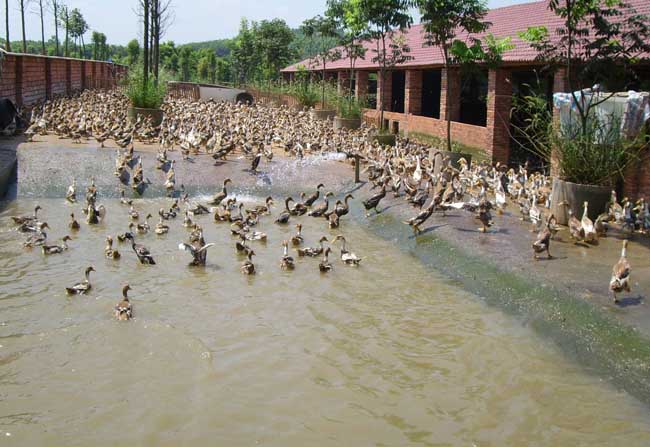
When selecting raw materials for laying duck feed formulas, they should be easy to handle. The feed raw materials are required to have stable quality, sufficient quantity, suitable price, and local resource advantages. The feed should be kept fresh. To prevent the feed from becoming moldy and deteriorating, the feed should be stored in a dry place, and the feed should not be stored inside the duck house.
Reference formulas for laying duck feed
When preparing the daily ration for laying ducks, the appropriate nutrient concentration of the compound feed should be determined according to the duck's age group and feed intake. Reference feed formula table for laying ducks:
Laying duck growth stageReference feed formulaRemarksDucklings (1-8 weeks)Corn 58.7%, soybean meal 26%, rapeseed meal or cottonseed meal 7%, stone powder 4% (bone meal or shell powder may also be used), special premix No. 6 4%, salt 0.3%It is recommended to feed all ducklings a complete pellet feed in the first weekGrowing ducks (8 weeks to start of laying)Corn 64%, soybean meal 16%, rapeseed meal or cottonseed meal 6%, stone powder 9.7% (bone meal or shell powder may also be used), special premix No. 6 4%, salt 0.3%, appropriate amount of Jinsaiwei/Laying period ducksCorn 51%, soybean meal 22%, rapeseed meal or cottonseed meal 3%, wheat middlings 10%, stone powder 9.7% (bone meal or shell powder may also be used), special premix No. 6 4%, salt 0.3%/Rational use of feed additives
The main components of additives include amino acids, vitamins and minerals, etc. Data confirms that by adding 80 grams of methionine and 50 grams of lysine to 50 kg of conventional laying duck daily ration, fish meal can be reduced from about 4 kg to about 2 kg, while egg production, egg weight, etc. will not be affected. Vitamin additives can completely replace the nutritional function of green feed, not only supplementing vitamins, but also saving a large amount of green feed, reducing the labor intensity of duck farmers, and lowering the production cost of duck farming.