Nine Precautions for Raising Ducks in Summer Explained in Detail
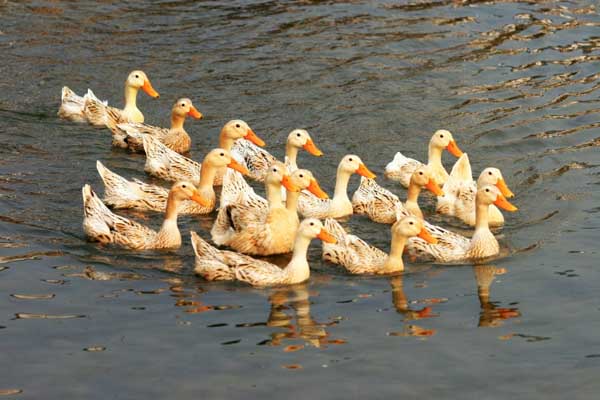
Summer is the golden period for raising meat ducklings, but a high-temperature, high-humidity environment easily causes manure in the duck house to rot and ferment, breeds pathogenic microorganisms, and triggers epidemic diseases, which is unfavorable to the growth of ducklings. To improve the survival rate of ducklings in summer, the following "nine precautions" must be taken.
Reduce stocking density
If the density of the duck flock per square meter is too high, it will cause crowding, piling and pressing, and accumulated heat and stuffiness in the pen, so the number of ducks in the pen should be reduced and more water basins and feed troughs should be added.
Adjust the feed formula
The feed formulas for ducklings at different growth stages vary. The summer feed formula should, on the premise of meeting all essential amino acids, keep the protein level at the lowest possible limit to reduce heat generated by feed digestion.
Change the rearing method
Net rearing can reduce ducklings' contact with manure, reduce opportunities for disease transmission, and lower the incidence of disease. At the same time, net rearing can reduce the nutritional consumption and heat production of the duck flock, which is conducive to healthy growth, so net rearing should be adopted. If ground rearing is adopted, it is best not to use thick litter, and especially not to use rice straw as litter.
Reduce sunlight exposure
Building tall and spacious duck houses is an effective way to reduce the impact of sunlight exposure. During high temperatures, water can be sprinkled on the roof or sprayed as a mist, and the inner ceiling can also be whitewashed to improve ventilation.
Optimize feeding time
Feed as much as possible in the early morning and at night between 8 p.m. and 10 p.m., during cooler periods. Let the ducks rest more during the day.
Do a good job of daily disinfection
Do a good job of disinfection to prevent flies and mosquitoes from breeding, so that the duck flock is free from harassment by pests.
Supply fresh feed
During periods of high temperature and high humidity, feed left for too long or feed stagnating in the trough for too long will ferment and spoil, so a supply of fresh feed should be ensured.
Keep the environment quiet
During hot periods, avoid sudden fright and noise disturbing the duck flock, so as to reduce the flock's activity to the minimum level.
Strengthen disease prevention and control
Effectively carry out the prevention and treatment of diseases in the duck flock. If sick ducks are found, symptomatic treatment should be given in time to ensure that the rearing and management measures can proceed smoothly.