Detailed Guide to Duck Sex Identification: Teach You to Quickly Distinguish Male from Female
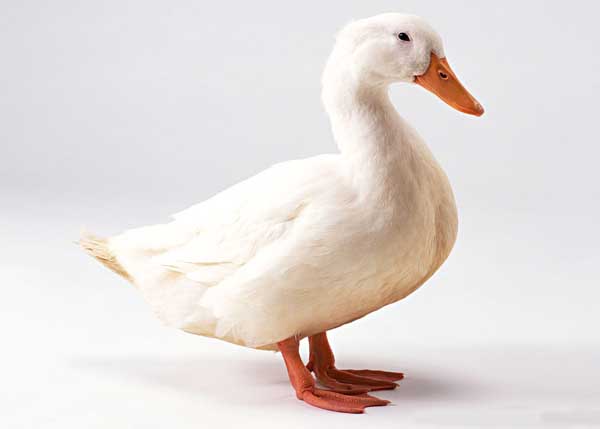
For egg-type ducks, female ducks are needed; for meat-type ducks, raising males and females separately facilitates management. Therefore, sex identification of ducklings has certain economic value, and the editor here will share with you the methods for identifying duck sex.
Appearance Identification Method
Generally, those with a large head, narrow and small nostrils running in a line along the bill, a round body, and a pointed tail are male ducks, while those with a small head, relatively large and slightly round nostrils, a flat body, and a spread-out tail are female ducks.
Syrinx Identification Method
The syrinx, also called the lower larynx, is located at the top of the tracheal bifurcation. In male ducks, there is an enlarged spherical tympanic cavity at this location, with a diameter of 3-4 mm, which can be felt from outside the chest, while female ducks do not have this syrinx.
Vent Palpation Identification Method
Hold a newborn duckling in the left hand with its back facing up and belly facing down, gently pinch the neck with the thumb and index finger, and use the right thumb and index finger to gently press flat below the vent, first pressing forward and then moving backward. If a protruding object the size of a hemp seed or rapeseed is felt, it is a male duckling; otherwise, it is a female duckling.
Vent Eversion Identification Method
Hold a newborn duckling in the left hand, clamp the duck's neck with the middle and ring fingers, with the head facing outward and the belly facing up, in a supine position. Then use the right thumb and index finger to part the feathers beside the vent and squeeze out the meconium, gently open the vent, and evert it. In male ducklings, a protrusion about 4 mm long (penis) can be seen, while female ducks do not have it, or only have a residual trace.