When Is the Best Time to Cull Laying Ducks
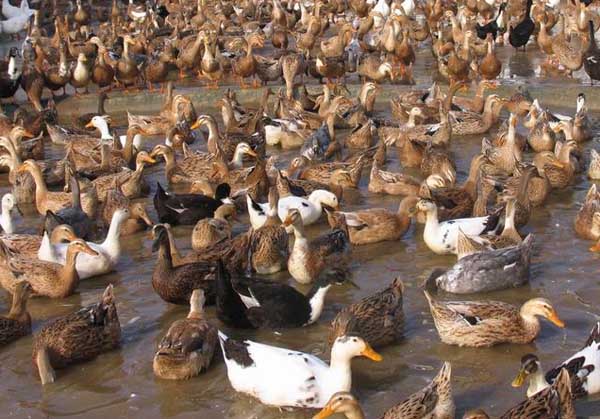
Some duck farmers in rural areas keep laying ducks for three or four years, and some even keep them until they die of old age. The duck farmers know very well that old ducks have a low laying rate, yet they still cannot bear to cull them. They do not realize that keeping old laying ducks for a long time not only consumes about 150 grams of feed every day, but also yields very few eggs, or even no eggs at all, reducing the economic returns of the whole duck flock.
So how long should laying ducks be kept to be relatively profitable? According to the optimal laying age of ducks, they start laying at about 120 days from hatching, and the first laying year has the highest laying rate, with confined ducks producing up to 20 kg of eggs per year. By the second laying year it generally drops by 5—10%, and by the third laying year it drops even more.
Old ducks have poor mobility, difficulty finding food when herded, weak adaptability to climate change, and high feed consumption with low feed conversion. According to many duck farmers, to produce the same 1 kg of eggs, old ducks consume about 20% more feed than new ducks. Given the high laying rate of ducks in the first laying year, feeding and management should be strengthened during this stage so that the whole flock can reach its greatest production potential during the optimal production period. After the first production year, selective culling should be carried out according to the laying performance of the ducks, removing low-yielding ducks and keeping high-yielding ones.
The most reliable way to cull low-yielding old ducks is to take those initially identified as low-yielding and repeatedly palpate for eggs, that is, use a finger to press against the opening of the cloaca and oviduct of the laying duck to feel whether there is an egg. For example, if 10 out of 100 ducks palpated are not laying, they can be isolated, and palpated again on the second and third days. If they still are not laying after three or four checks, they can be culled with confidence. However, for a new flock of ducks raised in the spring of that year, even if the laying rate is low, they should not be culled, because in that year they laid eggs for only two months due to natural environmental reasons; if management is strengthened the following year, the laying rate can rebound substantially, and they still have value for use.
When laying ducks reach 500—600 days of age, whether the old ducks are worth keeping should be judged according to the market prices of duck eggs and feed. If the income from selling duck eggs is greater than the cost of raising the old ducks, the whole flock can still be kept; otherwise, it indicates that these ducks are no longer profitable, and all the old ducks should be culled.