Key Points and Detailed Methods of Fermented Bed Duck Raising Technology
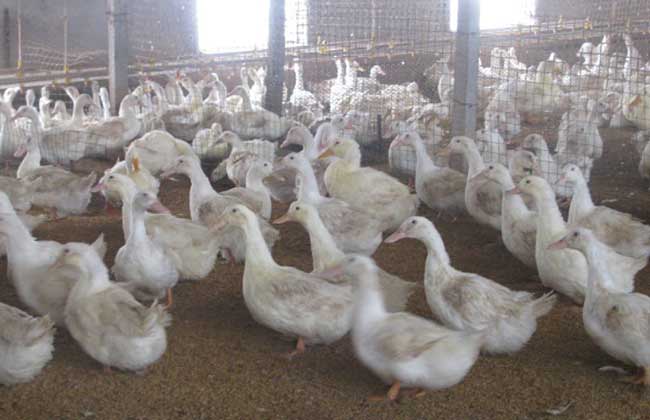
With the continuous development of the duck farming industry, antibiotics are commonly used to inhibit or kill harmful microorganisms in the digestive tract in order to improve production performance. However, adding antibiotics to feed has side effects, such as causing imbalance of the microbial flora in the duck's body, producing drug resistance, and the impact of drug residues on human health, which have increasingly attracted worldwide attention. Many countries have increasingly prohibited the use of antibiotics as feed additives. As a substitute for antibiotics, microecological preparations are being used more and more widely in the duck farming industry and have achieved good economic benefits.
Principles of Fermented Bed Duck Raising Technology
The digestive tract of ducks is relatively short, and about 70% of the organic matter in the manure has not been decomposed. It has high moisture content and high organic nutrient content. If not decomposed in time, it will deteriorate and produce odor. Under the action of functional microorganisms, part of the duck manure is degraded into odorless gases such as water vapor and carbon dioxide that are released, and the other part is converted into nutrients such as crude protein, bacterial protein, and vitamins. In this way, the pollution of duck manure to the environment is eliminated from the source, achieving zero emissions, and the quality of duck meat is naturally greatly improved. The fermented bed bedding eliminates the odorous substances in duck manure through physical adsorption, chemical neutralization, and the biochemical action of the fermentation process. The air in the duck house is fresher and the environment is clean and refreshing, which provides indispensable conditions for the healthy growth of ducks and helps improve their disease resistance.
Preparation of the Duck Bed for Fermented Bed Duck Raising
1. Dilute the bacterial culture: use 1 kg of fermentation bacterial agent per 10 sq m, mix and dilute with rice bran, cornmeal, or wheat bran at a ratio of 1:5 without adding water. The purpose is to increase the amount for sprinkling and spread it evenly into the bedding.
2. Bedding preparation: about 1 ton of dry sawdust is about 5 cubic meters. The sawdust must be non-toxic, harmless, and free of impurities, and should be dried in the sun before use.
3. Sprinkle the bacterial culture: you can spread it while laying the bedding, or mix it evenly before laying. Remember that there is no need to add water.
4. Lay enough bedding: the bedding should preferably be 40 cm. If sawdust is not easy to obtain, rice husks, peanut shells, or straw can be partially used as substitutes, with 20-30 cm of sawdust used on the surface instead.
5. Put the ducks into the bed: after laying, the flock of sheep can be put in. Do not wait until fermentation is complete before putting them in. If the surface is dry, a little water can be sprinkled first, so that the sheep do not raise dust when running.
6. Quick start: bury fresh manure and urine at a depth of 20-30 cm, cover with sawdust and then level it. After doing this several times, it can be started quickly.
7. Daily maintenance: when there is too much manure and urine and it is too wet, it needs to be buried and leveled. Be careful to open the ventilation openings, turn and loosen it, and use air flow to regulate humidity.
Precautions for Fermented Bed Duck Raising
1. Regularly drink EM diluted solution at 1:200, and feed EM-fermented feed, which can decompose the nutrients in the feed in advance and facilitate full absorption by the ducks.
2. The stocking density of ducks should be well controlled. If it is too dense, there will be too much manure per unit area, and the bacteria in the fermented bed cannot effectively decompose the manure. Five to six ducks per sq m.
3. EM bacteria need a moist environment. Observe the humidity of the fermented bed and spray EM diluted solution at 1:200. Keep the humidity at around 30%.
4. Pay close attention to the activity of probiotics. When necessary, add EM bacterial liquid at 1:50 to regulate probiotic activity to ensure that fermentation can proceed normally.
5. Chemical drugs are prohibited. The use of chemical drugs and antibiotic drugs is prohibited in the duck house to prevent killing and inhibiting probiotics and reducing probiotic activity.
6. Attention must be paid to ventilation and air exchange.
7. Normal epidemic prevention.