Detailed Explanation of Efficient Wild Duck Rearing and Management Techniques
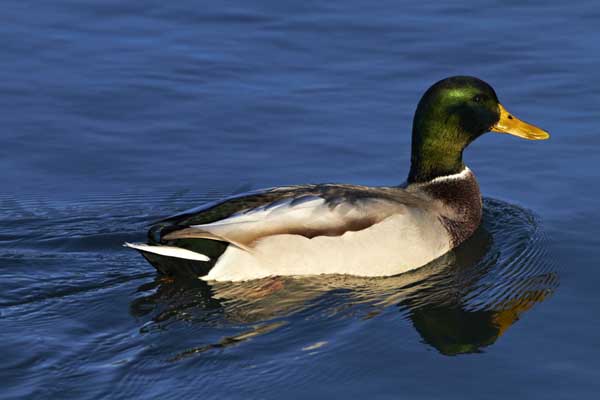
The wild duck is a typical representative of waterfowl; the wild duck is the common name for the mallard (Anas platyrhynchos) in the Northern Hemisphere. The wild duck belongs to the class Aves, order Anseriformes, family Anatidae; its numbers are very large, and it is a general term for many kinds of wild ducks, with more than ten species. Wild ducks can make long-distance migratory flights, and their highest flight speed can reach 110 km per hour. In the narrow sense, the wild duck refers to the mallard, also known as the large green head, large red-legged duck, large hemp duck, etc., and is the most common large wild duck and the ancestor of all domestic ducks except the Muscovy duck, and is currently the main target for artificial domestication.
Site and Housing Construction
1. Site selection: The wild duck house should be built in wild mountain woodland far from residential areas, with high terrain, sheltered from the wind and facing the sun, relatively flat land, easy to protect against animal damage, and conducive to controlling the spread of disease.
2. Building the house and shed: The duck house is built with bamboo and wood into a ""-shaped frame, with eaves on both sides 1.5 m high, and the top covered with thatch, so that it is warm in winter and cool in summer. The size and length of the duck house depend on the number of ducks raised, generally raising 8-10 ducks per 1,000 sq m. At the same time, sheds are built within the wild mountain woodland to provide wind protection and rain shelter for the ducks and for storing feed. In addition, there should be a sufficiently large activity area, with many trees and grasses planted, and ditches and ponds dug in the activity area, with algae cultivated in the water.
3. Enclosure net and overhead net: The entire activity area is enclosed with netting, with the large net at a height of about 2 m above the water surface, and a surrounding net added down to the bottom of the water, forming a closed body with the overhead net, to prevent the wild ducks from flying away. The mesh size is 3 cm×3 cm.
Breed Selection
At present, the mallard is the most suitable for artificial rearing of wild ducks. This duck is an artificially domesticated breed with a large body size; generally raised to 80 days of age, its body weight reaches the meat standard of 1.4 kg. Female ducks begin laying eggs at more than 5 months of age, laying nearly 200 eggs per year. The taste of the meat and eggs is even more delicious than that of natural wild ducks from the lake area, and especially the meat does not have the fishy odor of domestic ducks, so it is deeply loved by people.
Feed Formulation
The nutritional requirements of wild duck feed are basically the same as those of domestic ducks. Under normal circumstances, special compound feed for domestic ducks can be fed. If you formulate feed yourself, you can refer to the following formulas:
1. Ducklings: corn 47.3%, wheat 15%, wheat bran 10%, cottonseed cake 22%, fish meal 4%, shell powder 1.5%, salt 0.2%.
2. Adult ducks: corn 40.8%, wheat 14.5%, rice bran 17.5%, paddy 8%, cottonseed cake 14%, fish meal 4%, bone meal 1%, salt 0.2%.
3. Laying ducks: before laying, corn 35%, rice bran 15%, paddy 36.8%, cottonseed cake 10%, Wu powder 2%, bone meal 1%, salt 0.2%. During the laying period, corn 24%, rice bran 7%, paddy 37%, cottonseed cake 21%, fish meal 5%, bone meal 3%, shell powder 2.7%, salt 0.3%.
Rearing and Management
1. Ducklings (1-30 days of age): Generally brooded on flat ground inside the house. The ground should be covered with soft rice straw and divided into small pens, each about 2 sq m, with 1 heat-preserving electric lamp installed in each pen, and 50-70 ducklings raised in each small pen within 7 days of age. Pay attention to maintaining the appropriate temperature: 27-29°C for 1-3 days of age, 25-26°C for 4-6 days of age, 24-25°C for 7-10 days of age, and 17-19°C after 10 days of age. Because ducklings like to huddle together when sleeping, in order to prevent them from being crushed or suffocated by huddling, you must be on duty day and night, gently separating the huddles by hand once every 1 hour. When starting to feed, first provide drinking water and then feed; add an appropriate amount of compound vitamin B preparation to the drinking water. Prepare enough clean water for the wild ducks to drink freely. The number of feedings is generally 7 times a day within 10 days of age, and 4-5 times a day after 10 days of age; each time, while feeding the compound feed, also appropriately add chopped tender grass, vegetable leaves and other green feed, as well as kelp extract powder and fresh live animals such as small fish, shrimp, and earthworms. Ducklings 7-15 days old can be released into shallow ditches on sunny days, and after 15 days of age can be released into ponds, to promote healthy growth.
2. Adult ducks (31-80 days of age): To make the adult ducks grow quickly, compound feed should be supplied without limit throughout the rearing period, allowing them to eat freely, and sufficient clean drinking water should be provided. After 50 days of age, due to increased body fat and physiological changes, the adult ducks begin to learn to fly; at this time, strict escape prevention is required, the keeper should wear plain-colored clothes, and outsiders must be prevented from entering the house and disturbing the flock.
3. Laying ducks (after 80 days of age): Before laying, feed 2-3 times a day, feed less in the morning, let them move around more in the wild mountain woodland and eat more natural feed, feed less or even not at all at noon, and feed them fully before they enter the house in the evening. During the laying period, in order to make the ducks lay more eggs and lay "wild-flavored" eggs, it is best not to feed them fully every morning, and to let the ducks move freely in the wild mountain woodland to eat natural feed; at noon, prepare enough drinking water in the shed, and before the sun sets in the afternoon, drive the ducks back to the duck house and feed them fully. During the laying period, some shallow nests should be made artificially on the ground and lined with soft rice straw to facilitate egg laying.
Disease Prevention and Control
Wild ducks have relatively strong disease resistance, but when raised artificially the flock is relatively concentrated, so diseases must be carefully prevented and controlled. To prevent duck plague, attenuated duck plague vaccine can be used, with 1 ml injected intramuscularly per bird at 20 days of age; to prevent duck cholera, fowl cholera bacterin can be used, with 2 ml injected intramuscularly per bird at 30-40 days of age. Ordinarily, sulfadimidine or sulfathiazole can be mixed into the feed at a ratio of 0.5%-1%, fed continuously for 3-5 days, then fed again after stopping for 10 days; 0.01% potassium permanganate can also be used in drinking water for disease prevention, with very good results.