How to prevent and control duck plague? Detailed explanation of duck plague prevention and control techniques
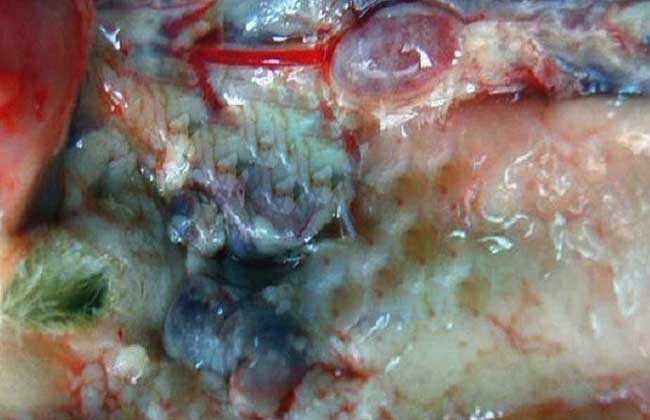
Duck plague is an acute, highly fatal infectious disease caused by duck plague virus, also known as duck viral enteritis, commonly called "big head plague". Ducks of all ages are susceptible, but the incidence rate is higher in adult ducks than in ducklings. Sick ducks are the main source of infection; the main route of infection is the digestive tract, and it can also be transmitted through mating, the conjunctiva of the eyes and the respiratory mucosa.
Symptoms of duck plague
Sick ducks appear listless, with reduced appetite or complete refusal to eat, increased thirst, and a preference for lying down rather than moving. In the early stage of illness, body temperature rises above 43 degrees. There is tearing, the feathers around the eyes become matted and wet, and there may even be purulent discharge that sticks the eyelids together. There is also discharge from the nasal cavity, and some ducks develop swelling of the head and neck. Sick ducks have diarrhea, passing green or grayish-white watery droppings.
Epidemiological characteristics of duck plague
1. Under natural conditions, this disease occurs mainly in ducks. Ducks of different ages, sexes and breeds are all susceptible, with Muscovy ducks and shelducks being more susceptible, followed by Pekin ducks. The incubation period of natural infection is usually 2 to 4 days, and ducklings under 30 days of age are less likely to develop the disease.
2. Under artificial infection, ducklings are more susceptible than adult ducks, while natural infection is more common in adult ducks, especially laying ducks. This may be because adult ducks are often kept free-range and have more opportunities to come into contact with the pathogen and become infected. Geese can also be infected and develop the disease, but epidemics rarely form. Chicks within 2 weeks of age can be artificially infected and develop the disease. Wild ducks and geese can also be infected and develop the disease.
3. Duck plague can be transmitted directly through contact between diseased poultry and susceptible poultry, and can also be transmitted indirectly through contact with a contaminated environment. Contaminated water sources, duck houses, equipment, feed and drinking water are the main vehicles of transmission of this disease. Some wild waterfowl can become a natural reservoir and vector for the spread of this disease after being infected with the virus. Arthropods (such as blood-sucking insects) may also be vectors of this disease because of the viremia caused by this disease. Transporting diseased ducks can cause the spread of the epidemic.
4. Duck plague can occur in all four seasons, but epidemics are more severe in spring and autumn. After duck plague is introduced into a susceptible duck flock, sporadic sick ducks generally begin to appear in 3 to 7 days, and then after another 3 to 5 days a large number of sick ducks appear successively, and the disease enters the epidemic development period and the peak epidemic period. The entire epidemic process in a duck flock generally lasts 2 to 6 weeks. If there are immune ducks or surviving ducks in the flock, it can be prolonged to 2 to 3 months or longer.
Prevention and control measures for duck plague
1. No specific drug: there is currently no specific drug that can be used to treat duck plague, so prevention should be the main approach. In addition to good biosecurity measures, immunization with attenuated live duck plague vaccine can effectively prevent the occurrence of this disease.
2. Introduction and breeding: it is strictly forbidden to introduce breeding ducks and ducklings from epidemic areas. Breeding ducks purchased from other places should be raised in isolation for more than 15 days and can only be mixed into the flock after strict quarantine. Duck eggs laid by diseased ducks and recovered ducks must not be kept as breeding eggs.
3. Immunization: for laying ducks, the first vaccination can be carried out at 20 days of age at half the dose, followed by a booster immunization after 2 months of age. A third immunization is carried out before the laying period. For meat ducks, half a dose of duck plague vaccine can be injected subcutaneously once at 1 to 7 days of age, and the immunity can last until market. For breeding ducks, immunization is carried out once each in spring and autumn every year, with each duck receiving an intramuscular injection of 1 ml of attenuated duck plague vaccine or 0.5 ml of duck plague hyperimmune serum duck virus antibody. It is essential to use one needle for only one duck to avoid cross-infection through injection. Any sick duck that has already shown obvious symptoms should no longer be vaccinated and should be culled immediately.
4. Emergency treatment
(1) When an outbreak occurs in a duck flock, healthy ducks or ducks suspected of being infected should immediately receive emergency vaccination with 3 to 4 times the dose of duck plague vaccine.
(2) For sick ducks, each duck is injected intramuscularly with 0.5 ml of Guohao Gaoke's duck plague hyperimmune serum duck virus antibody or 0.5 to 1 ml of polyinosinic-polycytidylic acid, once every 3 days for 2 to 3 consecutive times, for early treatment.
(3) Moroxydine hydrochloride soluble powder or enrofloxacin soluble powder can also be mixed with water for drinking, 1 to 2 times a day for 3 to 5 consecutive days, but it should not be used for laying ducks, and medication should be stopped 8 days before sale for meat ducks. All sick ducks should be slaughtered and deeply buried. At the same time, all items that may have been contacted by sick ducks should be thoroughly disinfected.