How to choose layer duck breeds? Master these selection methods
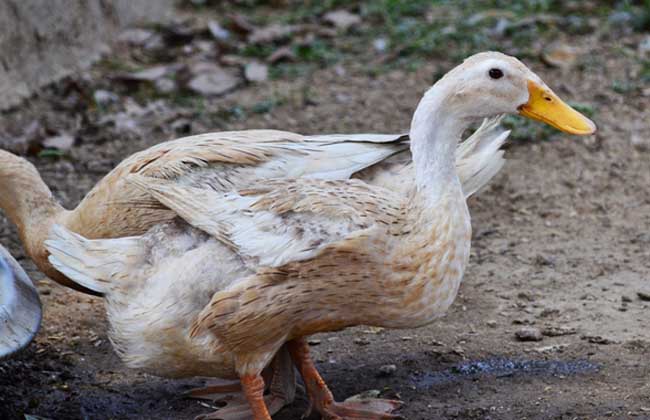
At present, China has many layer duck breeds. When choosing a breed to raise, you must be careful and not simply follow company advertising. On one hand, listen to experts' introductions; on the other hand, consult people who have raised good breeds and have practical experience. This can help avoid detours and reduce economic losses.
Introduction to excellent layer duck breeds
By comparison, among the layer duck breeds currently raised in China, the 3 breeds Shaoxing duck, Jinding duck and Khaki Campbell duck have relatively excellent production performance.
1. Shaoxing duck
The Shaoxing duck is one of China's most outstanding high-yielding layer duck breeds. Its full name is Shaoxing Ma duck, also called Shanzhong duck or Zhejiang Ma duck. It originated in Shaoxing, Xiaoshan, Zhuji and other cities and counties in Zhejiang Province. This breed has the advantages of high egg production, early maturity, small body size and low feed consumption. It is one of the high-yielding breeds among China's egg-type Ma ducks and is relatively suitable as the female parent for crossbreeding combinations. This breed can be kept in confinement and is also suitable for grazing in closely planted rice fields. It is now distributed throughout Zhejiang Province, the suburban counties of Shanghai, and the Taihu area of Jiangsu Province.
Appearance characteristics: The body is narrow and long, the bill is long and the neck is slender, the rump is full, and the abdomen droops slightly. When standing or walking, the front part of the body is held high, and the trunk forms a 45° angle with the ground. It has the standard body type of an egg-type breed and belongs to the small Ma duck type. The overall plumage uses brown sparrow feather as the base color, but due to different types, there are some differences in neck feathers, wing feathers and abdominal feathers. It can be divided into two types: the white wingtip with ring and the red-feathered green wingtip. Within the same type, the feathers of drakes and ducks also differ. They are introduced separately below.
① White wingtip with ring. The most obvious feature is a white feather ring 2-4 cm wide in the middle of the neck, white main wing feathers, and white feathers on the middle and lower abdomen. The iris (the color produced by diffraction on the surface of duck feathers) is grayish blue, the bill is orange-yellow, the bill bean is white, the shanks and webs are orange-red, the claws are white, and the skin is light yellow. In addition to the above common features, the drake's plumage uses dark brown as the base color, and the head and upper neck are dark green, glossy after sexual maturity. The drake has 2-4 upward-curling feathers in the center of the tail feathers, called sex feathers, also called curled feathers. The duck's plumage uses light brown sparrow feather as the base color, and the whole body is covered with black spots of varying sizes.
② Red-feathered green wingtip. The features of this type are no white feather ring on the neck, brown iris, grayish yellow bill, black bill bean, yellowish brown shanks and webs, black claws, and light yellow skin. The drake's plumage uses dark brown as the base color, and the head and upper neck are dark green, glossy after sexual maturity. The duck uses dark brown sparrow feather as the base color, the abdomen is brown Ma colored, with no white feathers, and the wing feathers are dark green and shiny, called mirror feathers.
2. Jinding duck
The Jinding duck is a blue-shelled egg breed, with a 100% blue-shell rate, and the eggs are relatively large (Shaoxing duck and Khaki Campbell are both white-shelled egg breeds). The Jinding duck is larger than the Shaoxing duck and slightly smaller than the Khaki Campbell, and its feed consumption is somewhat higher than that of the Shaoxing duck. The Jinding duck originated in the Humao Delta where the Jiulong River enters the sea in Fujian Province. It has long been grazed on soft, flat beaches and has good adaptability to coastal mudflat environments. It has strong foraging ability and is very suitable for raising in coastal areas and places with good grazing conditions.
Appearance characteristics: It belongs to the small egg-type breed, with a narrow and long body and the front part held high. Drake: the feathers on the head and neck are dark green and glossy; the back feathers are grayish brown, the chest is reddish brown, and the abdomen is grayish white; the main tail feathers are dark brown, and the sex feathers are black and slightly upturned; the bill is yellowish green, the iris is brown, the shanks and webs are orange-red, and the claws are black. Duck: the whole body is covered with reddish brown sparrow feathers and black spots of varying sizes, the back feathers gradually darken from front to back, the abdominal feathers are lighter, the neck feathers are brown with no black spots, and the wing feathers are dark brown; the bill is bluish black, the iris is brown, the shanks and webs are orange-yellow, and the claws are black.
3. Khaki Campbell duck
The Khaki Campbell duck (yellowish brown Campbell duck) is a foreign breed. There are 3 varieties: black, white and yellowish brown. China introduced the yellowish brown Campbell duck from the Netherlands. Unlike the above two breeds, it is larger in body size and close to a dual-purpose breed. Its duck meat is delicious, its laying performance is relatively stable, its temperament is gentle, and it is not easily affected by external environmental changes to produce stress. It is suitable for confinement raising and has now been promoted throughout the country.
Appearance characteristics: The body size is slightly larger than domestic layer duck breeds, the body is wide and deep, the back is wide and straight, the neck is slightly thick, the eyes are relatively small, and the chest and abdomen are well developed. Its body type and appearance are clearly different from China's egg-type breeds and are close to a dual-purpose breed body type. The down of ducklings is dark brown, and the bill and shanks are black. As they grow, the plumage color gradually becomes lighter. Adult drake: the plumage uses dark brown as the basic color, and the head, neck, wings, shoulders and tail are all bronze with black gloss; the bill is greenish blue, and the shanks and webs are orange-red. Adult duck: the whole body plumage is brown with no obvious black spots, the feathers on the head and neck are darker, and the main wing feathers are also brown with no mirror feathers; the bill is grayish black or yellowish brown, and the shanks and webs are grayish black or yellowish brown.
4. Jiangnan No. 2
A high-yielding layer duck hybrid line with excellent production performance. At 500 days of age, egg production can exceed 320 eggs, and total egg production can reach more than 21 kg. However, this is produced through strict breeding and according to a certain hybrid procedure, and at present no one strictly produces seed stock according to this procedure. Some companies claim they can provide Jiangnan No. 2; this is nonsense, and readers must not be fooled. It is better to realistically choose one of the 3 breeds: Shaoxing duck, Jinding duck or Khaki Campbell duck.
Regional selection of layer ducks
Among the above breeds, except for the Khaki Campbell duck, the origin places of the Shaoxing duck and Jinding duck are both in the south. Can they adapt if introduced to the north for raising?
1. Analyze the differences in the natural environment between the south and the north. The main difference is climate conditions. The average temperature in the south is high, and summers are hot; the average temperature in the north is low, and winters are cold. The south is rainy and humid, while the north has little rain and is dry. The main crop grown in southern rural areas is rice, and the grazing sites are mostly rivers, lakes and rice fields; the main crops grown in northern rural areas are dryland crops such as wheat, corn and soybeans, and the grazing environment differs greatly from the south.
2. Analyze the adaptability of layer ducks. Layer ducks differ from Muscovy ducks in that they have strong adaptability to climate. They can adapt to the high temperatures of southern summers, and northern summers are even less of a problem. Therefore, from the perspective of climate conditions, raising layer ducks in the north mainly concerns winter. When the outdoor temperature drops below zero, grazing must stop. When the indoor temperature is below 5°C, heating and insulation are needed. As long as the indoor temperature can be maintained at 10-15°C, a laying rate of about 85% can still be achieved in winter.
3. From the perspective of the natural grazing environment, grazing is also possible in the north in spring, summer and autumn, but the ducks must be trained. Only by mastering the technical essentials of grazing will problems be avoided. In winter, northern temperatures are too low, so grazing must stop and be changed to indoor confinement.
4. Overall, southern layer ducks can adapt to being raised in the north as long as proper insulation is provided in winter. The raising method used should preferably be confinement; if grazing is used, grazing must also stop in winter. To raise layer ducks well in the north, the key is to understand the habits of layer ducks and to use a complete set of reasonable and correct feeding and management techniques in order to achieve the goal of high yield.
Choose good breeds according to market demand
What does it mean to choose good breeds according to market demand? For example, white-shelled eggs and blue-shelled eggs have nothing to do with the level of laying rate, nor with the nutritional value of the eggs, but they are closely related to economic benefits. This is because in some areas people prefer blue-shelled duck eggs, and the retail price per egg is 0.05-0.1 yuan higher than white-shelled eggs. Calculating on the basis of 1 duck producing 300 eggs per year, under the same conditions, blue-shelled eggs bring 15-30 yuan more income than white-shelled eggs, which is a considerable benefit. For another example, in some areas ducks are raised mainly for processing preserved eggs and salted eggs, which are sold by number rather than by weight. Therefore, when merchants purchase them, the price per kilogram of small eggs is 30%-50% higher than that of large eggs, so small eggs sell well, making large-egg breeds difficult to promote. A similar situation occurs when hatcheries purchase breeding eggs: some specifically choose small eggs to buy, because whether large or small, each fertilized egg can only hatch one duckling, and ducklings are sold by number. Therefore, when choosing excellent breeds, in addition to considering production performance as the main factor, you must also take into account the special needs of the local market. Only by combining the two and considering them comprehensively can you obtain the best benefits.