How do you build a wild duck farm? A detailed explanation of the construction plan
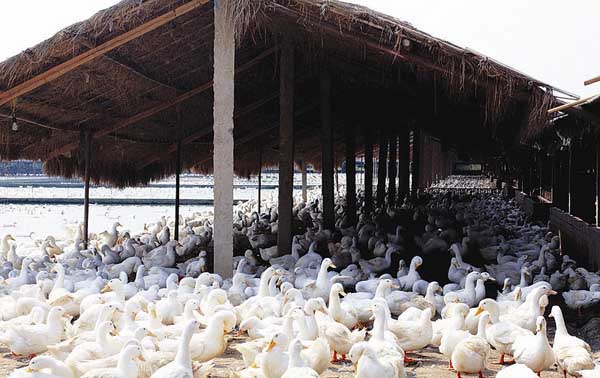
Site Selection
A wild duck farm should preferably be built beside a small river with water year-round, next to a stream, or around a pond, lake or reservoir. Ponds, lakes and reservoirs can also be modified and used, and the area around them as well. Duck rearing in a courtyard is also possible. Requirements for choosing a wild duck farm site:
1. The natural environment is secluded, warm in winter and cool in summer.
2. Sheltered from the wind and facing the sun.
3. Good drainage.
4. The ground is flat or slightly sloped, to help surface water drain away; when building a farm in hilly areas, the wild duck farm should be built on a sunny side, so that the wild duck house can get plenty of sunlight, have good ventilation in summer and block the wind in winter, which benefits the growth of the wild ducks.
5. The soil is sandy or loam.
6. There is open water nearby. If there is sloping land near the water with a slope of less than 30 degrees and a shallow flat below the slope, then building the farm on such a slope is ideal. If no ready-made water area is available, one can be dug artificially.
7. No pollution sources: the site's soil is required never to have been contaminated by pathogens of infectious diseases or parasites.
8. Convenient electricity and transportation.
Construction Plan
The construction of a wild duck farm is determined according to production needs, the amount of capital invested and so on. Generally there should be a wild duck house, a wild duck yard, a duck beach, a water sports area, and housing for the keepers. The wild duck house is the place where the ducks roost and also where they lay eggs. The size of the duck house depends on the number raised; the usual stocking density is calculated at 2-3 birds per square meter. Duck houses are further divided into duckling houses, growing duck houses and breeder duck houses (laying duck houses).
1. Duckling House
The mallard wild duck has relatively high housing requirements during the brooding period, with the goal of raising the brooding survival rate. The duckling house should face the sun, keep warm well, be dry, have good lighting and good ventilation. The ratio of the window lighting area to the floor area inside the house is 1:(10-15). The interior is divided into small compartments of about 4 square meters, so that ducklings can be brooded in small groups, avoiding ducklings huddling together and the resulting deaths from crushing and smothering. The brooding duck house requires good insulation, and convenient water play, manure removal and cleaning.
The duckling house consists of two parts: the indoor warm-keeping area and the outdoor exercise and water-play area. The indoor area is 20-40 square meters, using far-infrared panels, flues or suspended galvanized sheet flues for heating and warmth. The flues use coal, the furnace door opens on the side wall, the firebox extends into the room to make full use of the heat source, and the chimney pipe is also built indoors. The indoor floor is made into sloped cement flooring, with two small collection gutters running in the direction of the slope, so that the floor dries quickly after being washed. On the indoor floor it is best to use 1-square-meter mesh panels laid down for brooding. The outdoor exercise area is the same size as the indoor one. The ground is sloped, and at the far end of the exercise area a shallow water-play pool 1-1.5 m wide and 10-20 cm deep is built, letting the ducklings play in the water freely or rest and sunbathe on the land area. At the edge of the exercise area there is a 30-40 cm high retaining wall built of single bricks, above which are a drainage ditch and a walkway.
2. Growing Duck House
The mallard wild duck's growing duck house does not require high conditions; it can be a relatively simple shed used for roosting at night. From 15 to 70 days of age, the mallard wild duck does not have the ability to fly, so ground flat rearing is used and no overhead netting is built. The ratio of the indoor area to the land exercise area to the water activity area is 1:1:1.
Simple growing houses are built on the banks of streams with flowing water, lakes and similar places. The houses can be large or small, but the flowing water should not be too deep; the water depth should not exceed 1 m. The indoor floor and the land exercise area floor are both cement floors, both sloping toward the water, so the ducks can come and go freely. The usual specifications are 9 m long, 4 m wide and 3.2 m high, and the house can have small windows or no windows.
There is no fixed form for the internal equipment of the duck house; rearing can use mesh, wooden slatted panels or litter, but if the entire area occupied by the ducks is all spread with litter, it is difficult to keep clean and dry and the workload is very heavy. Along the junction of the land exercise area and the water surface, a sewage drainage ditch is built, 15-20 cm deep and 20-30 cm wide. Slatted boards are laid over the ditch, so that the manure and dirt from cleaning and washing flows out through this ditch to outside the rearing area, so as not to pollute the water area, keeping the water area clean and reducing the occurrence of disease. The interface between the land area and the water area is built as a cobblestone ramp 2-3 m wide with a 20-degree slope, for the ducks to go up and down. In addition, the wall of the growing house is 40 cm high, and the land area and water area use 40 cm high welded wire mesh as movable fencing. The underwater part of the water area is enclosed at the bottom with nylon fishing net. When the weather is cold or windy, plastic woven cloth can be used as a shield to maintain the house temperature. If there is no natural water source, then the method of building an artificial pool can be adopted, with a pool depth of 60 cm, water supply and drainage channels, and a manure drainage ditch at the pool edge, making water changes convenient. When changing the water, drain the dirty water completely, thoroughly clean the duck manure, feathers and dirt from the bottom of the pool, and carry out disinfection treatment.