Key Technical Points for Feeding and Management of Muscovy Ducks During the Laying Period
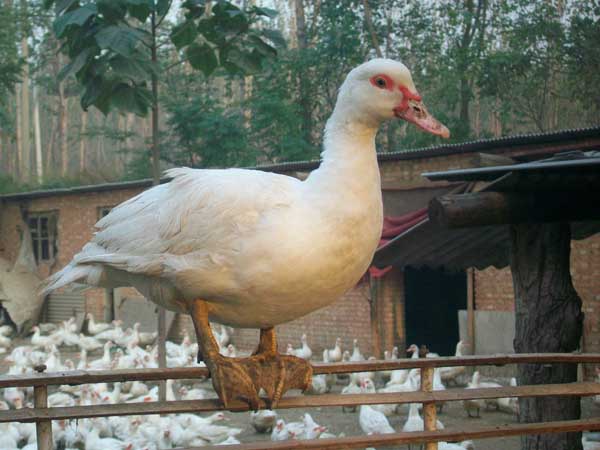
Key Feeding Technical Points
Before the laying period, breeding ducks should be selected and retained according to breed duck body shape and body weight standards. Generally, before the start of laying, female Muscovy ducks weigh 2.5-3.0 kg, and male ducks of the same age weigh 4.0-4.5 kg. Surplus male Muscovy ducks should be culled according to a male-to-female ratio of 1:4-5. Raise them in separate groups; breeding ducks should be kept in groups of 200-300, with a stocking density of 3-4 birds per sq m. The duck house should be well ventilated, and the exercise yard should be as large as possible, with shade trees and weeds. During the laying period, breeding Muscovy ducks require more crude protein than reserve breeding Muscovy ducks, and should be fed 3 times a day.
Key Management Technical Points
1. Reasonable grouping. When confining and grouping Muscovy ducks, ensure consistent breed, consistent age, and consistent body weight to prevent mixing strong and weak birds.
2. Four-season management of confined Muscovy ducks. Corresponding management measures should be taken according to seasonal climate changes.
① Spring: The weather gradually becomes warmer, and this is the peak laying period for female Muscovy ducks. Various microorganisms also multiply easily, so during this period the shed should undergo a thorough disinfection once, and bedding should be cleaned up to reduce opportunities for disease occurrence. At the same time, feed a diet higher in protein and energy to ensure the female duck flock enters the high-production period as quickly as possible. The laying rate in spring should reach about 85%-90%.
② Summer: The main task is to prevent heat and reduce temperature. A shaded awning can be built on the exercise yard; feed more in the morning and evening, feed less at noon, and continuously supply clean drinking water. In this season, the laying rate should be maintained at 75%-80%. In addition, special attention should be paid to the impact of typhoons and thunderstorms on the duck flock. Generally, before and after a typhoon, the laying rate of the duck flock drops by 30-40% compared with normal, and it takes 7-10 days to recover; storms and heavy rain also have a great impact on duck flock production, but it can return to normal in 2-3 days.
③ Autumn: Around mid-to-late September, the laying rate begins to decline. When the laying rate is about 30%, artificial forced molting can be carried out. After about 1 month, the Muscovy duck flock begins laying again, which is the second laying period of the year. As long as the diet level meets requirements, the laying rate in this season can still remain above 75% until January of the following year.
④ Winter: The main task is to prevent cold and keep warm. Muscovy ducks are relatively sensitive to cold. On sunny days, the duck flock should be allowed to move around in the exercise yard; nutrition should be kept appropriate so that the duck flock does not become too thin over winter, laying a good foundation for spring laying.
3. Management at different laying stages
① The focus of the early and initial laying stages is to improve feed quality and appropriately increase feeding frequency, so as to push the laying rate to a peak as quickly as possible.
② In the mid-laying stage, ensure high and stable production. Note that the nutritional concentration of the feed should be somewhat higher than in the previous stage, lighting should be stable and slightly increased, daily operating procedures should be fixed, and the house temperature should be between 10°C and 30°C.
③ In the late laying stage, determine the feed supply according to body weight and laying rate, release more and confine less to promote movement, keep the environment stable, and appropriately add cod liver oil and inorganic salt additives.
4. Daily management
Various bacteria exist in the surrounding environment, so we must take a series of measures to prevent pathogens from entering the duck house, protect the duck flock from infection, and keep the open areas outside the house clean and flat. Various wastes, wastewater, and manure must be discharged through the sewage system to designated locations. Trucks transporting feed should unload at a dedicated warehouse, and the feed silo should be disinfected once every 3 months. The production area must be kept absolutely clean, and the floor in the duck house should be swept clean after each bedding replacement. After group transfer, the duck house should be disinfected once. Vehicles entering the farm area need to be disinfected in a disinfection pool containing disinfectant, and the roads in the farm area should be washed and disinfected once a week. When managing the duck flock, follow the order of ducklings first, then adult ducks, and finally handling sick ducks. Remove dust regularly, and keep bedding dry. Disinfect the water supply system pipes with iodine solution once every two weeks, and drinking water should also be disinfected. Eggs must not be piled up in humid, high-temperature environments. Clean dirty eggs every day, do not let them pass through the passage entrance of the egg storage area, do not let them pass through the passage entrance of the egg storage area, and dead ducks should be incinerated promptly. Other poultry must not be raised on the duck farm, and other wild animals, especially rats, should be prevented from entering the duck farm.