How to raise young laying ducks in confinement? Key technical points explained
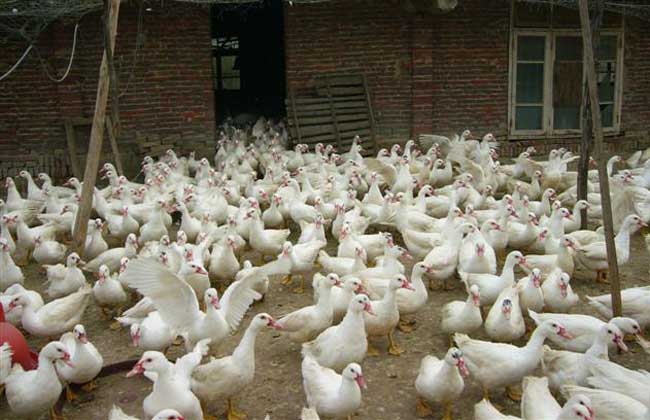
Confinement rearing of young laying ducks differs from grazing management, and confining young laying ducks has many advantages, such as the ducks' living environment not being affected by outside conditions and remaining relatively stable; saving labor, reducing labor intensity, and improving labor productivity; lowering the incidence of infectious diseases, poisoning and other accidents, and raising the ducks' survival rate. However, management still needs to be strengthened during the confinement rearing of young laying ducks.
Regular exercise
With confinement rearing, young laying ducks easily become overweight due to low activity levels, which affects future egg production. The ducks should be driven to walk in circles inside the house at set times every day, 5-10 minutes each time, 2-4 times per day. If there is suitable grazing ground near the duck house, short-distance activity can be carried out at set times.
Building boldness
Young ducks are timid, and egg-type breeds are especially sensitive. Farmers should make the most of feeding, watering, and changing bedding during the ducks' young period to have more contact with the flock and increase the ducks' boldness. For example, when feeding, a person can stand nearby and observe how the ducks eat, letting the ducks walk around them; when a “spoiled duck” quietly crouches beside them, they can stroke it with their hand, and over time the ducks will no longer fear people. If you avoid approaching the ducks because they are timid and afraid of people, it will instead make them even more timid, and later, when a stranger comes near or the environment changes, they will very easily panic as a flock, causing serious losses.
Stable lighting
Young ducks require the daily lighting period to be kept stable at 8-10 hours, and it should not be increased before they begin laying. However, to make it easier for the ducks to drink at night and to prevent flock panic caused by the movement of rats or birds and animals, weak lighting should be provided in the house throughout the night. One 15-watt bulb can be lit for every 30 sq m of duck house; in the event of a power outage, a kerosene lamp or barn lantern with a glass cover should be lit immediately, and this must never be delayed. This is because a flock kept under weak light all night will very easily panic severely and suffer injuries or deaths once it encounters a dark environment.
Vaccination
The main infectious diseases of young ducks are duck plague and cholera. Both diseases can be prevented with vaccines, and the specific immunization schedule is: at 60-70 days of age and 100 days of age, inject fowl cholera vaccine once each. At 70-80 days of age, inject attenuated duck plague vaccine; for laying ducks kept for only 1 year, 1 injection is enough; for laying ducks kept for more than 2 years, a preventive injection is needed again after 1 year. Preventive injections for duck plague and cholera must both be completed before the ducks begin laying.
The living environment of confined ducks is more stable than that of grazing ducks, and keeping to a fixed daily routine according to the ducks' living habits helps keep the flock settled.