Prevention and Control Methods and Technical Key Points for Vitamin A Deficiency in Meat Ducks
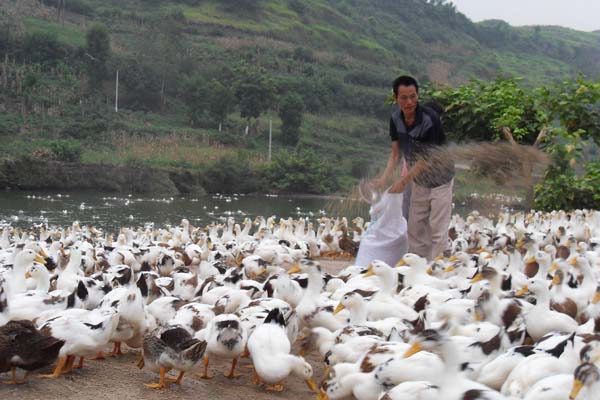
During the process of raising meat ducks, they are often prone to a metabolic disease whose main symptoms are visual and movement disorders, which is known as vitamin A deficiency in meat ducks.
Symptoms of Vitamin A Deficiency in Meat Ducks
The typical symptom of sick ducks is a milky exudate flowing from the eyes, with the upper and lower eyelids stuck together by the exudate, and the conjunctiva cloudy and opaque. In severe cases, large white caseous material accumulates in the eyes of sick ducks, and the cornea may even soften and perforate, ultimately causing blindness in the sick ducks. Under normal circumstances, sick ducks stop growing, are listless, become thin and weak, walk unsteadily, have ruffled feathers, lose the yellow color of the skin on the beak and lower legs, and have weak movement. If timely treatment is not carried out, death is certain.
Prevention of Vitamin A Deficiency in Meat Ducks
1. Pay attention to feed diversity in daily practice; green feed or poultry multivitamins are essential.
2. According to the season and feed source conditions, in winter and spring, carrots or carrot tops are the best, followed by legume green leaves (such as alfalfa, clover, Chinese milk vetch, broad bean seedlings, etc.). In summer and autumn, wild aquatic plants such as wild rice stem grass are the best, followed by green vegetables, pumpkin, etc.
3. Once sick ducks with vitamin A deficiency are found, feed rich in vitamin A should be added to the daily ration as soon as possible, such as increasing the proportion of yellow corn in the compound feed, and green feed must not be interrupted. It must be noted that vitamin A is a fat-soluble vitamin with poor heat stability, and it is easily oxidized and rendered ineffective during the processing, preparation, and storage of feed, so feed should be prevented from becoming rancid, fermenting, and generating heat.
Treatment of Vitamin A Deficiency in Meat Ducks
1. Exogenous vitamin A can be rapidly absorbed in the body, so after artificial supplementation of exogenous vitamin A, the symptoms of sick ducks will disappear quickly.
2. For group treatment of vitamin A deficiency in meat ducks, the method of intramuscular injection of cod liver oil can be used. Young ducks weighing more than 250 grams can be injected intramuscularly with 1 milliliter each time, or the treatment method of adding 20 milliliters of cod liver oil per kilogram of concentrated feed can also be adopted.