Key Points of Muscovy Duck Farming Technology and a Detailed Explanation of Scientific Rearing Methods
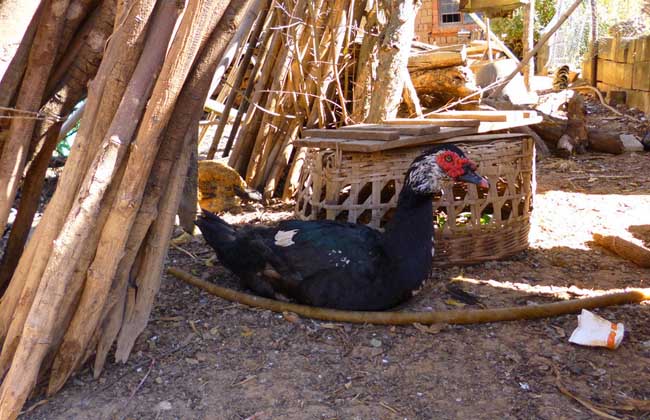
The Muscovy duck is also called the "han duck," and its scientific name is the warty-faced duck. It is the only duck breed in our country used for both medicinal and food purposes, and it is an animal of the family Anatidae, genus Cairina, order Anseriformes, class Aves. It originated in the area of the Yunnan-Guizhou Plateau in our country. The Muscovy duck has strong disease resistance, tolerates coarse feed, is easy to raise, has a high egg production rate, and reproduces quickly. It is suitable for free-range and confined rearing, among other methods. It is a newly emerging special poultry type with great development prospects, and it is suitable for raising in both northern and southern parts of our country.
Production Performance of the Muscovy Duck
According to measurements, under current rearing conditions, the average birth weight of the Muscovy duck is 40 grams. After 11 weeks of rearing, the weight of a male Muscovy duck is 3500 grams, with the largest reaching about 5000 grams, while the weight of an adult female Muscovy duck is 2500 grams. The meat-to-feed ratio can reach 1:2.8 to 3.4. The semi-eviscerated dressing percentage of adult male Muscovy ducks is 74%, and that of females is 75%. Female Muscovy ducks begin laying eggs after 6 months of rearing, with an annual egg production of 250 to 280 eggs. The average weight of a duck egg is 70 grams, and the largest reaches about 100 grams.
Living Habits of the Muscovy Duck
1. Water habits: Muscovy ducks have webbing between their toes, and they have the habit of entering water, but their swimming ability is poor. Therefore, during people's long-term domestication, this function gradually degenerated, and they became somewhat afraid of water. Perhaps this is also the reason people call it the "fire duck" (Muscovy duck)!
2. Gregariousness: Muscovy ducks are gentle in temperament, not afraid of people, tolerate coarse feed, are good at foraging, and have strong gregariousness. As long as there is a relatively suitable rearing site and conditions, they can live well together in groups in terms of feeding and reproduction. Therefore, Muscovy ducks are suitable for large-group rearing.
3. Cold tolerance: Muscovy ducks have strong adaptability to climate and environment, tolerating both cold and heat. As long as rearing conditions are relatively good, when temperatures are lower in winter and spring, their production and weight gain are not affected.
4. Omnivorousness: Because Muscovy ducks have underdeveloped senses of smell and taste, they do not demand much from the aroma of feed. They can swallow relatively large food masses and store them in the esophageal pouch (use footage of Muscovy ducks eating pipa), and the grit retained in the gizzard can grind food well. Therefore, Muscovy ducks eat a relatively large amount at one time, and their feeding habits are quite broad.
Construction of the Rearing Site
1. Brooding room: The brooding room can simply use some old, worn-out houses. Inside, brick walls should be used to divide it into multiple small pens. The pens should not be too high; a height below one meter is suitable. If too high, management is not easy. The specific size and height should be decided according to the site. A layer of wire mesh should be laid inside the pens to facilitate sanitation and cleaning work. Feeding troughs and water troughs are best chosen as movable ones. Heat-preservation lamps should also be installed indoors. In addition, drainage outlets must be set at the base of the walls so that indoor waste can be removed in a timely manner.
2. Adult duck house: The rearing site is best chosen in a quiet environment, sheltered from the wind and facing the sun, on relatively high terrain. The pen is best oriented facing south with its back to the north. The slope of the exercise yard is best at 30 degrees, and the soil is best sandy. If conditions permit, it can be paved with bricks or built into a cement floor. The rest area should be laid with wire mesh to strengthen sanitation and epidemic prevention and prevent bacterial infection. The water source facilities at the rearing site should be complete. Water troughs should be set up in the activity area. Stone troughs are best movable, which makes cleaning and feeding convenient. In addition, various idle rooms and unused spaces can also be used for rearing. For example, fencing off a piece of woodland for rearing can not only use the space, but the Muscovy duck manure can also bring a lot of nutrients to the trees. This can be said to kill two birds with one stone and achieve both goals at once.
Breeding Technology for Muscovy Ducks
1. Selection of breeding eggs: Duck eggs that are unbroken, odorless, and not spoiled should be selected as breeding eggs. After selection, place them on racks. After they are placed, put them directly into the incubator. Next, disinfection work must also be carried out.
2. Disinfection of breeding eggs: For disinfection, Jie Tai Wei Sa disinfectant can be used (show medicine on camera). Mix it into a 600-fold dilute solution and spray it directly onto the breeding eggs. After the breeding eggs dry, close the incubator door and begin management during the incubation period.
3. Incubation management: The entire incubation process takes about 40 days. The first 27 days are carried out inside the incubator, and the last ten-plus days are carried out on the incubation bed.
Management During the Incubator Period
1. Turning eggs: Starting from the first day of incubation, eggs must be turned once every 3 hours. Turning eggs can change the position of the embryo, promote embryonic movement, make the embryo receive heat evenly, and effectively prevent the embryo from sticking to the eggshell. There are two methods of turning eggs. The first is to take the rack out of the incubator and turn each egg individually. When operating by hand, one must be careful to reduce the eggshell breakage rate to the lowest possible level. The second is overall rotation, in which the incubation rack is pushed and pulled so that the breeding eggs change position accordingly. These two methods can be used alternately.
2. Candling: During incubation, candling should be carried out once each on the 7th day, the 13th day, and the 23rd day. Candling can be done with a light. It has two purposes. One is to check the incubation status of the breeding eggs. The second is to pick out spoiled, rotten, infertile eggs and dead embryo eggs. Candling can be done at night or during the day. If you are a beginner, it is recommended to do this work at night, because in a pitch-black environment, if there are spoiled eggs, they are easier to distinguish by color. For those that look gray, pick them out in time. Moreover, candling can very clearly reveal the development inside the breeding eggs. At around 7 days, thread-like and net-like things can be seen inside. At around 13 days, they become cotton-ball-like objects. This is the gradually developing duck embryo. At around 23 days, the inside of the breeding egg looks like a cloud mass, with one patch black and one patch white. This is the nearly formed embryo.
3. Cooling eggs: During the incubation process, cooling eggs is a very important step, aimed at helping the embryos dissipate heat and breathe fresh air. Because duck eggs contain more fat, as the embryos develop, heat increases. If temperature regulation is improper, death is likely. Therefore, once each in the morning, at noon, and in the evening every day, the incubator door should be opened to cool the eggs. Each cooling session lasts about 2 hours. Doing this can help regulate air circulation and ensure smooth incubation.
4. Temperature: During incubation, temperature must be strictly controlled to ensure successful hatching. During the first 7 days, the temperature should be controlled at 38°C. After 7 days, control the temperature at 37.8°C. After 23 days, lower the temperature to 37.4°C. Temperature can be adjusted by machine or coordinated manually, such as by adjusting eggs. Adjusting eggs means swapping the upper and lower positions of the racks. Temperatures at different positions within the mesh box are also different, so this can keep the temperature balanced.
5. Humidity: During the incubation process, the moisture inside duck eggs continuously evaporates, so the weight of the eggs also decreases. Measures should preferably be taken to control the weight loss of duck eggs at about 13%. The main control method is maintaining humidity.
Management During the Incubation Bed Period
1. Temperature: The temperature should be controlled at 36 to 37°C. The breeding eggs on the incubation bed can all dissipate heat on their own. The closer to the middle part, the higher the temperature, while the temperature around the edges is relatively lower. This is unfavorable for incubation. Therefore, eggs must be turned once every 4 hours. The method is to move the ones around the edges to the middle and press them gently downward, so that the breeding eggs in the middle are pushed to the sides. Doing this can balance the temperature well. In addition, when the air temperature is too high, a fan can be turned on to lower the indoor temperature, and water can also be sprinkled on the incubation bed. The temperature should not be too low; 18 to 26°C is suitable. When the air temperature is too low, blankets or cotton cloth can be used to add warmth.
2. Inspection: The closer one gets to this final stage, the more strictly one must check. Inspections must be frequent. There are three methods, commonly described as "first look, second smell, third listen." The look means carefully examining. If the surface color is found to be dull gray, the egg feels cold to the hand, or the tip of the egg is black, then it is a dead embryo and can be taken out immediately. Next, smell it with the nose. If the breeding egg has an off odor or stinks, then it is certainly spoiled. If you still cannot be sure, then hold the breeding egg in your hand and gently shake it by your ear. If you hear the sound of liquid sloshing, then it is certainly a failed hatch, and it can be thrown away. After about 7 days, a small opening can be seen on the duck egg. This is the hole pecked from inside by the duckling, because they want to come out of the shell. At around the 13th day, they will impatiently struggle to leave the eggshell.
3. Vaccine: 2 to 3 hours after the ducklings hatch, they must immediately be vaccinated. The vaccine can be selected as duckling Muscovy duck parvovirus vaccine (show on camera). Usually, when injecting, the injection should be given from the back of the duckling's neck. The dosage standard is 0.2 milliliters per duckling. After the vaccine injection is completed, they enter the growth stage of brooding ducklings.
4. Transportation: Ducklings can be placed into specially made cardboard boxes. The density should not be too high, and each duckling must be ensured 10 to 15 cm of activity space. The top cover of the cardboard box should have some holes to ensure air circulation. In addition, during transportation, water supplementation must be carried out once every 2 hours, that is, spraying water on the ducklings in the form of mist (the misting footage also includes a segment before the ducklings run on the grass), so that they can take in some moisture and ensure safety during transportation.
Feeding and Management of Brooding Ducklings
1. Feeding: During this period, ducklings do not eat much. They are mainly fed some coarse feed with relatively fine particles. Feed once a day, and the time can be chosen at 11 a.m. The feeding amount standard is 2% of individual body weight.
2. Drinking water: During the brooding period, drinking water is very critical. It is best to use movable water troughs so that water can be changed in a timely manner and the safety and hygiene of the water can also be ensured. After filling the water trough with water, simply place it directly in the pen.
3. Sanitation: Sanitation must be cleaned once every day to prevent the breeding of pathogens. When cleaning, clean every corner of the pen and wash feces and debris into the drain so that the pen stays away from contamination.
4. Disinfection: Indoor disinfection must be carried out every day. Shuang Lv Jing can be selected. After mixing it into a 500-fold dilute solution, spray it evenly in the brooding room. The time is best chosen after 5 p.m.
5. Temperature: During this period, the temperature should be controlled at 28 to 30°C. It can be adjusted through heating lamps. The length of time the heating lamps are left on should be decided according to the indoor air temperature. After scientific management, at about 15 days later, the brooding ducklings can be moved to an outdoor site and enter the management stage for commercial ducks.
6. Epidemic prevention: It should be noted that before release for rearing, epidemic prevention work must be carried out once. Duck triple disease vaccine can be selected. The liquid medicine should be injected at the base of the duck's thigh. The dosage standard is 0.2 milliliters per duck.
7. Density: Because Muscovy ducks reach market weight very quickly and do not need to be separated during the rearing process, the density for this release should not be too low. Generally, a standard of 5-6 ducks per square meter is sufficient.
Feeding and Management of Commercial Ducks
1. Feeding: During this period, poultry-specific pellet feed is mainly provided. Feed twice a day, and the amount each time is based on 4% of the individual duck's weight. Feeding times can be chosen from 7 to 8 a.m. every day and from 5 to 6 p.m. every day. It should be reminded that Muscovy ducks have two peak feather-pecking periods: one is at 1 month of age when tail feathers grow, and the other is after 2 months of age when wing feathers grow. To reduce feather pecking, attention should be paid to promptly adding some sulfur-containing amino acids and additives for treating feather pecking to the feed. Both feather meal and Ting Zhuo Ling can be used. The ratio of feather meal to feed can be matched at 1:5. The ratio of Ting Zhuo Ling to feed is based on 1:7. This can effectively stop their feather-pecking behavior.
2. Drinking water management: Muscovy ducks drink a very large amount of water. Therefore, sufficient drinking water must be maintained in the water troughs, and water must be changed frequently to ensure fresh and hygienic water quality.
3. Site disinfection: Muscovy ducks like to flock together, and they defecate anytime and anywhere. This makes it relatively easy to trigger pathogens. Therefore, the pen must be disinfected every day. Shuang Lv Jing can be selected. After mixing it into an 800-fold dilute solution, spray it evenly in every corner of the pen.
4. Sanitation and cleaning: In order to create a clean and hygienic living environment for Muscovy ducks, sanitation must be cleaned every day. Rinse the pen clean. Particularly dirty places must also be cleaned with a brush. When rinsing, be sure to be careful and thorough and do not miss any corner, so as to avoid breeding bacteria and bringing adverse factors to the growth of Muscovy ducks.
5. Immunization and epidemic prevention: While Muscovy ducks grow rapidly, they are prone to duck plague or avian influenza. For this, prevention should be the main focus. A vaccine should be given once every month. Duck triple disease vaccine can be selected. At 30 days, the standard is 0.5 milliliters per duck. At 60 days of growth, the standard is 1 milliliter per duck. In this way, they will rarely develop disease. After about four months of management, the weight of commercial ducks can basically reach 3000 kilograms. At this time, they can be sold on the market. At the same time, a portion of breeding ducks should also be retained for egg production and reproduction.
6. Retention of breeding ducks: Breeding Muscovy ducks or egg-laying Muscovy ducks can be selected and retained according to a male-to-female ratio of 1:4 to 5. It should be noted that when selecting and retaining female Muscovy ducks, female ducks with small heads, long necks, and large eyes should be chosen. The standard for male Muscovy ducks is large body, robust health, and agile movement. After breeding Muscovy ducks are retained, wing clipping must also be carried out, because at this time they are already close to having the ability to fly. In order to prevent the Muscovy ducks from escaping, wing clipping is carried out.
7. Wing clipping to prevent flight: Simply cut off the 5 to 6 feathers at the tail end of the Muscovy duck's wings. These feathers play a balancing role in the Muscovy duck's flight. As long as the feathers on one wing are cut off, they have no way to fly. Next, they can enter the feeding and management stage for breeding ducks.
Feeding and Management of Breeding Ducks
1. Vaccine injection: Breeding ducks begin laying eggs about one month after being retained. 3 to 5 days before entering the laying period, a vaccine should be injected once. Duck triple disease vaccine can be selected. The dosage standard is 1 milliliter per Muscovy duck. Inject the medicine at the base of the Muscovy duck's thigh. After that, a dose of 0.5 milliliters should be injected once every month. This can play a role in preventing duck plague and avian influenza.
2. Feeding management: During this period, the feed can be selected as complete feed for laying ducks or laying breeder ducks. At the same time, attention should be paid to the ratio of calcium and phosphorus in the feed. It can be mixed according to a feed-to-calcium-to-phosphorus ratio of 5:2:1. Feed three times a day, with times chosen at 7 a.m., 1 p.m., and 6 p.m. The amount each time is based on 6% of the Muscovy duck's individual weight. After about 2 months, they will enter the peak egg-laying period. At this time, attention should be paid to adding protein to the feed, at a standard of 200 grams per kilogram of feed. Doing this is beneficial for achieving high and stable production.
3. Drinking water disinfection: The water troughs at the rearing site must not run out of water, and the quality of drinking water must also be ensured. Water must be changed in a timely manner every day. Disinfection work during this period is essential. Disinfect once every 3 days. An 800-fold dilute solution of Shuang Lv Jing can be selected for spraying throughout the house. This can not only ensure the health of the Muscovy ducks, but also prevent the laid duck eggs from being contaminated.
4. Sanitation and cleaning: At this stage, both male and female Muscovy ducks carry enormous tasks. Not only do they eat a lot, they also produce a great deal of excrement. Therefore, the pen must be cleaned every day. Not only must the entire pen be swept, but the water troughs must also be rinsed clean to ensure hygiene and create a comfortable environment for the female ducks to lay eggs.
5. Timely egg collection: Muscovy ducks do not lay eggs at fixed times. Therefore, eggs must be collected once every 3 to 5 hours. Those in places that are easy to pick up can be placed directly into a bucket. When there are many, a tool similar to a slotted spoon can be used to scoop up the duck eggs and then put them into the bucket. These duck eggs can be sold for consumption and can also be used for incubation to breed the next generation.