Detailed Explanation of Key Technical Points for Duckling Rearing Management
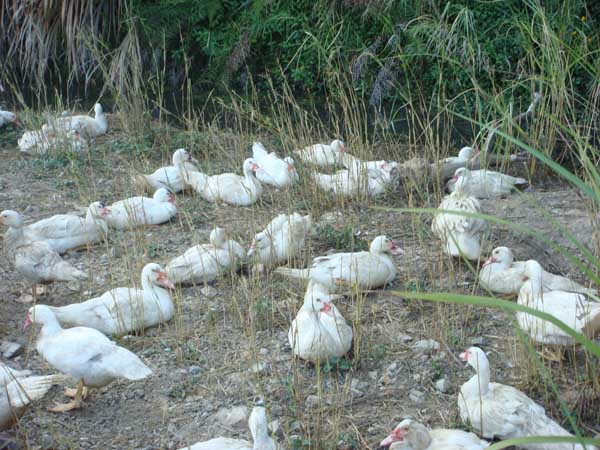
With the development of modern farming, farmers face many problems never encountered before. Such as investment, breed selection, site selection, building sheds, and so on. Material conditions such as funds are often relatively easy to prepare, but the lack of technology has become a huge difficulty standing in front of farmers. It has also discouraged some friends who longed to become farmers because of the lack of technology. This article will introduce the problems in the process of raising ducks. It may not be authoritative enough, but it is also gathered from the experience of many successful farmers.
Preparatory Work
Duck raising is mainly based on herding, and ducks often move around, so simple sheds can be built. There must be a water surface outside the duck shed so that the ducks can enter the water and move about. The ground should be covered with clean litter. Prepare the necessary duck-raising tools, such as a small boat, a duck-driving pole, a hurricane lamp, plastic sheeting for feeding, a wooden basin, and so on.
Brooding
Feeding and managing ducklings well is mainly done through self-warming brooding, and generally the heat-preservation equipment used for raising chicks can also be applied. Ducklings begin eating 14 to 24 hours after hatching. Before feeding, some people's experience is to first place the ducklings in a bamboo basket and gently press them into the water surface so that the duck feet are soaked in water. The ducklings, stimulated by the water, will become active, drinking water while moving about, putting them in a physiologically excited state, and then they are fed cooked, soaked, and washed brown rice or broken rice grains. After that, before each feeding, the ducks should first be allowed to enter the water and move about, as this can promote the ducks' metabolism.
Feeding and Herding
Ducklings are fed 6 to 7 times a day before 10 days of age, and after 10 days of age this is gradually reduced to 4 to 5 times. After feeding, it is best to check the duck's esophagus once to see whether it has eaten enough, and pick out the ducklings that have not eaten enough and feed them once more, so as to avoid uneven growth in the duck flock. The ducklings' feed should contain more live food, such as finless eel, river snail, and fiddler crab, which can be chopped or mashed and mixed into the feed. Attention should be paid to keeping the duck shed and litter dry and clean.
Herding Ducklings After ducklings reach 5 days of age, they can be driven into the water to move about, and the activity time should be gradually increased. After 10 to 12 days of age, herding can begin. The herding time should go from short to long, and the locations from near to far. Generally, 600 to 1,000 ducks are herded as one group, by 3 to 4 people. Ducklings are by nature fond of rushing straight ahead, so one person should lead at the front, using a duck-driving pole to control the few in front, and the flock behind will follow and move forward slowly. The person following behind must prevent the ducks from scattering.
After herding begins, attention must be paid to training the flock, gradually taming the ducks into the habit of acting in response to people's calling sounds. When herding ducklings, the conditions of the pasture must be understood, and they must not be herded in places where pesticides or chemical fertilizers have just been applied or where there are decaying animals. At noon in hot seasons, attention should be paid to avoiding the heat, and ducklings should also be driven back before thunderstorms. At the same time, according to the amount of natural feed and the ducklings' intake, after herding back each day, some feed should be appropriately supplemented.
The Pattern of Feather Growth in Ducklings When ducklings hatch, they have yellow or black-tinged down. After that they molt once, the down becomes lighter and whiter, and then they begin to grow feathers. Feather growth follows a regular pattern, and by observing it one can judge whether the ducklings' growth and development are normal and decide what corresponding management measures should be taken. This is also an experience created by the working people of our country in long-term production practice.
Basic Experience in Raising Ducklings Newly hatched ducklings are called duck yellow. At this time the body is still relatively tender, and the ability to adapt to external environmental conditions is relatively poor, so appropriate heat preservation is needed. Also, their food intake is relatively small, and their ability to digest, absorb, and convert nutrients is relatively poor, so they need to be given some feed that is more nutritious and easy to digest. This stage is mainly a stage of growing bones, feathers, and internal organs, with relatively little accumulation of muscle and fat. Then they enter the growth period. If conditions permit, they can be fed more and fed well to promote rapid growth. If conditions are insufficient and there is a lack of good pasture, the process can also be appropriately delayed and the frame built up first, but delaying does not mean stopping. If the limit is exceeded, stunting will occur and they will become "old ducks" (big head, body not developing, somewhat like a stunted pig, and not easy to grow any further). The next stage is the fattening stage. At this time the ducks have basically grown up and have entered a period of greatly increasing muscle and accumulating fat. At this time, the favorable opportunity must be grasped, feeding enough and herding well, to promote early fattening and marketing. In short, duck yellow should be "protected," ducklings should be "promoted" when conditions permit, and if conditions do not permit, they can also be appropriately "delayed," but "aging" must be prevented, and fattening ducks must seize the time to "fatten." This is the basic experience for raising ducklings (meat ducks) well. There is also one key point: during the brooding process, the addition of brooding drugs is also indispensable. For example, Chujian produced by Huifengda is a good brooding drug. It can effectively treat chick omphalitis, poor umbilical healing, pericardial effusion, ascites, perihepatitis, airsacculitis, and so on caused by chick Salmonella, Escherichia coli, and others. It can promote yolk absorption, resist stress, and prevent and treat malnutrition, dehydration, incomplete development, and so on. It increases the survival rate and promotes growth and development.