Don't panic when succulents grow aerial roots - it's actually a good thing
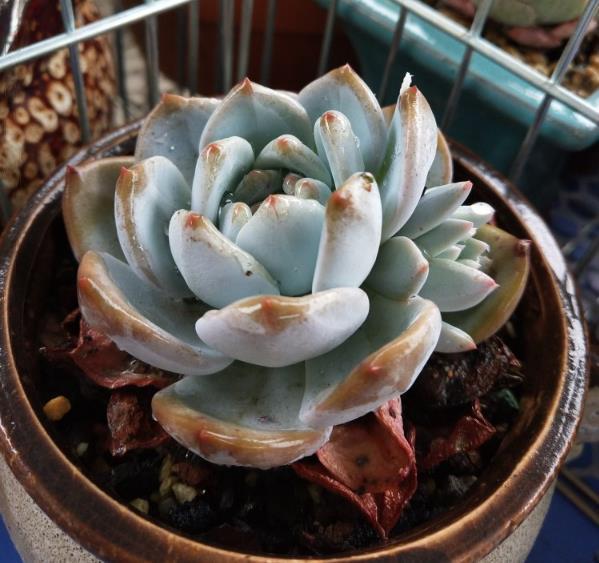
For a newly planted succulent, the roots at the bottom aren't able to work properly and absorb water that quickly yet. So the succulent chooses the fastest way: growing aerial roots. Even if you ignore these aerial roots, they will gradually age and lose their function after a while. Pulling them off might have some effect on stimulating root growth at the bottom. When a succulent grows aerial roots, it means the plant can still survive, whereas some succulents that don't grow aerial roots may already be suffering from black rot, dropping leaves, or even drying up and dying. A succulent growing aerial roots is actually a way for it to adapt to its current environment and its own condition; it wants to keep surviving or continue growing better, so when you notice your succulent has grown aerial roots, don't panic.
When problems with a succulent's roots or stem prevent it from absorbing water - for example, root rot or roots dying, or the stem rotting or shriveling - perhaps you haven't watered for a long time and the bottom of the succulent has dried up, or perhaps you've watered frequently for a long time and the roots have rotted, or perhaps after summer the roots and stem are ruined - when these problems occur, the succulent will also choose to grow aerial roots from its vigorous parts to ensure its survival. When a succulent grows aerial roots during the acclimation period, generally speaking, the bottom roots of a newly planted succulent aren't absorbing water and nutrients normally that quickly, so at this time the succulent chooses the fastest way to absorb moisture from the air to replenish water and stay alive. That is growing aerial roots. With this kind of aerial root, we don't need to bother with it; after a while these aerial roots will gradually age and lose their function.
After a succulent has grown for a long time, its roots will also gradually lose vitality, and the stem at the bottom will gradually become woody, no longer transporting water and nutrients normally as before. At this point the succulent can only find another way and grow aerial roots from vigorous parts such as the stem. The aerial roots grown in this situation actually don't need to be dealt with either, because whether you behead it or take stem cuttings, you'll lose a plant with an old stem. When problems occur with a succulent's roots or the bottom of its stem, it won't be able to absorb water - for example, root rot or roots dying, or the stem shriveling. When these problems occur, the succulent will choose to grow aerial roots from its vigorous parts to stay alive. If aerial roots grow in this situation, we need to pull out the succulent and check the roots, re-trim the roots or even behead it, and treat the remaining part as a leaf cutting.
Usually you should watch out for problems with the roots and stem and solve them as early as possible; rot or drying at the bottom tends to slowly spread upward. In a short time, the succulent can't grow new roots from the bottom on its own, so you can only re-trim the roots or even behead it, and treat the remaining part as a leaf cutting. Succulents also have a lifespan; living three to five years is about enough for them to get old, and if you're unlucky, one or two years of your fussing can age them. The roots will gradually lose vitality, and the bottom of the stem will gradually become woody, unable to transport water and nutrients normally as before, so the succulent can only find another way and grow aerial roots from vigorous parts of the stem.
Succulents growing aerial roots is actually their way of solving problems encountered during growth. If you can't solve the root problem, such as removing the old dead stem and roots, and only vainly hope that pulling off the aerial roots will make everything fine, then there's really no need. Sometimes the appearance of aerial roots is very likely reminding you that the succulent has developed a disease of the roots or stem. For example, root rot makes it unable to absorb nutrients normally; at this time the other parts of the succulent are still very tenacious, so it will grow aerial roots and absorb nutrients through them. However, the nutrients aerial roots can absorb are very limited. If not dealt with in time, it's very easy for the rotting part of the succulent to spread until the succulent dies.
Water the succulent once a week; if water leaks out of the bottom of the pot, stop watering. As long as the indoor humidity is sufficient, you don't need to bother with the aerial roots; they will dry up on their own and then be gone. This is how to handle aerial roots grown when the soil has dried out completely. Varieties such as Bai Mudan (Graptoveria 'Titubans') and Ji Long Yue (Graptosedum 'Bronze') very easily grow aerial roots; this is also one of their ways of propagating. There's also the case where the succulent is top-heavy, and it grows aerial roots to keep the top stable. Another case: if the potting soil is too dry while the air humidity is relatively high, and the humidity difference between the two is too great, this will also cause the succulent to grow aerial roots. However, the harm in these situations isn't great - it isn't even harm - and you can choose for yourself whether to keep them or not.
This is a gathering place for succulent lovers, sharing succulent care tips. You're welcome to follow and join the discussion.