How to identify high-laying ducks? Master these selection methods
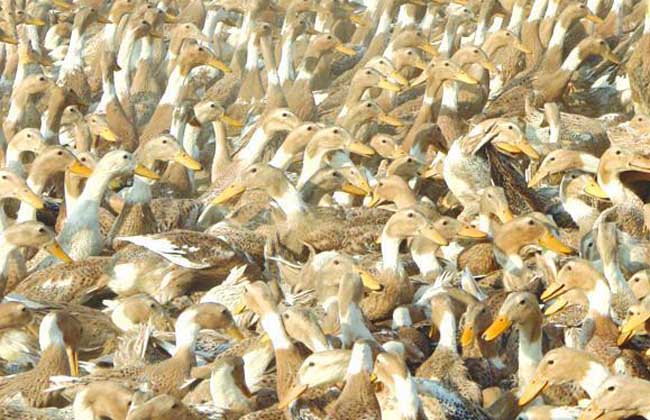
The egg production of laying ducks is affected not only by breed, feed, management techniques and age, but also varies greatly between individuals. Therefore, they can be identified by their body type and appearance.
High-laying ducks have large, protruding and spirited eyes, a slightly small head, a slender and long neck, a long body, a broad back, a wide and deep chest, full and balanced development, and agile movement. When lifted by the neck, both feet stretch straight down without struggling. Low-laying ducks have small, non-protruding and dull eyes, a large head and thick neck, a short body, a relatively narrow back and chest, and slow movement. When lifted by the neck, both feet curl up.
After a high-laying duck eats its fill, the esophageal section of the neck bulges and hangs down. This indicates that it holds more feed and has sufficient nutrients, and can lay at a high rate. The opposite indicates low production.
Whether young ducks or old ducks over two years of age, before the start of laying, the feathers are thick, tight and fine. After laying begins, high-laying ducks absorb most of their nutrients for egg production and little for body growth, so their feathers gradually lose their luster and become messy and dull. If the feathers on the top of the head, neck and back become sparse, it shows that it frequently mates with drakes, which is also a sign of high production. Because it squats for long periods to lay eggs, the feathers on its belly are dirty and untidy. Low-laying ducks have messy and lusterless feathers before laying begins.
During the laying period, high-laying ducks have a large and soft belly, full and drooping but not dragging buttocks, and a large, moist, soft cloaca in a half-open state. Low-laying ducks have a small and hard belly, and a tight, small, contracted, wrinkled and relatively dry cloaca.
During the laying period, high-laying ducks have a wide pubic bone distance, which is soft and elastic when pressed and can accommodate 3 to 4 fingers. The width between the pubic bone and the end of the breastbone reaches 12 to 13 cm, while that of low-laying ducks is less than 10 cm.