Detailed Explanation of Gosling Feed Formulas and Preparation Methods
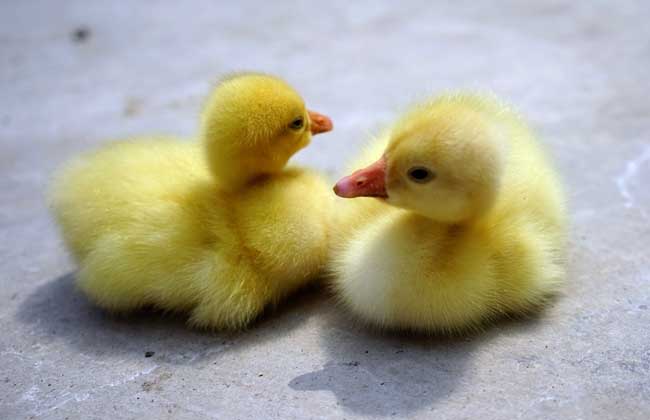
Goslings are geese that have just hatched not long ago. At this stage, the young geese are very fragile and must be handled with special care regarding food, temperature, moisture protection, grazing, and hygiene. Raising goslings definitely requires method and patience. Let us take a look together at gosling feed formulas below!
Feed Formulas for Goslings
Broken rice 50%, rice bran 14%, wheat bran 10%, crushed soybean cake or peanut cake 20%, barley malt 3%, bone meal 1.8%, salt 0.4%, sand grains 0.8%.
First Water Drinking and First Feeding for Goslings
1. First water drinking: The water given to goslings before their first feed is also called first water drinking. The water must be clean and hygienic. Dissolve 0.05% potassium permanganate or a small amount of glucose and vitamins in the drinking water, which helps clear the digestive tract, stimulate appetite, expel meconium, and absorb nutrients. The water temperature should be around 26°C.
2. First feeding: After first water drinking, feeding can begin. The first feeding is called first feeding. Fresh, tender, and juicy green feed and gosling complete feed (if unavailable, chick complete feed can be used as a substitute) can be mixed at a ratio of 2:1, with an appropriate amount of water added until it can be squeezed into a ball and crumbles apart when released. The goal of first feeding is not for the goslings to eat their fill; it is enough if they can take in a little. From 1 to 3 days of age, feed 4 to 5 times per day; after 4 days of age, feed 6 to 9 times per day, with 2 to 3 additional feedings at night. Achieve fixed times, fixed amounts, small feedings with frequent additions, and each feeding should be about 70% to 80% full.
Raising Management of Goslings
1. Heat preservation: Newly hatched goslings have poor body temperature regulation and are afraid of both cold and heat, so artificial heat preservation must be implemented. Generally, infrared heat preservation lamps are needed for 2 to 3 weeks. The suitable brooding temperature is 27 to 28°C at 1 to 5 days of age, 25 to 26°C at 6 to 10 days of age, 22 to 24°C at 11 to 15 days of age, 20 to 22°C at 16 to 20 days of age, and 18°C after 20 days of age. Generally, it is only safe to stop heating after 4 weeks, but the 1st and 2nd weeks are critical. Raising goslings requires corresponding heating and warming equipment to ensure that the goslings safely pass through the brooding stage. When the temperature is suitable, grazing can begin at 5 to 7 days of age; when the temperature is low, grazing begins at 10 to 20 days of age.
2. Humidity: For the first 10 days, the relative humidity should be kept at 60% to 65%. After 10 days of age, as goslings gain weight, their respiration and manure output also increase, the moisture content of the litter increases, and the room easily becomes damp. At this time, the relative humidity should be kept at 55% to 60%. The pen must be cleaned promptly, and the bedding and litter must be changed frequently. The litter should be replaced once every 2 days, and manure should be removed promptly to keep the room dry and the environment clean and hygienic.
3. Ventilation: When ventilating the goose house, attention should be paid to preventing drafts, avoiding wind blowing directly on the goslings so they do not catch cold. Ventilation holes should be left at a height of 2 m in the goose house. When heat preservation is in use, attention must be paid to ventilating every day at noon when the temperature is relatively high, in order to discharge moisture and ammonia gas from the brooding house. In winter and on rainy days, the ventilation windows should be opened during the day and closed at night.
4. Density: Generally, when goslings are raised on the floor, the density is 15 to 20 birds per sq m at 1 to 2 weeks of age, 1.0 bird per sq m at 3 weeks of age, 5 to 8 birds per sq m at 4 weeks of age, and 3 to 4 birds per sq m at 5 weeks of age and above. Each flock should preferably not exceed 200 birds.
5. Light: Light is very important for goslings' feeding, drinking, movement, and development. Goslings within 1 week of age need 23 hours of light day and night. A 50 sq m goose house needs one 40W light bulb, hung at a height of 40 cm from the ground; at 2 weeks of age, 18 hours of light per day are needed. As days of age increase, reduce light by 1 hour per day thereafter until natural light is reached.