How to build a goose-raising greenhouse? A detailed explanation of simple construction methods
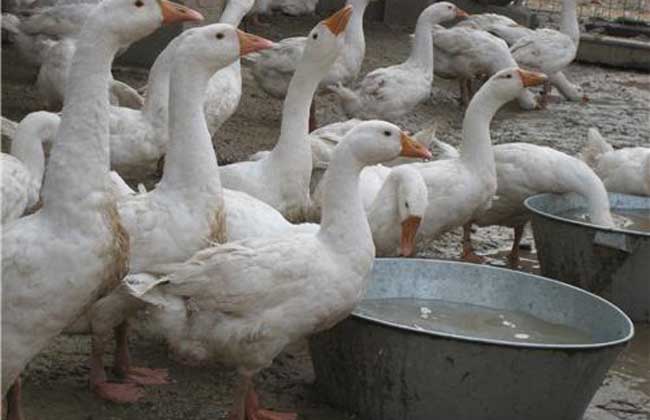
In recent years, many poultry farmers have begun to use plastic greenhousesfor raising geesetechnology. With this technology, the fixed investment is relatively low, it does not occupy cultivated land, and it also helps prevent goose diseases. Meat geese grow quickly, medication costs are low, and the breeding benefits are relatively good. Now let us take a look at the simple construction methods for a goose-raising greenhouse!
Scope of use of simple goose-raising greenhouses
1. Investors with relatively tight funds but a small scale, because greenhouses are relatively cheap to build.
2. Those whose rearing site is not fixed and who may change sites in one or two years, such as free-range operations and so on! This type of gosling house can also use a greenhouse, after all, it is easy to move.
Disadvantages of simple goose-raising greenhouse farming
1. Greenhouses are often sealed with plastic film, so ventilation is poor, and the humidity inside the greenhouse is often difficult to control. High humidity is a major taboo in raising goslings.
2. Many farmers use greenhouses to raise goslings because they are cheaper and more convenient, so most of the ground is bare soil. That is where the problem lies. Bare soil, combined with the poor ventilation of the greenhouse, often makes the ground inside the greenhouse relatively damp, and on rainy days it can even become muddy. These are the biggest hidden dangers in raising goslings.
3. Greenhouses have poor insulation performance and are not sturdy enough.
Material selection for simple goose-raising greenhouses
1. Greenhouse frame: The greenhouse frame is generally made of steel structure, which should be available locally, and the structure is the same as that of a vegetable greenhouse. There are requirements for height, and at least a person must be able to enter and exit normally for management.
2. Sealing materials: such as plastic film (this is used relatively often), straw curtains (for insulation), pressure film lines (for reinforcing plastic film and straw curtains), load-bearing wood or posts inside the greenhouse, and wood or moso bamboo (for building perches).
Points to note when building a simple goose-raising greenhouse
1. Area size: The construction area of each greenhouse should not be too large. It is recommended that each greenhouse hold no more than 4000 birds (personal suggestion). If the capacity is too large, it is very easy to cause emergencies, and by then you will regret it. If the scale is 4000 goslings, it is recommended to build an area of 250 sq m.
2. Ground requirements: The ground is best paved with brick structure or covered with netting. In any case, the ground must be kept dry. If such conditions are not available, then extra effort must be made in management to ensure that the gosling house is as dry as possible.
Summary: Although from a technical point of view the feasibility of raising goslings in greenhouses is relatively poor, after all, they are convenient to build and require little investment, so many investors still adopt this scheme. In particular, customers investing in ecological farming will consider greenhouses. To help such customers, we have, on the basis of considering the technical factors of raising goslings, provided a detailed introduction to greenhouse construction, striving in design and construction to make the best use of advantages and avoid disadvantages so as to achieve relatively good results.